


Planning where to sleep in Fez makes a bigger difference than in many other Moroccan cities. The medina is labyrinthine, the lanes are narrow, and even a great riad can feel difficult if it’s in the wrong pocket of the old city.
If your priority is easy access to Bab Bou Jeloud and straightforward navigation (especially on your first day), base yourself near the medina edge or in the nearby Ville Nouvelle. You’ll spend less time “searching” and more time exploring the tanneries, souks, and historic squares.
Stay Near Bab Bou Jeloud for the Shortest Walks
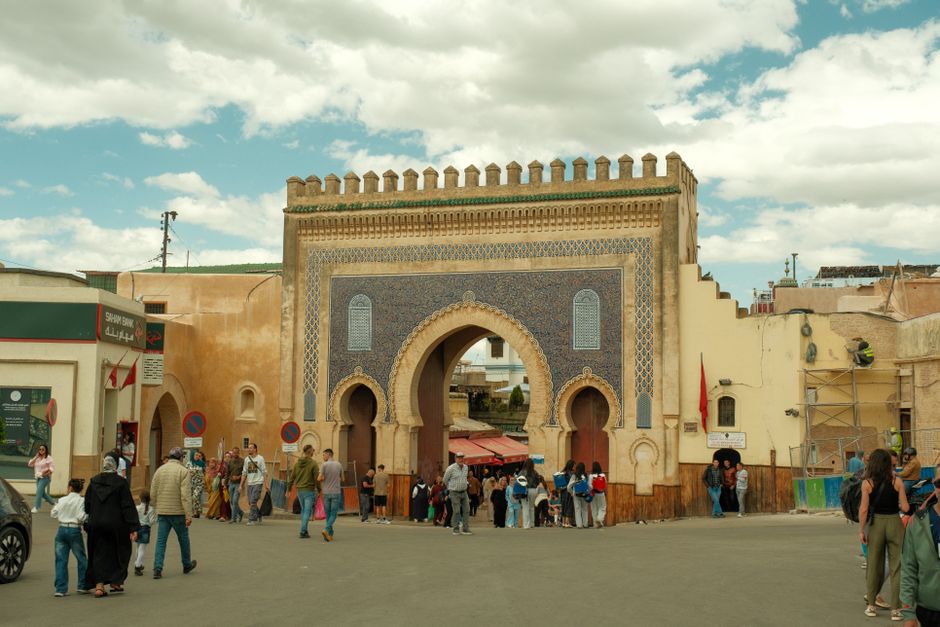
Batha (the gate-side base for first-time navigation)
Batha sits close to the medina entrance zone, so you can reach Bab Bou Jeloud and start walking into Fès el-Bali quickly. It’s a good choice if you want fewer wrong turns when you’re still learning the layout.
What it’s like in practice:
- Walking to Bab Bou Jeloud is usually short, often within a 10–20 minute range depending on your exact riad and the direction you enter.
- You can keep your evening route simple: head back toward the gate area, then follow the larger, more walkable streets.
- You’ll find plenty of staff and riad services that can help with the “last part” of your arrival (medina streets aren’t taxi-friendly).
Why it works for navigation: Batha gives you a clear reference point. When you get turned around inside the medina, returning toward Bab Bou Jeloud is often easier than trying to work your way back toward a more distant landmark.
R’cif (busy medina edge with an easier arrival feel)
R’cif is another strong base if you want to stay close to the historic core but still have a practical arrival experience. The area tends to feel more active and “street-connected” than deeper inside-the-medina pockets.
What it’s like in practice:
- Your walk into the medina is usually straightforward, and you can often reach major lanes without too much backtracking.
- It can feel lively in the evening, which helps with night-time comfort—people are around, and there’s more ambient light.
- Taxi access is generally easier right up to the medina perimeter, which matters if you don’t want to carry bags through the thickest alleys.
The trade-off: because it’s active, some streets and riads can be noisier than quieter, more residential pockets. If you’re a light sleeper, ask for a room location away from the loudest lane-facing sections.
Talaa Kebira (central lanes for souks, mosques, and a direct line)
If you want to step out and be “in the action” quickly, Talaa Kebira is a practical choice. It’s well positioned for walking to key sights and for getting the medina’s bustle early.
What it’s like in practice:
- You’re typically well placed for reaching busy shopping lanes and historic sights without needing repeated taxi rides.
- The central positioning often makes navigation easier once you’ve learned two or three turns from your nearest landmark.
- Evenings can be energetic, so it’s a good match if you like walking after dinner.
Why it can be hard: the same central convenience can mean heavier foot traffic and more noise. If your plan includes late nights, that’s a plus; if you want calm mornings, choose your riad carefully (especially regarding room placement and soundproofing).
Choose Ville Nouvelle for Taxi-Friendly Arrival and Night Comfort

You’ll trade a little “old city immediacy” for smoother logistics—especially if you’re travelling with luggage, arriving at night, or you simply want a calm base to reset.
Avenue Mohammed V and Place de l’Indépendance (practical for taxis and dinner)
This area is a convenient hub because it’s close to major roads and tends to have a more modern street grid. That makes it easier for taxis to find you and easier to plan return trips.
What it’s like in practice:
- You’ll usually find it simpler to get a taxi to the medina edge, then complete the last walking stretch on foot.
- Evening plans are easier because there’s more open-street activity outside the medina.
- The day-to-day logistics—meals, small errands, and meeting your riad staff—are generally smoother here.
Best for: travellers who want easy navigation outside the medina, then a deliberate walk in for the sights.
Jnan Sbil and the Park Road (pleasant evenings without losing access)
If you like your evenings a bit calmer, look toward the park-and-avenue side. Jnan Sbil gives you a more relaxed atmosphere between medina trips, while still keeping you within reach of major entry points.
What it’s like in practice:
- Your base can feel quieter at night compared with the medina edge, which helps after long walking days.
- You can still plan medina visits with a simple rhythm: taxi to the perimeter, walk in, then return the same way.
A good fit if: you’re visiting in hot seasons and want a comfortable place to recharge, or you simply prefer less crowd density around your accommodation.
Medina Navigation: Turn Landmarks Into a Simple Route
No matter where you stay in Fez, the medina rewards a method. Without a plan, even a short walk can become an hour because lanes look similar and street markers aren’t always obvious.
Use Bab Bou Jeloud as your “reset” point
If your accommodation is near Bab Bou Jeloud or within a comfortable walking range of it, treat the gate area as your reset point. That means when you feel disoriented, stop trying to “guess the shortcut” and instead orient toward the direction of the gate.
How to make this work:
- When you enter the medina, identify one nearby landmark route—such as your riad’s entrance direction relative to the gate.
- If you’re crossing from one side of the medina to another, consciously note where you came from before you wander deeper.
Expect narrow lanes and plan for walking time
Inside Fès el-Bali, taxis won’t help once you’re in the maze of narrow streets. Even riads that are “close” to a gate can require a short walk from the point where a driver can’t go any farther.
A practical rule: build in extra time for your first few days. Once you’ve learned the two or three main streets that feed into your area, your walking times usually get more predictable.
Ask for a realistic entry route, not just a map pin
Before you commit to a base, clarify how you actually get to the riad on arrival and on return. A map pin can be misleading in Fez because streets change character fast, and you may be directed along a lane that’s far narrower than it looks.
Ask your host a simple question: where does the taxi drop you, and what’s the last walking segment like?
Night Safety: Stay Comfortable Without Avoiding the Medina
Night safety in Fez isn’t about fear so much as friction. The biggest risks for visitors are getting lost after dark, walking unplanned routes, and carrying bags through crowded or quiet lanes.
Where it feels easiest after dark
In general, the medina-edge areas near the entrances tend to feel more comfortable at night because there’s more steady foot traffic. You’ll also find that returning toward Bab Bou Jeloud or the adjacent gate zones is often smoother than trying to navigate toward a more interior address.
If you’re choosing between bases, consider how your evening walk will end:
- A base that lets you return toward a well-known gate area usually feels simpler.
- A base that forces you to move deep into quieter lanes late at night can be more stressful—even if it’s technically safe.
When to head back earlier (even if you feel fine)
If you’re out for dinner or a late souk browse, use a “soft cutoff” for returning. As the evening gets later, lane familiarity matters more. When you’re tired, you’re more likely to take a wrong turn and extend a walk.
A common approach is to return with enough buffer to avoid the final stretch when you’re mentally fatigued. You don’t need to cut experiences short—just don’t schedule your longest navigation window for the time you’re most likely to misread turns.
Booking Tips That Make Check-In and Taxi Finding Easier
Good accommodation in Fez isn’t only about the room—it’s about whether your arrival and departure feel organised.
Confirm street access and “where the taxi can stop”
When you book, ask how a driver reaches the closest possible point. The best location isn’t always the closest on a map; it’s the place where a taxi can drop you without creating a long, awkward walk through the tightest lanes.
If you’re staying in Batha, R’cif, or near the Bab Bou Jeloud entry zone, the arrival logistics are often smoother than bases deeper in the medina. If you’re in Ville Nouvelle or near Jnan Sbil, taxis usually reach the main roads more reliably, and your last walk into the medina is predictable.
Pick a riad with a clear landmark for drivers
Taxi drivers do best with simple landmarks: a prominent street, a recognizable gate-side area, or a main road junction. Avoid accommodations where the address relies on vague directions.
Before you pay, make sure your booking includes guidance for meeting the driver and entering the right lane. This one detail can save you time and frustration, especially if you arrive after dark.
Choose room location for quiet, not just price
Many travellers focus on the room rate and overlook sound. In Fez, noise often depends on how the riad sits relative to the street and the courtyards behind it.
If quiet matters, ask whether certain rooms are more exposed to street activity. You’ll get a better night’s sleep, and it’s easier to enjoy walking during the day.
Final Thoughts: Narrow Down Your Base
If you want the easiest medina access and the simplest first-day navigation, start by comparing Batha and R’cif (gate-edge practicality) against Talaa Kebira (more central buzz). If you’d rather reduce night-time stress and make taxi arrivals straightforward, balance your schedule by staying in Ville Nouvelle around the Mohammed V / Place de l’Indépendance area or toward Jnan Sbil.
Once you pick an area, confirm the taxi drop-off point and the last walking segment before you book—those details determine whether Fez feels easy from day one or genuinely confusing.