

If you are travelling from Amsterdam and want Dutch windmills plus heritage villages, the good news is that the rail network is usually the easiest way to start. The trade-off is that the best-known windmill sights often require one extra step after the station (a short bus or a water connection), so your day is really about managing those handovers.
This guide ranks the most train-friendly options by total time and effort, then shows how to book ahead and build sensible buffers so you do not end up chasing late connections.
How to Pick the Right Train Day Trip
Match your goal to the route length
Think in half-day blocks:
- About 1/2 day (roughly 4–6 hours door to door): Zaanse Schans and Haarlem are the easiest because they combine short train journeys with walkable sites.
- About a full day (roughly 6–9 hours): Volendam–Marken (and often Edam) works well if you accept one extra transit segment.
- Long-but-scenic (roughly 8–11 hours): Kinderdijk is worth it for the landscape, but it needs more planning for transfers.
Choose villages that feel like a destination, not a stop
Windmill sights are rarely just a photo point. The best days combine:
- A structured village setting (open-air feel, historic streets, clustered mills)
- One or two time-flexible activities (walks, waterfront views, museum-style stops)
- A simple return plan that does not depend on a single strict departure
Book ahead only where it matters
For many routes you can keep it simple and buy train tickets close to departure. The “book ahead” items are usually the ones with limited capacity (popular boat rides, guided tours, or attractions that publish time slots).
Best Day Trips by Train to Windmills and Heritage Villages (Ranked)

1) Zaanse Schans (Fast Windmill Village)
Zaanse Schans is the most straightforward windmill day trip from Amsterdam. You will generally find frequent trains, then a short walk or a quick local connection to the open-air village and working mills.
Why it ranks high (time + effort):
- Minimal transfers compared with most other windmill options
- The village layout is walkable, so you can adjust on the day
- It is easy to fit into a half day if you prefer a lighter schedule
What to plan for:
- Arrive early enough to get calm street views before the midday swell.
- Keep some flexibility; different mills and demonstrations can have varying rhythms.
2) Haarlem + De Adriaan (Easy City Heritage With a Historic Mill)
Haarlem is not a classic “fishing village”, but it is a strong heritage day with a historic windmill centerpiece: De Adriaan. The train ride is typically short, and the old town area is convenient for strolling.
Why it ranks high (effort):
- Low-stress rail journey from Amsterdam
- Lots of time flexibility because Haarlem centre is easy to explore at your own pace
- You can tailor the day around weather (walk streets in drizzle, save viewpoints for clearer hours)
How to structure the day:
- Use Haarlem as your base for heritage atmosphere, then treat De Adriaan as the windmill anchor.
- If you want “village energy”, add a short nearby stop in the surrounding waterways region, but keep it simple so the return journey stays reliable.
3) Volendam and Marken (Heritage Waterfront Villages)
Volendam and Marken deliver the heritage village experience: harbour scenes, traditional architecture, and a slower coastal rhythm. The route usually works well by train up to the region, followed by one extra transit step (bus and/or short regional connection) depending on the day.
Why it ranks in the middle:
- The heritage payoff is high, but the logistics are more layered than Zaanse Schans.
- Peak season can feel busy at the waterfront, so early timing helps.
A good way to plan the itinerary:
- Pick one of the two villages as your main focus, then add the other as a secondary stop.
- Consider adding Edam on the way back if you prefer calmer streets and a classic Dutch historic-town feel.
4) Kinderdijk (Iconic Windmills With More Transfers)
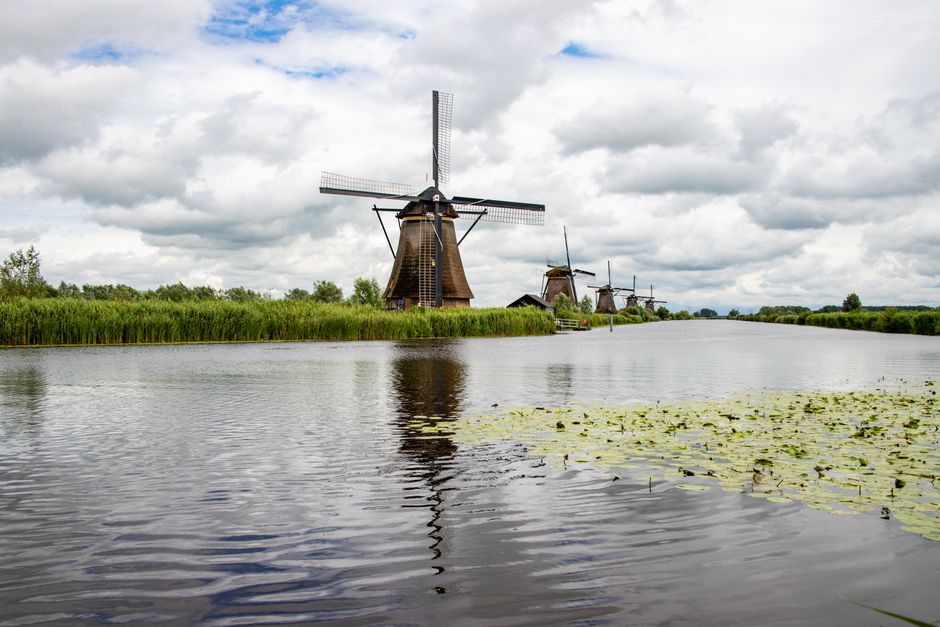
Kinderdijk is the big-name windmill landscape. It is also the one that most often turns a “day trip by train” into “train plus connections plus water views”. You will usually combine a rail journey with a local transfer (bus, metro, or a water connection) and then walk or shuttle around the visitor area.
Why it ranks last (time + complexity):
- Longer overall trip time
- More opportunities for delays during the handover from station to site
- You need a stronger buffer plan, especially in busy periods
How to make it work without stress:
- Aim for an arrival time that gives you margin before your planned activity.
- If you are relying on a specific timed experience (like a boat segment), treat that as your fixed anchor and plan the rest around it.
What to Do Once You Arrive at Each Stop
Use the layout: walk it like a village, not a checklist
In windmill villages, the best experience usually comes from moving at pedestrian pace:
- Start with the main viewpoints first while crowds are lower.
- Then circle back for the smaller streets and secondary angles.
- If you are travelling with children or you are sensitive to long walks, you will enjoy having at least one mid-day reset point (a café area or museum-style indoor stop).
Get the heritage context, not just the skyline
Heritage villages become more meaningful when you link the buildings and machinery to daily life:
- Look for interpretation panels and workshop-style demonstrations where available.
- Prioritise the “working” angle: how mills support water management or local industry.
- In waterfront villages, spend time on the harbour edges; the scene tells you as much as the buildings.
Pair a windmill moment with one “slow hour”
To avoid rushing, pair each major windmill moment with a slower block:
- A long waterfront stroll rather than another photo stop.
- A short indoor break if weather turns.
- A guided talk (when offered) if you want quick context without reading everything on site.
What to Book Ahead (and What You Can Leave Flexible)
Book time slots only for capacity-limited experiences
For train-friendly day trips, you typically do not need to pre-book trains for every scenario. What to pre-book (when you see a clear time slot option) usually includes:
- Popular guided tours that start at set times
- Boat or ferry segments that may have limited departures
- Museum-style entries when they use timed slots
If you are travelling in school holidays or peak summer weekends, booking the capacity items earlier helps you keep your day structure.
Keep train tickets flexible, but lock the return plan
A common trap is planning the outward journey too tightly while leaving the return vague. Instead:
- Use your planned arrival window as the outward anchor.
- Treat the return as a back-up set: identify at least one earlier and one later train option so you can switch if your connection is delayed.
Consider a guided route for the highest-transfer day
Kinderdijk is the one where a structured plan can reduce friction. If you want to avoid route-juggling, a guided day option (or a guided-on-site segment) can take care of the “station to site” transition. If you prefer independence, just make sure your buffers are bigger (see next section).
Buffer Planning for Seamless Connections
Use a connection window that matches the transfer risk
Not all transfers are equal. A safer rule of thumb:
- Simple transfer (short walk or single local connection): aim for a moderate buffer so you are not dependent on the exact minute.
- Medium transfer (platform change plus regional bus/ferry timing): build in more room.
- High-transfer day (station handover plus water segment): double the buffer you would normally use.
In practice, that means you should avoid back-to-back segments that leave almost no slack, especially during peak commuting hours.
Plan your day around the fixed point, not the train timetable
When you have a timed experience (a boat, an entry window, a tour start), build the rest of the day as a “schedule around the anchor”:
- Arrive early enough to handle delays without stress.
- Allow time for the slow walk inside the site.
- Do not schedule your return to depart immediately after the latest possible moment at the attraction.
Expect where delays show up most
Delays tend to hurt most when your route depends on:
- A connection from a major station to a smaller regional stop
- A transport mode that has fewer departures per hour
- Weather affecting water connections or longer walking segments
For that reason, the best approach is usually: earlier arrival, one flexible activity block, and a return plan that has an alternative departure.
Final Steps: Build Your Route and Stress-Test It
Pick your top two options based on how you want to feel: an easy half-day (Zaanse Schans or Haarlem), a full-day village experience (Volendam–Marken), or the iconic but transfer-heavy trip (Kinderdijk). Then plan your outward arrival early, set one fixed anchor (or book one capacity item), and choose a return window with at least one backup train.
If you share your travel month and whether you prefer mornings or afternoons, you can refine the best option and the buffer size to match the season.