


Public transport out of Marrakech is workable for day trips—especially if you start early and keep a buffer for connections. The biggest difference versus private transfers is time: you’ll usually trade comfort for flexibility and lower cost.
Below are five destinations that are achievable in a long day from Marrakech without needing a full private tour.
Top Day Trips (Most Manageable by Bus)
- Essaouira (coast)
- Safi (coast)
- Ourika Valley and the Setti Fatma area (Atlas)
- Ouzoud Waterfalls (big day)
- Aït Benhaddou (heritage on a long route)
Essaouira And Safi: Coastal Day Trips

Public Transport Route To Essaouira
You’ll generally use an intercity bus running from Marrakech toward Essaouira. Plan on roughly 2.5 to 3.5 hours each way, depending on stops and how full the bus is. Aim to leave Marrakech in the morning so you arrive around midday at the latest.
Because the last leg within Essaouira is short, you can handle it locally: the centre is walkable and the beach areas are easy to reach with local transport if you don’t want to walk.
What To Do On Arrival In Essaouira
Essaouira works well as a self-paced day because you can focus on one or two areas rather than trying to “do everything”:
Expect plenty of time for the medina streets, the harbour area, and a long stretch of coastline at your own pace. If you’re visiting in peak season, the fishier parts of the harbour can feel busy around the busiest hours.
Safi As A Shorter Coastal Alternative
Safi is often a slightly easier coastal option if you prefer a quieter rhythm. Journey time is usually closer to about 2 to 3 hours each way by bus, which means you can spend more time exploring rather than rushing.
On a day trip, Safi is best when you treat it as a neighbourhood-to-neighbourhood outing: harbour, old town streets, and the coast near the city edge.
Atlas Valleys: Imlil And Ourika
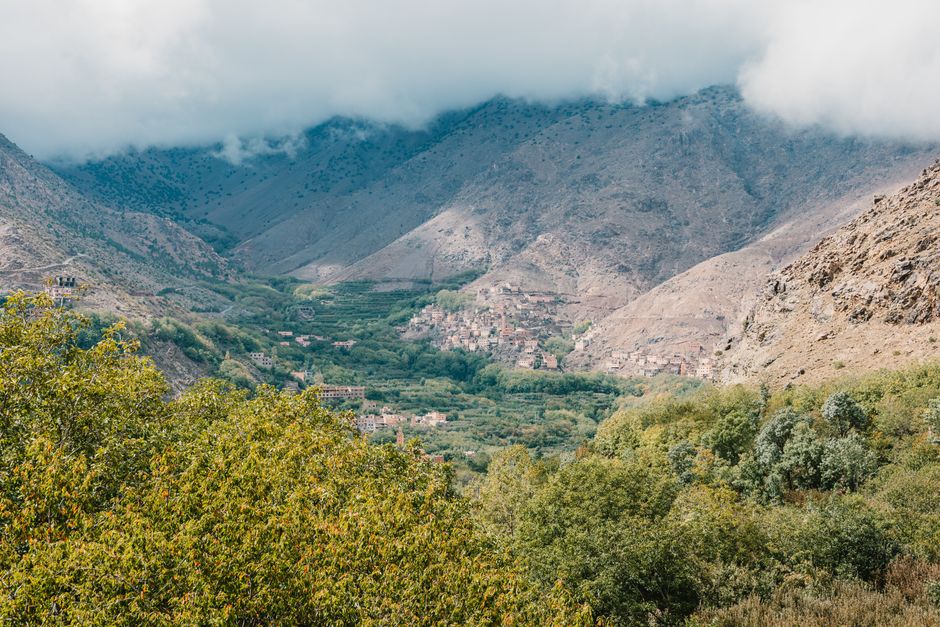
Getting To Ourika Valley (Easier Day Trip)
Ourika Valley is usually the most straightforward Atlas option by public transport. You’ll take a bus out from Marrakech toward the Ourika direction and then connect locally to reach the start of valley walking routes.
Expect around 1 to 1.5 hours for the main road portion. In the valley, you can keep it flexible: walk for as long as you want and return before the light fades.
Reaching The Setti Fatma Area Near Ourika
If you’re aiming for the more waterfall-oriented areas around Setti Fatma, treat it as a longer version of the Ourika day. You’ll likely need local transport for the last segment once you reach the main valley access point.
It’s not difficult, but it’s timing-sensitive. Go early enough that you’re not trying to return after the mid-afternoon rush.
Imlil: How To Make It Work Without A Tour
Imlil is deeper in the High Atlas, which means more travel time and more dependence on local connections once you leave the main bus route.
A practical approach is to take the public road service toward the Atlas access area closest to Imlil, then arrange onward transport locally. If you want a full “hike and return” day, you should plan for a long outing—this is better done in months when daylight hours are generous.
Ouzoud Waterfalls: A Long But Straightforward Day
Ouzoud is one of the most satisfying day trips from Marrakech if you want a dramatic natural setting. It’s also one of the longer ones by public transport, so your planning needs a little more discipline.
Getting There By Bus And Local Connections
Ouzoud is typically reached via an intercity bus toward the Azilal or Beni Mellal region, followed by local transport for the last stretch to the waterfalls. Expect roughly 3.5 to 5 hours each way depending on connections.
Because you’re relying on more than one ride, leaving Marrakech early matters. If you’re travelling in busy periods, arriving later in the day can mean fewer options for the return.
What The Day Looks Like (And How To Avoid Rushing)
At Ouzoud, you’ll spend most of your time walking between viewpoints and platforms along the falls. The walk is manageable for most visitors, but the terrain includes steps and uneven ground.
To make it feel like a day trip rather than a commute, keep your plan simple: pick one main viewpoint route, then allow time for slower moments (water, photos, and the riverside atmosphere). If it’s hot, schedule a longer pause when the shadows are better.
Where Booking Helps (And Where It Doesn’t)
For Ouzoud, you usually don’t need to pre-book a full-day experience to enjoy the place. However, if you’re travelling in the high season or on a weekend, it can help to firm up your return options the morning of departure.
If you prefer less walking, local transport at the waterfalls access area may be available—but you’ll still be constrained by the site’s terrain.
Aït Benhaddou: Heritage Over A Long Route
Aït Benhaddou is possible as a day trip, but it’s the one that most often turns into an all-day travel day. It works best when you treat the journey seriously: start early, assume delays can happen, and don’t plan extra stops.
Public Transport Route Toward Ouarzazate And Aït Benhaddou
The most common public-transport logic is to take a bus from Marrakech toward Ouarzazate (or the nearest major hub in that direction), then connect onward to the Aït Benhaddou area.
Expect a long journey—often in the 5 to 7+ hour range each way depending on how smoothly the connections line up. This is not a trip to “try on the day” without an early start.
How To Structure Your Visit Once You Arrive
Once you reach the Aït Benhaddou area, the key is to spend enough time to actually enjoy it. The site is a living heritage landscape, and rushing through it reduces the payoff.
A sensible plan is to arrive before the busiest late-morning hours, then spend time inside the main kasbah areas and viewpoints before heading back to catch your return connection.
When To Skip Aït Benhaddou By Public Transport
If you’re travelling with limited flexibility, this is the day trip most likely to stress you out. Skip it if you’re already tired from earlier Atlas days, or if you can’t handle uncertainty around connections.
If you still want the heritage experience but want fewer logistics risks, consider allocating an overnight (or staying closer) rather than forcing a very long day.
Next Steps: Booking And Getting Around
Day trips by public transport from Marrakech are very doable when you prepare the right variables: departure time, return timing, and buffer space.
What To Book Ahead
Book ahead when demand is high and you need certainty. In practice, that means:
- Long-route days (especially Aït Benhaddou) where delays can easily ruin your return plan
- Peak seasons and weekends when buses fill faster
For shorter coastal routes like Essaouira and Safi, you can often arrange travel closer to departure, but still aim to secure seats early in the day.
What You Can Handle On Arrival
Within destinations, most local movement is manageable without advance booking. Walking often covers the core sights, and local transport is typically easiest during daytime.
The best approach is to arrive and then decide based on time: if you’re ahead of schedule, add a second neighbourhood; if you’re running late, focus on one area and return.
Quick Checklist Before You Leave Marrakech
Before you go, make sure you know your return plan before you’re fully committed to the day. Keep phone battery and a basic note of your return departure point handy, and choose footwear that suits steps and uneven ground (especially for Ouzoud and Atlas valley walks). Leave Marrakech early enough that you’re not trying to find connections in the last hour of daylight.