

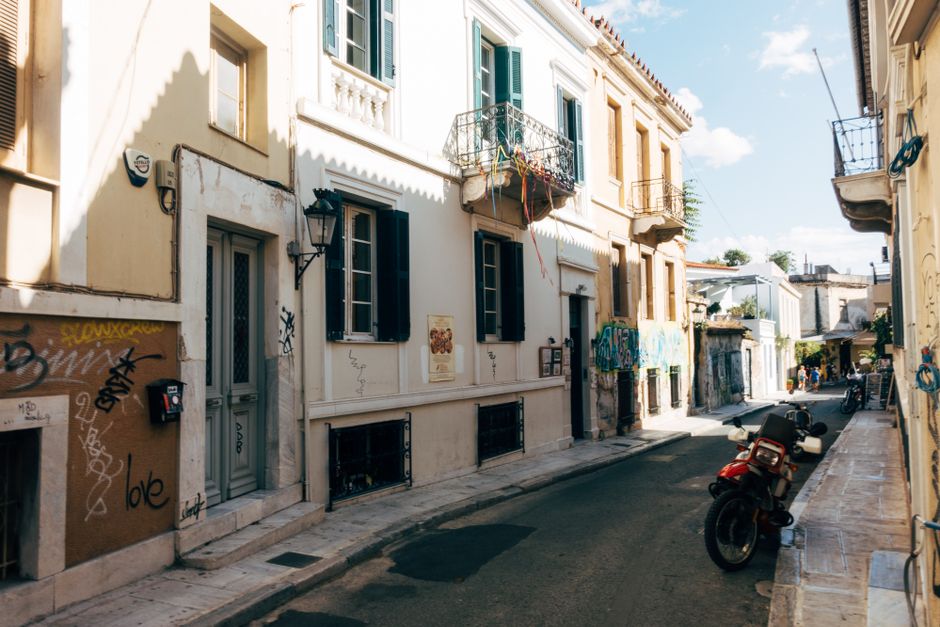
Athens is compact enough that a lot of sightseeing can be done on foot, but the city isn’t flat. Cobbled lanes, short staircases, and a few proper climbs can turn a “quick walk” into a slower slog—especially around the Acropolis.
Use the neighborhoods below as a practical shortlist. Each one is selected for (1) how quickly you can reach the major sights by foot and/or metro, and (2) what you’ll trade off—hilliness, nightlife noise, and crowd pressure.
Plaka and Anafiotika: Old Town Charm With Direct Routes to the Acropolis

Best for: fastest access to Acropolis viewpoints
You’ll be within comfortable walking distance of:
- The Acropolis area and the main viewpoints
- The Acropolis Museum area
- Upper Plaka streets with easy “in-and-out” walks
For a very sight-heavy day, this base helps because you can go early, avoid the worst midday crowds, and return to rest without a long commute.
Walkability reality: cobbles and stairs
Plaka is walkable, but it’s not “easy flat walking.” Expect:
- Uneven pavements
- Short steep sections (especially when you’re heading up)
- Stair-only pockets through smaller lanes
If you have mobility limitations or you’re travelling with heavy luggage, look for streets that sit closer to the main pedestrian corridors rather than the deepest lanes.
Nightlife and crowds: beautiful, but busy
Plaka is lively in the evenings, and it can feel crowded during peak tourist seasons. Noise tends to come in waves: dinner time and late-night foot traffic around popular lanes.
If you’re sensitive to noise, choose accommodation slightly back from the busiest restaurant streets—even if it means a couple of extra minutes walking.
Koukaki: A Smoother Midpoint Between the Acropolis and the City Centre

Best for: quick walks to major sights with fewer extremes
From Koukaki, you can reach:
- The Acropolis and Acropolis Museum areas
- The Parthenon-adjacent hill routes (walkable early in the day)
- The edges of the Ancient Agora zone via gradual walking corridors
When walking is tiring, the nearby metro connections make it easier to switch from “climb mode” to “smooth travel.”
Hilliness: manageable, with occasional steep shortcuts
Koukaki isn’t entirely flat, but the slope is usually less dramatic than right up in the Plaka/Onafiotika maze. You’ll typically get a better mix of:
- Longer but gentler streets
- Easier route choices when you map your walk in advance
A good strategy is to plan one “main direction” route (out to sights in the morning, back via a different street later) so you don’t keep repeating the steepest segment.
Nightlife noise: usually quieter than Monastiraki/Psyrri
Koukaki has bars and late dinners, but the party atmosphere is usually more controlled than the nightlife-heavy areas further east. If you’re aiming for an evening that stays social without keeping you up, this can be a sweet spot.
Thissio and Kerameikos: Comfortable Walking Base Near the Ancient Agora
Thissio and Kerameikos give you a strong location for classical sites and an easier rhythm for walking—especially if you prefer calmer streets after a long day of sightseeing.
Best for: Ancient Agora days and evening strolls
This area is well placed for:
- The Ancient Agora and nearby archaeological walks
- Easy transitions toward the Acropolis zone
- Morning and evening wandering without the same constant tourist density
It’s also a handy base if you want a “classics circuit” without continuously changing metro lines or backtracking on steep hills.
Walkability: often easier streets, but check your route
Compared with the Old Town’s tighter lanes, you’ll generally find:
- Wider roads in parts of the area
- More straightforward pedestrian paths to key sights
That said, Athens still has slopes. Before you choose a street, do a quick elevation check in your map app: the difference between a “good” walking route and a “steep surprise” can come down to two or three blocks.
Nightlife and atmosphere: calmer, with local energy
Expect a more relaxed feel than Monastiraki/Psyrri. You’ll still find restaurants and an active crowd, but less of the late-night spillover.
If you’re travelling in summer and you like to eat out late, Thissio/Kerameikos usually gives you that option without constant noise every night.
Monastiraki and Psyrri: Central, Mostly Walkable, and Lively After Dark
Monastiraki is a key hub for getting around, and Psyrri is where the evening energy concentrates. If you want to step outside and immediately feel the city—cafés, bars, and street life—this is the classic base.
Best for: fast access by metro and walking to multiple landmarks
Monastiraki’s location makes it easy to connect to:
- The Ancient Agora area
- Popular shopping streets and central museums
- The main sight corridors heading toward the Acropolis
Even if you don’t walk the entire way, metro access here helps you avoid time loss when the climbs get too much.
Walkability: convenient routes, but plan for crowds
You’ll often get good walking convenience because this area sits in the centre. The main issues are:
- Dense foot traffic at peak times
- Narrow lanes near the market and nightlife zones
- “Stroll pace” rather than “quick crossing” during busy hours
If your priority is sightseeing efficiency, start early (especially for Acropolis-area walks) and reserve later hours for museums or lighter strolls.
Nightlife noise: expect late activity in Psyrri
Psyrri is lively. That can be perfect if you’re out for dinner and drinks—but it can also mean louder nights, particularly on weekends.
If you’re booking here:
- Choose a room farther from the bar-heavy streets
- Consider earplugs as normal Athens travel gear
Syntagma and Kolonaki Edge: Best for Metro Convenience and Museum Days
If you prefer a smoother base—good transit, comfortable streets, and a calmer evening than the Old Town—Syntagma and the Kolonaki edge are strong picks. This is less “historic postcard” and more “easy access to everything.”
Best for: quick metro hops to the Acropolis and beyond
Syntagma’s main transport hub makes it straightforward to reach major sights via the metro, especially when you want to avoid long, hilly walks. It’s also a strong choice if you plan to split your days between:
- Acropolis-area visits
- Museum time
- Neighbourhood dining
Hilliness: mostly easier, but the Acropolis still takes effort
This area generally avoids the tight, step-heavy lanes of Plaka. However, getting to the Acropolis on foot will still involve uphill sections depending on your exact route.
A practical approach is:
- Walk for flatter or museum-heavy days
- Use the metro for the Acropolis direction if you want to conserve energy
Nightlife and crowds: more controlled than Monastiraki
Syntagma can feel busy during day and commute hours, but nights are typically less chaotic than the Psyrri scene. Kolonaki tends to feel more upscale and often quieter—though traffic noise can be an issue on major roads.
If you’re a light sleeper, focus on side streets rather than the busiest avenues.
Final Steps for Choosing Your Athens Base
Pick your neighbourhood based on the trade you’re willing to make: Plaka/Koukaki for maximum closeness to the Acropolis, Thissio/Kerameikos for calmer classic-site days, Monastiraki/Psyrri for central energy, and Syntagma/Kolonaki for metro convenience and museum-friendly walking.
Before you book, do one simple test: map a “morning sight” route and an “evening return” route to check whether the steepest segment is optional—or unavoidable.