


If you’re visiting Ho Chi Minh City for the first time and want to stay close to District 1, you’ll get the smoothest trip by choosing a base around walkable landmarks, well-lit evening streets, and fast connections (usually by taxi/ride-hailing and short bus rides).
Below are the neighbourhoods that work best for first-timers—each is set up to help you spend less time crossing the city and more time seeing Saigon.
How to Choose a Neighbourhood Near District 1

Walkability to landmarks (without “cross-city” mornings)
A good base near District 1 puts you within easy reach of major sights like Ben Thanh Market, Nguyen Hue Walking Street, Saigon Central Post Office, the Opera House area, and nearby museums.
When you’re walking, look for:
- Streets that lead directly toward Nguyen Hue / Ben Thanh rather than requiring long detours
- Side streets with fewer barriers and less constant traffic noise
- Enough food options within a 10–20 minute walk (so you’re not relying on rides every time)
Evening safety that feels calm, not empty
Ho Chi Minh City is lively at night, but not every street is equally comfortable.
Aim for:
- Well-lit roads with steady foot traffic (even if you go out late)
- Easy “return routes” back to your hotel (short, visible paths)
- Areas where you can still get a quick ride back if you’re tired
If a neighbourhood is packed with nightlife, expect the upside (energy) plus the trade-off (busy crossings and more opportunistic pickpocketing). You can still stay there—just pick the side streets.
Transit access that doesn’t get stuck in peak traffic
Near District 1, you can usually move fast, but traffic can spike around rush hour.
For practical transit access, prioritise neighbourhoods with:
- Quick pickup points for taxis/ride-hailing
- Easy access to bridges if you’re staying across the river (for areas like Thao Dien)
- Bus routes that run toward District 1’s central corridors
Most Walkable: District 1 Pockets for First-Timers
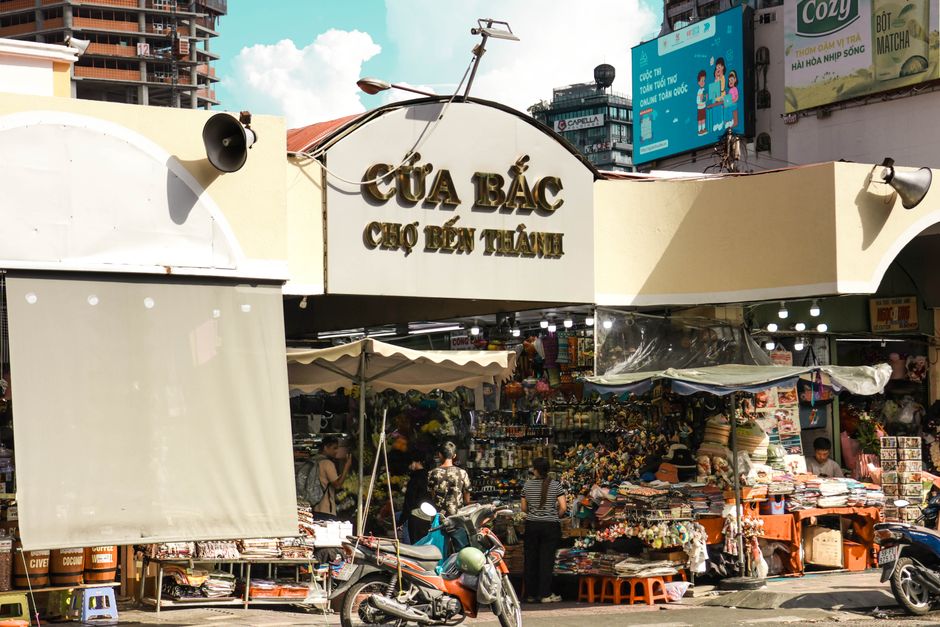
Ben Thanh–Nguyen Hue (District 1): best overall base on foot
This area keeps you close to the sights and the “everyday” convenience. If you want to walk to major landmarks and still have plenty of cafés and restaurants nearby, this is usually the smoothest starting point.
Why it works for first-time visitors:
- Short walks to Ben Thanh Market and the Nguyen Hue area
- Plenty of meal options and late-opening convenience (handy after long sightseeing days)
- Easy to find transport when you’re not in the mood to walk
What to watch for:
- Higher crowds around Ben Thanh and the central shopping streets
- The most convenient roads can also be the most traffic-heavy—choose a hotel on a quieter parallel street if you’re sensitive to noise
Dong Khoi–Saigon Central (District 1): calmer streets near iconic sights
Dong Khoi and the Saigon Central area are still very central, but the streets often feel more “controlled” than the busiest corners. It’s a strong pick if you like having great sights nearby without being in the thick of the party blocks.
Good for:
- Easy access to major landmark clusters around the Central Post Office / Opera House area
- Evening strolling with a more relaxed pace
- Finding good-value restaurants without walking through constant nightlife crowds
Keep in mind:
- Some streets are pricey—expect mid-range options rather than ultra-budget deals
- You may walk a little less if you choose hotels close to quieter lanes (which is often a positive)
Bui Vien–Pham Ngu Lao (District 1): lively, social, and easy for quick outings
If you want the most atmosphere, this is the zone. It’s popular with backpackers and budget travellers, and you’ll find plenty of places to eat and meet people.
Pick this area when:
- You plan to spend evenings out and want everything close by
- You don’t mind a busier street environment
- You prefer to return to your hotel via short, well-known routes
Practical cautions:
- Crowding around bar streets can make evenings hectic
- Keep your phone secure and avoid open bag pockets in busy lanes
- Choose a hotel that sits on a calmer side street rather than right on the loudest stretch
A Calmer Change of Pace: District 3 and District 4
If District 1 feels too intense, these areas often deliver a gentler evening atmosphere while staying reachable to District 1 sights.
District 3 (near the central museums and main corridors): comfortable, local-feeling base
District 3 is a good “in-between” option: you can still get to District 1 without long commutes, but the streets can feel less relentlessly tourist-driven.
Why it’s useful:
- Easy rides and manageable walking for many central sights
- A more neighbourhood feel for coffee, casual dining, and evening strolls
- Many main roads that make pickup for transport straightforward
Where to focus:
- Streets within easy reach of central museum zones and well-connected roads
What to watch for:
- It may not be as simple to do “everything on foot” as the best pockets of District 1
- Some hotel blocks can be louder if they’re close to busy corridors—check how far your room is from the main road
District 4 (river-adjacent): quieter evenings with a different vibe
District 4 is especially appealing if you like waterfront scenery and a slightly slower pace. It’s not the first choice for walking to every landmark, but it can be great as a calm base for evenings and relaxed mornings.
Why travellers like it:
- A noticeable change in atmosphere compared with the tightest District 1 streets
- Evening spaces where the mood feels less hectic
- Easy access by short rides back toward the central sightseeing zone
Practical trade-off:
- Expect to rely more on transport for peak tourist sights than you would from Ben Thanh/Dong Khoi
- In rush periods, crossing can take longer—plan sightseeing blocks so you’re not zig-zagging across the city every day
Quieter Evenings, Still Easy: Thao Dien (District 2)
Thao Dien sits across the river and feels more residential than central District 1. It’s a strong match if you want calmer nights and a more relaxed rhythm—especially for couples or longer stays.
Thao Dien (District 2): green streets and a slower pace
If you’re tired after sightseeing and want a neighbourhood that feels more like a break, Thao Dien is often a comfortable choice.
What it gives you:
- A calmer setting for evenings (useful after busy daytime visits)
- Plenty of cafés and casual dining without the constant tourist crowding
- A more “liveable” neighbourhood feel
Transit reality:
- You’ll usually do District 1 sightseeing by short rides rather than walking
- River crossing time can vary—avoid scheduling “must-see” sights exactly during peak commute windows
When it’s worth it:
- You care more about sleep quality and evening comfort than being able to walk everywhere
- You’re happy to plan District 1 days as set outings
Booking Tips to Match Your Neighbourhood Choice
Once you pick a base area, small details can make the difference between a smooth stay and a frustrating one.
Choose your street, not just the district
For first-time visitors, the best hotel isn’t necessarily the one with the “most famous address.” It’s usually the one with:
- A quieter lane for sleeping
- A short walk to a main road where transport pickups are easy
- Good nighttime visibility (especially if you’ll head out after dark)
A quick checklist before booking:
- Does the route from the lobby to the main road look straightforward?
- Are there late-night shops or lit streets nearby (so you’re not stranded after a long day)?
- Will you likely need to cross major intersections repeatedly?
Avoid the most common first-timer traps
Even in the best neighbourhoods, these choices can create problems:
- Staying on the busiest bar strip when you want a quiet night’s sleep
- Picking an address that’s “technically central” but requires multiple crossings (roads + alleys) to reach anything you need
- Choosing a “cheap but far” option that turns every sightseeing day into long transport sessions
Practical transport habits that keep your days efficient
You don’t need a complex commute strategy—just a few habits:
- If you’re going out in the evening, confirm your return pickup point in advance (a brighter, easier-to-spot location)
- Bundle District 1 sights into one walking-friendly loop when you’re based in the most central pockets
- If your hotel is in Thao Dien or District 4, plan District 1 outings as rides + short walks, not as constant back-and-forth
What to Do Next
Pick one neighbourhood that matches your travel style: the most walkable pockets in District 1 if you want maximum on-foot sightseeing, or District 3 / District 4 / Thao Dien if you prefer calmer evenings and can use short rides. Once you’ve chosen the base area, compare hotels by street quietness and how easy it is to step out to a main road for transport.