

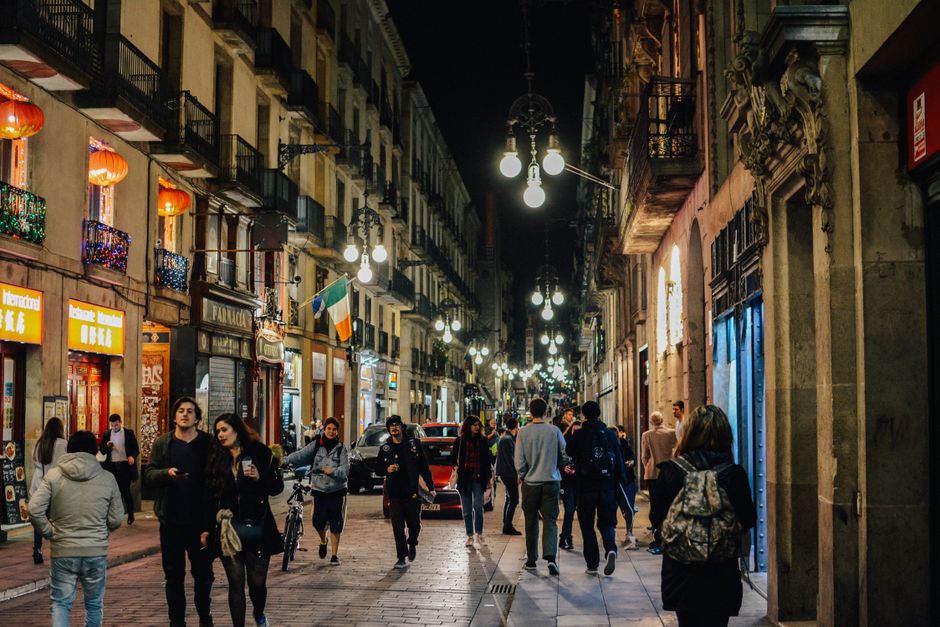
If you’re planning your first Barcelona trip around late dinners and evening plans, where you stay matters almost as much as what you book. The city is spread out, and nightlife clusters—so your “best” neighborhood depends on how much noise you’re willing to tolerate and whether you’d rather walk or take transport at night.
Below are eight solid bases, each with clear tradeoffs, plus practical ways to reach Barcelona’s main sights after dark.
Old Town for Walkable Nightlife (Expect Noise)

El Born
El Born is a go-to for first-timers who want late dinners and an easy evening stroll.
Why it works
- You’re in the thick of restaurant streets and cocktail bars.
- Many attractions are within a comfortable walk from your hotel.
Tradeoffs
- Heavier foot traffic in the evenings can feel busy even if you choose a quieter side street.
- Prices trend above average compared with more residential areas.
How to reach main sights at night
- To the Gothic Quarter and central historic sights: walk back and forth easily after dinner.
- To Passeig de Gràcia for shopping-and-architecture nights: it’s usually an easy late ride by taxi or metro, with most journeys feeling quick rather than “long haul.”
- To get over toward Montjuïc for evening viewpoints or the waterfront atmosphere: head out by metro and/or taxi depending on the time and crowds.
Gothic Quarter (Barri Gòtic)
If you want late dinners right on the doorstep, the Gothic Quarter delivers. It’s all about medieval streets, atmosphere, and going out without worrying about transport.
Why it works
- You can step out for dinner and still have options for a second drink.
- You’ll be near major sights for evening sightseeing that’s easiest on foot.
Tradeoffs
- Nightlife noise can be intense, particularly on weekends and around dense restaurant streets.
- The area can feel crowded, so expect busier streets when you return late.
How to reach main sights at night
- For most central highlights: you’ll often be walking distance from one evening stop to the next.
- For Park Güell: plan to use metro and a short connection rather than relying on a long walk.
- For the beach at night: it’s typically a quick metro/taxi hop, but it’s not the same “stroll there” experience as staying closer to the water.
Eixample and Sant Antoni for Central Convenience (Less “Party in Your Street”)

Eixample
Eixample is ideal if your itinerary includes the city’s grand architecture and you still want late dinners.
Why it works
- You’ll be close to the main boulevards where restaurants and bars cluster.
- Getting around at night is usually straightforward because the streets are easy to navigate.
Tradeoffs
- Some streets can feel more “commercial” than local, so the vibe depends on exactly where you book.
- Certain prime streets come with higher nightly rates.
How to reach main sights at night
- To Casa Batlló and the Passeig de Gràcia area: it’s generally a short walk or a fast late ride.
- To Sagrada Família: expect a clear but not instant journey—metro plus a short walk is usually the simplest approach.
- To Montjuïc: metro/taxi is the sensible plan at night, especially when streets are crowded.
Sant Antoni
Sant Antoni is a strong “live like a local” alternative nearby, with dining that stretches later than you might expect.
Why it works
- You get nightlife options without the same level of Old Town intensity.
- The area is well-placed for easy connections to the rest of the city.
Tradeoffs
- It’s more spread out than the densest nightlife quarters, so you may walk less between stops.
- Saturday nights can still get busy—just usually less chaotic than the historic core.
How to reach main sights at night
- To the Gothic Quarter and El Born: it’s typically an easy metro/taxi ride.
- To Eixample’s restaurant streets: you’ll often find quick, low-effort routes by metro and short walks.
- To the beachside zones: plan on public transport or a taxi rather than a long late walk.
Gràcia and Poble-sec for Terrace Evenings (Local, Not Just Touristy)
These neighborhoods lean local: bars, small venues, and dinner that feels less like a checklist. They can still be lively, but the nightlife tends to feel more “neighborhood” than “festival.”
Gràcia
Gràcia is a great fit when you want late dinners and a lively atmosphere—but not constant tourist crowds.
Why it works
- Many streets feel made for evening wandering and spontaneous plans.
- You can find both casual eateries and proper sit-down dinners.
Tradeoffs
- Nightlife can be noisy on the right streets—choose carefully if you’re sensitive.
- If you’re chasing very specific “top landmark at 9pm” moments, the evenings may take a bit more planning.
How to reach main sights at night
- To Park Güell: expect it to be a simpler evening ride, often with a short walk on arrival depending on where you are.
- To central boulevards and major architecture: metro and short connections usually work best at night.
- To the beach: plan transport rather than a late stroll.
Poble-sec
Poble-sec is known for dining and drink options, with a nightlife feel that’s lively without being as overwhelmingly tourist-packed as some central areas.
Why it works
- You’ll find lots of late dinner choices close enough to bar-hop.
- It’s often a calmer return trip than staying in the oldest lanes.
Tradeoffs
- Some streets attract bigger crowds later in the evening.
- Rooms can vary widely in how quiet they are—street-facing options can be louder.
How to reach main sights at night
- To the historic center: metro or taxi is usually the quickest way back and forth.
- To Montjuïc: you’ll typically want transport at night rather than trying to walk long distances.
- To Eixample’s architecture area: metro and short walks are the usual approach.
Barceloneta and Poblenou for Beachside Nights (Crowds in Season)
If you want late dinners near the sea, these are the neighborhoods to consider. The tradeoff is summer crowding and a more “busy promenade” feel—especially around the waterfront.
Barceloneta
Barceloneta is the classic choice for beach energy and easy access to waterfront dining.
Why it works
- You’re close to the sea promenade atmosphere, especially in warm months.
- Late dinners feel naturally paired with evening walks.
Tradeoffs
- It can be crowded and loud when tourist numbers peak.
- Some streets can feel more commercial; you’ll get the lively vibe either way.
How to reach main sights at night
- To El Born and the Gothic Quarter: it’s typically a straightforward late ride (and often faster than walking when it’s crowded).
- To Sagrada Família: plan on metro plus a short walk.
- To Montjuïc: take transport, since the distance and late-night street layout can turn an “easy” plan into a long one.
Poblenou (Including the beach-and-modern strip)
Poblenou gives you an alternative to the most crowded beach zones, with a more modern feel and plenty of evening spots.
Why it works
- It’s a good base if you want nightlife that feels less packed than Barceloneta.
- The area supports both dinner plans and later drinks without feeling like a single-party street.
Tradeoffs
- You may walk less between nightlife stops, depending on where you book.
- Some late plans are clustered around specific pockets, so it helps to know where you’ll go next.
How to reach main sights at night
- To the beach promenade: it’s immediate—expect mostly walking within the neighborhood.
- To central Barcelona landmarks: use metro or taxi; it’s usually not difficult, just not “walk everywhere.”
- To Montjuïc: plan transport at night to keep the evening comfortable.
Next Steps: Choose Your Base, Then Book the Quietest Room You Can
Narrow it down based on your tolerance for noise: Old Town (El Born/Gothic Quarter) is most convenient for late meals, while Eixample and Sant Antoni are often easier for sleep. Once you pick an area, book early for high season and request a quieter room setup (for example, an interior-facing option) if you’re sensitive to street noise—especially on weekends.