

Layover reality check: border-free entry, not stress-free guessing
Before you book anything outside the airport, decide how “in-country” your layover really is. In Istanbul you’ll face two constraints at once: immigration/security and traffic between neighborhoods.
Airside vs landside (the only choice that matters)
You’ll generally have two options:
- Airside: you stay in the transit area. Usually easier, but you’ll only access airport facilities.
- Landside: you leave the airport for the city. This is where the classic Istanbul sights are, but you must clear immigration on entry and exit and then re-clear security for your next flight.
If you’re unsure what your ticket and nationality allow, plan as if you’ll need immigration and re-check entry rules before you go.
Pick one airport—and build a return buffer you can actually use
Istanbul has two main airports. Your “best plan” changes fast depending on which one you land in (and which one you depart from):
- IST (Istanbul Airport) is on the European side and typically takes longer to reach the city core than SAW.
- SAW (Sabiha Gökçen Airport) is on the Asian side and can be more convenient for neighborhoods like Kadıköy/Moda and Üsküdar—depending on traffic.
Use this simple return-buffer rule:
- For a short layover, set your “last ride back” time so you still have time for immigration + security + an unexpected hold.
- A practical guideline is to leave the city with at least 2–3 hours remaining for tight connections, and more if your hotel area is far from your airport.
Keep the route single-direction: no hopping across the city
For layovers, the most reliable approach is “one main zone + one supporting stop.”
- If you’re landing on the European side, you’ll usually do best staying in Sultanahmet / Beyoğlu / Galata / Karaköy.
- If you’re landing on the Asian side, you’ll usually do best with Üsküdar + the waterfront or Kadıköy/Moda.
When you cross the Bosphorus during a layover, do it with purpose (one ferry or one scenic viewpoint), not as a plan to “also see everything.”
4–6 hour layover: a focused Old City or Bosphorus hit
This is the shortest window where you can do something memorable without feeling like you’re sprinting. You’ll want one anchor area and one quick “bonus” view.
Sultanahmet burst: Sultanahmet Square → Hagia Sophia → Blue Mosque
Best when you land and depart from the European side or when traffic is unusually kind.
- Start at Sultanahmet Square for orientation.
- Walk to Hagia Sophia and then Blue Mosque while you’re still fresh.
- If time allows, add Basilica Cistern as a cool indoor stop.
Time-block idea:
- 60–90 min: square + Hagia Sophia exterior/entry
- 30–45 min: Blue Mosque area
- 20–40 min: Basilica Cistern (only if your pace is smooth)
Bosphorus quick-view: ferry energy without a full cruise plan
Best when you want the water without committing to a long boat schedule.
- Use Eminönü waterfront & ferry docks as your practical starting point.
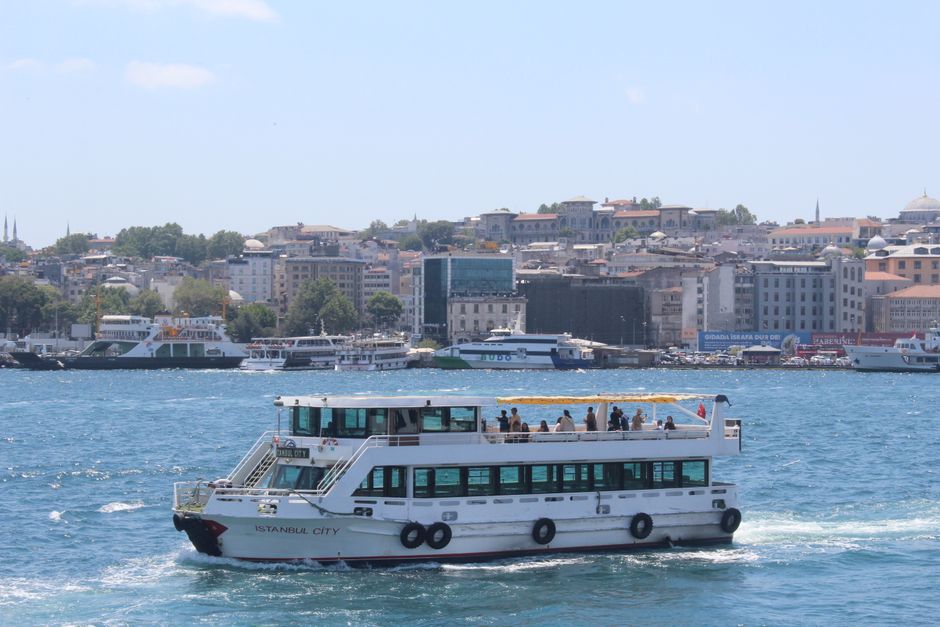
- Take a Bosphorus ferry ride for skyline views.
Optional add-on if you have enough time:
- Jump off for Ortaköy Mosque & square for a brief break and photos.
Return planning rule:
- Don’t assume you can “go back later.” During peak evening traffic, the route back to the airport can swell quickly.
6–9 hour layover: the classic Istanbul combo (Old City + bazaar + viewpoint)
With an extra couple of hours, you can add one landmark from each “feel” of Istanbul: history, shopping streets, and a high viewpoint.
Old City backbone: Hagia Sophia area → Topkapi Palace (selectively)
You’ll keep your walking efficient by staying in Sultanahmet.
- Begin at Sultanahmet Square.
- Prioritise Hagia Sophia and Blue Mosque.
- If you want a deeper history stop, choose Topkapi Palace—but treat it as a timed visit. A full palace day usually won’t fit a layover pace.
Time-block idea:
- 90–120 min: Hagia Sophia + Blue Mosque area
- 60–120 min: Topkapi Palace (short route only)
Bazaar + local streets: Grand Bazaar or a faster alternative
You can enjoy the “market Istanbul” experience, but bazaars can become crowded.
- Add Grand Bazaar if you’re going during a calmer window.
- If you’d rather keep it less maze-like, consider using it as a browsing stop rather than a deep shopping session.
End with a skyline: Süleymaniye Mosque area viewpoint
Finish with a viewpoint that doesn’t require long travel.
- Head to Süleymaniye Mosque and the surrounding hill area.
- This works well as a “last-hour reset” because you can move at your own pace.
Return buffer rule:
- Build this viewpoint as the end, not the middle. If the bazaar runs late, you’ll still have an easy way to exit.
9–12 hour layover: neighborhoods on both sides without losing the connection
When you have most of a day, you can do a proper route across Istanbul’s most scenic corridors—without turning it into a checklist.
Beyoğlu and Galata mood: Galata Tower → Istiklal Avenue
This is where Istanbul feels like a living city instead of a museum district.
- Walk to Galata Tower for skyline views.
- Continue along Istiklal Avenue for cafes, street life, and quick photo stops.
Time-block idea:
- 60–90 min: Galata Tower + nearby streets
- 60–90 min: Istiklal Avenue stroll
Waterfront + spice stop: Karaköy → Spice Bazaar
You’ll get water, small streets, and classic market energy.
- Start at Karaköy waterfront.
- Add Spice Bazaar for a structured market break (easy to re-enter and re-exit).
Avoid the tourist-trap trap:
- If a shop sells the same souvenirs with the same signage every few steps, treat it as an “interesting photo” and keep walking.
Add the Asian-side flavor: Üsküdar → Maiden’s Tower (pick one)
If you’re landing and departing in a way that allows it (and you can keep your return buffer strong), you can add a Bosphorus-crossing moment.
- Use Üsküdar waterfront as your base.
- For a landmark photo, aim for Maiden’s Tower.
- Keep it to “one iconic stop,” not a full day across the bridge system.
Getting in and out smoothly: timing, transport, and what to skip
Layovers don’t fail because you chose the wrong sight—you miss flights because you chose the wrong timeline.
Best time blocks to aim for
A practical rule: your itinerary should be driven by predictable friction.
- Mid-morning to early afternoon is usually easier for sights and queues.
- Late afternoon into evening can be great for photos, but it’s riskier for return-time buffers due to traffic.
- If your flight lands near closing time for major landmarks, switch to exterior-friendly stops and waterfront areas.
Getting around: choose one method per day
You’ll usually move faster by combining modes:
- Taxi/private car for airport-to-zone moves (most time-efficient if traffic is moderate).
- Walking inside a district so you don’t spend layover time negotiating stops.
- Ferry for Bosphorus views when schedules and timing line up.
Avoid this common mistake:
- Don’t plan multiple long taxi segments back-to-back. If you do, you’ll spend your layover paying for time lost in traffic.
What to skip on a layover
To protect your connection, skip or shrink anything that becomes a time sink.
- Large multi-building museum days.
- Full “shopping session” plans inside crowded markets.
- Any itinerary that requires crossing the city twice (there and back) with no buffer.
Final thoughts: lock your plan before you land
Pick your layover template first—4–6, 6–9, or 9–12 hours—then map it to your exact arrival/departure airport. Once you know the airport pair, choose one main zone and one supporting viewpoint, and leave with a strict return buffer rule so the city doesn’t cost you the flight.