

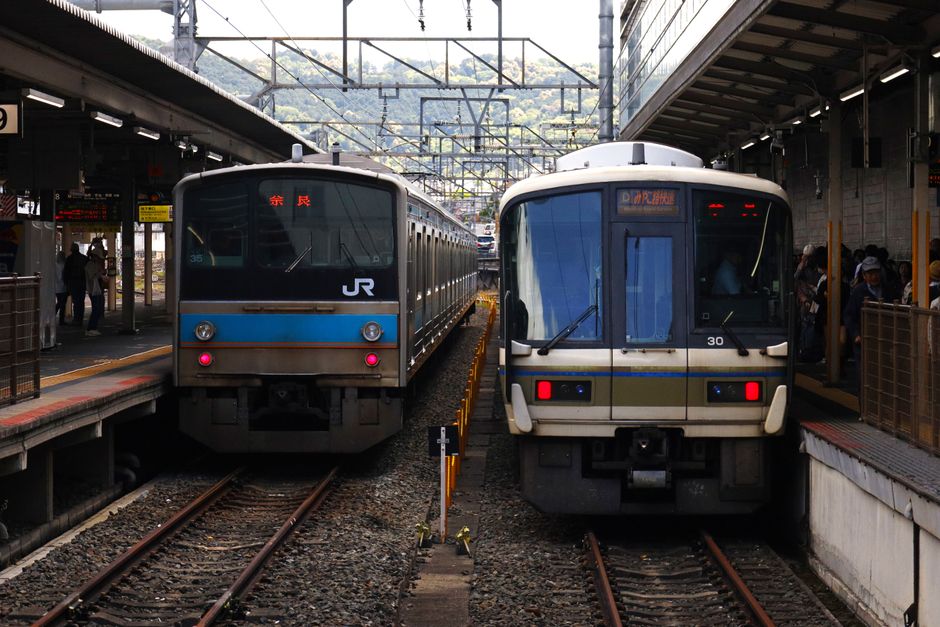
Japan Rail Pass and regional trains: the coverage basics
JR vs non-JR rail operators
A Japan Rail Pass covers trains run by the JR group (JR East, JR Central, JR West, JR Shikoku, JR Kyushu). The biggest reason people get stuck is assuming “rails in Japan” means “JR rails”. In practice, many urban lines are operated by companies that are not part of JR.
What “regional” usually means with the pass
When you’re travelling between cities or around a region (Kansai, Kyushu, Tohoku, Hokuriku), you’re typically on one of these covered categories:
- Local trains that stop often
- Rapid services that skip some stops (often still part of JR regional networks)
- Limited Express trains that go faster over longer stretches (not Shinkansen)
Shinkansen exceptions that affect regional journeys
Even if your route mostly uses regional trains, it’s easy to get tripped up if your itinerary includes a Shinkansen leg. The pass does not cover the Shinkansen services Nozomi and Mizuho. If your plan has you “switching” from a Shinkansen to a regional/local train, always check that the Shinkansen you’re taking is on the covered list.
Where the pass works for regional travel
Local and commuter services
On JR-operated Local (and most commuter-style services), you can board directly with your active pass. These trains are the simplest use case because they don’t usually require you to lock in a specific seat.
Limited Express and reservation rules
Limited Express trains on JR lines are often where travellers spend the most time “making it work” smoothly. You generally can use the pass, but you should plan around reservations and seat availability.
Green Car and seat types
If you pay for the Green Car option of the pass (where available), you can use the Green Car sections on covered JR trains. Without that option, you’ll need to stay in the standard (Ordinary) seating.
- Local trains (JR lines): generally straightforward to use
- Rapid / commuter services (JR): usually covered, often busy in peak hours
- Limited Express trains on JR lines (non-Shinkansen): covered, typically the place where reservations matter
- Green Car (if included): available on covered JR services where Green Car is offered
Where it doesn’t work (and what to do instead)
Subways and city metros
Metro systems in major cities are usually operated by non-JR companies. Your Japan Rail Pass will not cover these rides, even if the route looks like it “should” be part of the broader JR network.
Private railways and airport links
Outside JR stations, you’ll also find private railways that run in parallel with JR lines in many areas. Airport rail connections can be especially misleading because they are sometimes priced and operated separately.
Buses and Shinkansen exceptions
Buses and taxis are generally out of scope for the rail pass. On the rail side, remember the key Shinkansen exception (Nozomi/Mizuho), because it can force a timetable change even if the rest of your route is regional.
- Tokyo Metro / Toei and other subway operators: not covered by the pass
- Private railways (non-JR companies): not covered
- Most non-JR airport rail links: not covered
- Shinkansen Nozomi and Mizuho: not covered, even though other Shinkansen are
- Buses and taxis: not covered
Seat reservations: how to avoid “no seat available” moments
Reserved vs unreserved cars
For regional JR trains, you’ll usually see two practical patterns:
- Unreserved seating: common on Local trains and some Rapid services. You can sit where there’s space, but peak periods can be crowded.
- Reserved seating (limited express / some Shinkansen situations): used when the train has a reserved-seat layout or when you want a specific guarantee.
If your travel day is a weekday morning/evening commuter window, reservations are worth prioritising even on trains where unreserved is technically possible.
Ticketing steps (what to do at the station)
Before you board any covered train, make sure your rail pass is activated (you’ve exchanged your voucher for an issued pass) and is valid for the exact dates you plan to travel.
For seat reservations, the standard flow is:
- Choose the exact service you want (departure time and train name/type).
- Check whether the service requires or recommends reservations for the seat type you’re aiming for.
- At a JR station, use a reservation counter or a reservation machine and select reserved seating for that specific train.
- Use your rail pass details as instructed by the machine/counter system and take the reservation document you’re given.
- On board, show the reservation proof if required and board the correct car.
This is also where many “it should work” mistakes happen: the pass gives you access, but for reserved seats you typically still need the reservation output for the specific train.
When you can skip reservations
If your route is mostly made of Local trains (frequent departures, many cars, and short distances between stops), you can often rely on unreserved seating. You’ll also have better odds late morning or outside commuter peaks.
Reservations become much more valuable when:
- You’re on a Limited Express route with fewer cars
- You’re travelling during holidays or around major weekends
- Your connection is tight and you need a predictable boarding plan
Common mistakes by train type
Local and Rapid services
Local trains can look “easy”, but the station reality is where mistakes happen. You may find yourself at the right stop but walking into a non-JR gate, especially in large hubs.
Limited Express services
Limited Express trains are where travellers discover that “JR Pass access” is not the same thing as “free-for-all seating.” Seat layouts differ by train, and some services are simply busier than others.
Shinkansen and the Nozomi/Mizuho trap
Shinkansen coverage is where the most expensive mistakes happen, because the pass won’t let you board the wrong train. If your timetable includes a Nozomi or Mizuho, you’ll need to switch to another Shinkansen that is covered.
- Boarding Nozomi/Mizuho by mistake: even though they look like normal Shinkansen options, they’re not covered
- Assuming a reservation is automatic: the pass is the access ticket, but reserved seats usually need a reservation output for that train
- Confusing JR stations with nearby non-JR terminals: you can still be “in the right station area” but end up at the wrong operator gate
- Treating peak commuter travel like weekends: Rapid trains can be packed even on routes where Local feels manageable
- Picking the right train type, wrong date/time: seat reservations are tied to specific trips, not just “that route”
- Ignoring that some onward legs change operator: a regional JR train can connect to a non-JR metro/private segment that the pass won’t cover
Next steps for your itinerary
List your exact city-to-city legs and note the train type for each leg (Local/Rapid/Limited Express/Shinkansen). Then check each leg against JR coverage (and Shinkansen exceptions) and only book reservations for the trains where you actually need guaranteed seating. If you’re unsure about a specific operator at a station, plan a quick detour to confirm the departure platform and company before you commit to the route.