

Kanazawa handles visitors better than many Japanese cities, but the classic trio—temples, gardens and Omicho Market—can still feel packed on weekends, holidays, and cruise-day spillovers. The goal of this overtourism-free plan is simple: you’ll visit each headline spot when foot traffic is naturally lower, then you’ll pivot to quieter streets for the rest of your time.
A good rule here is to anchor your mornings around one major sight, then keep your afternoons more neighborhood-based. That approach avoids the “arrival wave” and lets you actually enjoy the old lanes, tea districts and seasonal gardens.
Map Your Low-Crowd Route in Kanazawa
A crowd-free day in Kanazawa is mostly about sequencing. You’re not avoiding people altogether—you’re avoiding peak-time clustering.
Time the big sights, not the labels
The “famous” areas tend to surge together. Instead of moving between three top attractions at the same time of day, spread them out.
- Start your day with the most popular garden option (often busiest later in the morning)
- Plan Omicho Market for earlier in the day, not lunch hour
- Schedule your museum stop for late afternoon when the light changes and day-trippers thin out
- If timed entry rules apply to any garden or exhibition, secure the slot before you arrive
Build your day around walkable districts
Kanazawa works best when you stop thinking in straight lines and start thinking in districts. Teramachi, the samurai quarter, the garden area, and Omicho are all close enough that you can walk parts of the route, which also helps you dodge the densest tram stops.
Aim for one short transit ride between districts, then long walking stretches inside each area. When you walk, you’ll naturally pick up quieter side streets that don’t show up in crowd photos.
Skip the “queue choreography”
Crowd management in Kanazawa usually breaks down when people arrive for the same photo points within minutes of each other.
To stay ahead of it:
- Arrive before the first guided groups usually settle in
- Give yourself 10–15 minutes to just wander before you target any specific gate, bridge or viewpoint
- If a spot looks busy, treat it as a pass-through and move on—often the lanes around it are much calmer
Teramachi Temple District: Go Where the Lanes Are Narrow
Teramachi is the temple district feeling—stone paths, incense, and side streets that stay atmospheric even when the main lanes get busy. The trick is choosing smaller stops along the way and not lingering at the first big landmark for too long.
Use Teramachi as your “slow start”
Instead of trying to tick off every temple facade, you’ll get more out of Teramachi by browsing the lane rhythm: small entrances, low shrines, and quiet corners.
- Teramachi Temple District lanes (the overall atmosphere is the point)
- Myoryuji (Ninja Temple) as your single “must-see” stop in this area
- D.T. Suzuki Museum as a calmer, indoor-or-edge complement if you want context
- Nagamachi Samurai District as the next walkable change of scenery
Keep your time in the district flexible
Teramachi benefits from a slower tempo, but crowds still form. You’ll find that you can reduce the crush by not over-sticking to the busiest entrances.
A practical approach:
- Spend your first 30–45 minutes moving and scanning, not waiting
- Plan one longer stop (like a museum or a quieter temple garden corner), then move again
- Leave the “most obvious photo moment” until later in the lane cycle, not at the start
Pair temples with neighborhood streets
The easiest overtourism-free win is to treat temples and streets as a continuous loop rather than separate attractions.
If you notice groups converging at the same narrowing passage, step aside for a tea break or a small snack and continue after the wave passes. In Japanese cities, a 20-minute shift often makes a huge difference.
Gardens Without the Midday Crush
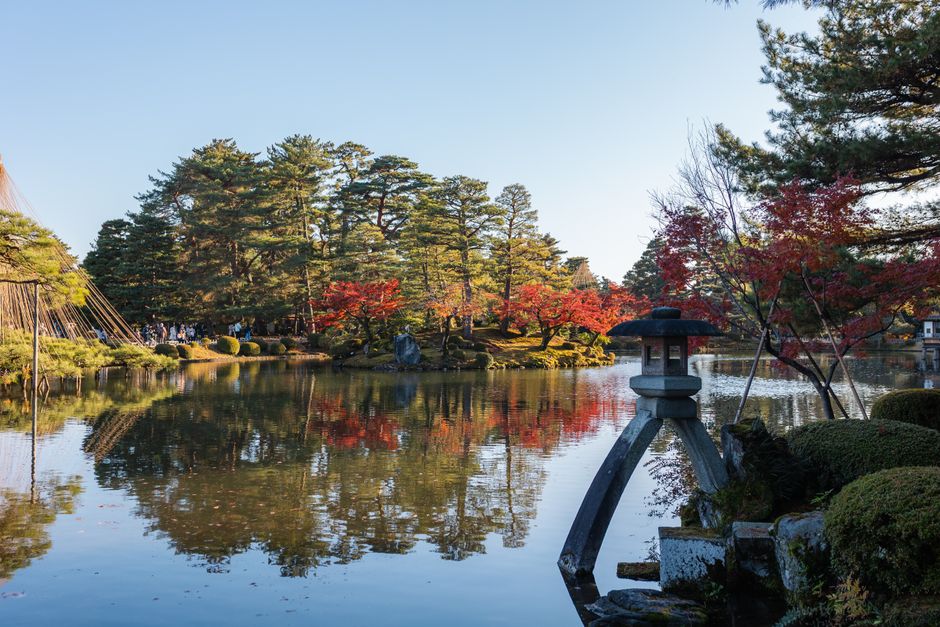
Kenrokuen is the headline garden in Kanazawa, but it’s also the place where overtourism shows up first. You’ll still enjoy it if you design your garden time around arrival and exit flow.
Hit Kenrokuen on the right schedule
Kenrokuen’s beauty is strongest early, when the light is softer and the walking routes feel less congested.
- Kenrokuen Garden (plan your route before you enter)
- Gyokusen-en Garden for a quieter, more curated feel
- Kanazawa Castle Park (green space and open sightlines when you need a breather)
- A riverside stroll around the central tea-district approach to cool down after walking
Walk the garden like a route, not a checklist
Inside Kenrokuen (and in gardens connected to it), the most crowded sections tend to be the obvious bridges and the busiest viewing points.
To spread out:
- Start with the less central route segments first, then return to the classic views later
- Keep your pace steady—stopping in the middle of a footflow creates micro-queues
- If you see a cluster forming, step away and circle back after 10–15 minutes
Add one “buffer” garden stop
A single extra garden is what prevents your day from feeling like a frantic sprint from one crowd to another.
Gyokusen-en is the kind of addition that helps you transition from “major sightseeing” mode into calmer strolling. Even when Kanazawa is busy, a well-timed second garden stop often feels noticeably less crowded.
Omicho Market and Food Spots: Eat Before the Rush
Omicho Market is the place to go for fresh seafood, casual bites, and quick browsing. It’s also the place where lunch-hour density can get intense.
Keep Omicho for breakfast or early bite timing
You’ll get better vibes—and more choice—when you arrive before the strongest lunchtime tide.
- Omicho Market as your main market stop
- Seafood breakfast and simple counter meals inside/around the market lanes
- Local sweets and snack counters in the nearby tea-district streets after you finish browsing
Know what to browse vs. what to commit to
Markets work best when you separate “looking” from “ordering.” If you try to do both at full speed, you’ll spend time behind people.
A good rhythm:
- Browse first for 10–15 minutes to spot stall types you actually want (grilled, raw, hot, take-away)
- Choose one meal or two small snacks, not a full shopping list
- Once you’re seated or walking away with food, let the wave move through
Don’t overpay for convenience packaging
In popular market areas, you can run into the tourist-friendly version of “local.” A quick way to avoid that is to focus on what’s clearly fresh and ask for plain, ready-to-eat options rather than elaborate gift bundles.
If you see the same packaged items stacked in large quantities at multiple stalls, treat it as a sign to switch to counter-prepared choices.
Tea District Calm and Culture Detours
When the big sights have done their job, Kanazawa’s tea districts and museums give you variety without constantly feeling like you’re standing in a queue.
Use Chaya districts as your crowd-pressure valve
Tea districts don’t always stay empty, but the side streets and slower walking loops help keep things breathable.
- Higashi Chaya District for traditional streetscapes and craft storefront browsing
- Kazuemachi and nearby canal-side lanes for a quieter, more atmospheric wander
- 21st Century Museum (go later for fewer photo-clusters around the main highlights)
Treat museums as “timed energy”
Museums can be great overtourism relief because visitors disperse differently inside than they do outside. Late afternoon is often a better fit for those who want calmer corridors and softer light for getting there.
If an exhibition requires a ticket in advance, plan that purchase before you finalize your day. If not, aim for the later entry window rather than the first opening rush.
Re-enter the city at a human pace
One underrated crowd strategy is returning to the parts of Kanazawa where you’ve already walked. You’ll remember the lane rhythm, and you can spot quieter shortcuts.
After 4 pm, the city often shifts from “attraction hopping” to “evening strolling.” That’s your cue to slow down and enjoy the tea-house streets, river views, and late snack stops.
Next Steps
Build your day around one early anchor (temple lanes or a garden), then move district-by-district rather than hopping attraction-to-attraction. When you draft your route, set two “crowd buffers” in your notes—one before Kenrokuen and one before Omicho—so you have space to detour if a lane feels busy.
If you share your travel dates and whether you’re going on a weekday or weekend, you can tighten the plan further into a realistic hour-by-hour route.