

Itinerary Order: Cascais First or Sintra First
If you’re doing both towns in one day, order matters. Cascais is easier for quick stops along the waterfront; Sintra needs more time for paid entries and slower getting-around.
Choose the order based on what you’re most pressed for:
Cascais first (best if you want a coastal break early)
- Use the morning for the coast: long promenades, sea views, and a couple of short stops.
- Keep Sintra for the afternoon when you can work in palaces and gardens at a steady pace.
Sintra first (best if you want palace time before crowds)
- Start with one or two major palace visits in the morning.
- Switch to Cascais later for beaches and a calmer waterfront walk.
Either way, expect a full day. Most travellers plan for roughly 8–11 hours including transfers and entrance time.
Lisbon to Cascais: Train Legs and Coastal Time
Cascais is the easier side of this trip because the train connection from Lisbon is direct and frequent.
Leg 1: Lisbon → Cascais by train
- Get to the departure station in central Lisbon (commonly Cais do Sodré for this route).
- Buy a one-way ticket for Cascais (or choose a day-focused option if it fits your travel style).
- Keep your ticket ready for checks. On many routes, inspectors can board at any time.
- Board the coastal train and ride to Cascais.
What to watch for at checkpoints:
- Metro/gates (if you’re using Metro to reach the station): validate at the turnstiles before you enter the platform area.
- Train: there’s usually no “Metro-style” gate validation. Instead, keep your ticket confirmation/QR/barcode accessible.
Where to start walking on arrival
Once you reach Cascais station, you’ll be close enough to reach the seafront without long detours.
Realistic walking blocks (typical pace):
- Station → waterfront promenade: ~10–20 minutes, depending on where you want to stop first.
- Promenade → viewpoint/sea-cave area: ~10–15 minutes.
- Waterfront → back towards town centre: ~10–20 minutes.
What to do in Cascais (fit 2 stops, not 6)
You’ll enjoy Cascais more when you keep it simple—pick a sea-view stop plus a beach or two.
- Boca do Inferno (sea-cave viewpoints)
- Praia da Rainha (central beach)
- Praia do Guincho (wild Atlantic coastline; plan extra time)
Tip on Guincho: it’s scenic but it’s also a time sink. If you’re short on time, treat Guincho as optional rather than mandatory.
Coastal-to-town swap while you’re in Cascais
If you’re deciding on the day:
- If the morning feels calm, go beach first (Praia da Rainha) and save viewpoints for later.
- If crowds are building or you’re losing time, do Boca do Inferno + a shorter promenade walk and head back towards the transfer for Sintra.
Cascais to Sintra: How to Switch from Sea Views to Palaces
There isn’t one single “perfect” public-transport hop between Cascais and Sintra. The usual approach is either:
- Train via Lisbon, or
- Bus connection (where available) that takes you across the coastal/inner routes.
Option A: Cascais → Lisbon → Sintra (often the most straightforward)
- Return by train from Cascais to a central Lisbon station.
- Transfer to the train that serves Sintra.
- Board the Sintra-bound service and get off at Sintra station.
Ticket checkpoints to remember:
- If you switch lines using Metro to reach the next rail station, validate at the gates.
- For the rail legs, keep tickets accessible for inspectors.
Walking blocks to plan around:
- Station-to-station transfers in Lisbon: allow ~10–25 minutes depending on how straight your route is.
Option B: Cascais → Sintra by bus (saves one rail leg)
In some seasons and schedules, buses can be an efficient connector. This route is best when:
- you don’t want to backtrack to Lisbon, and
- you’re comfortable with less frequent departures than the rail line.
How to make the bus work smoothly:
- Check the timetable the day before.
- Aim to arrive in Sintra early enough to reach your first palace via the correct shuttle/bus.
Quick “swap” moment: coastal time vs palace time
As you cross from Cascais inland, decide your priority:
- If you started Cascais first: shift into “palace mode” before you arrive in Sintra (choose one paid palace as your main event).
- If you started Sintra first: use Cascais as a late-day reward—keep walking light and focus on views.
Sintra Day Plan: Palaces, Gardens, and Shuttle Stops
Sintra works best when you stop trying to walk everywhere. The town centre is walkable, but the palaces and viewpoints sit across hills.
Leg 2: Sintra station → Historic centre (walk, then branch out)
From Sintra station, you can usually reach the historic centre on foot.
Realistic walking blocks:
- Station → historic lanes/centre: ~15–25 minutes.
- Centre → main viewpoint/central palace area: ~10–20 minutes depending on where you start.
If you plan to visit a central landmark first, arriving before lunch helps you avoid a later rush.
Choose your “palace cluster” (pick 1–2, not 4)
Sintra’s paid attractions are close enough to combine, but only if you accept that each one needs time.
You can build your day around these major sights:
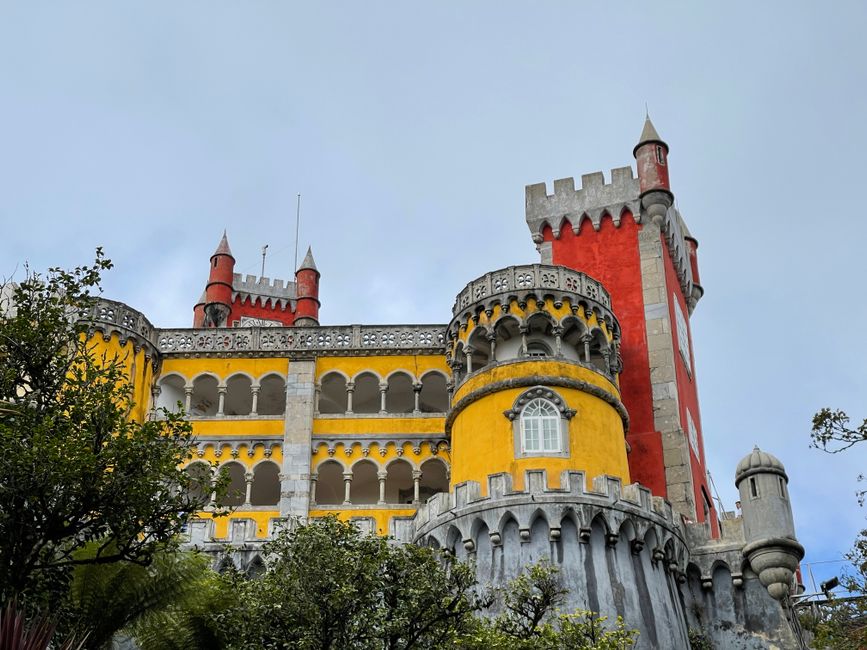
- Palácio da Pena
- Palácio Nacional de Sintra
- Quinta da Regaleira
- Palácio de Monserrate (often more relaxed than the big two)
If you also want a hillside viewpoint, add:
- Castelo dos Mouros (Moorish Castle)
And if you want something quieter and different, consider:
- Convento dos Capuchos
How to get between the centre and the hill-top sights
Most travellers use local shuttles/buses between:
- the historic centre / station area, and
- hill-top palaces and viewpoints.
How to keep it from eating your day:
- Plan your palace order so you’re not backtracking.
- Build in waiting time. Even with good planning, shuttles can feel slow when they’re busy.
Walking inside Sintra: where it’s fine vs where it’s not
- Fine for walking: historic lanes in the centre.
- Not ideal for walking: long uphill stretches to the major palace areas, especially if you’re carrying water and you’re trying to keep a schedule.
If you’re visiting in warmer months, keep transfers tight and your walking blocks short.
Timing, Tickets, and Crowd Control for One Long Day
This trip can be great, but it’s also one of Lisbon’s most popular day combinations. When it’s crowded, the bottleneck is usually Sintra—not Cascais.
A practical timing template (works for both orders)
Use this as a planning backbone, then adjust based on your pace:
- 1st town (Cascais or Sintra): ~3.5–4.5 hours
- Transfer window: ~1–2 hours (including waiting and station changes)
- 2nd town: ~3.5–4.5 hours
- Buffer time: ~30–60 minutes for delays and queueing
Booking strategy: what to secure before you go
For Sintra, aim to secure time-sensitive entries ahead of time—especially if you’re targeting the best-known palaces.
For the train legs and any local shuttle/bus usage:
- follow the day’s timetable,
- arrive early enough at stations to avoid last-minute stress,
- keep some flexibility in your exact order if you find long queues.
Realistic cost shape (without overpromising exact totals)
Your spend usually breaks down into:
- rail transport for two Lisbon-area legs,
- one or two paid palace/garden entries (more if you add viewpoints),
- optional bus/shuttle rides within Sintra and any extra connector to Guincho.
If you want a budget-friendly day, the biggest lever is the number of paid attractions you commit to.
When to plan your day (seasonally)
- High season and weekends: start early to protect palace time.
- Shoulder seasons: you’ll still deal with queues, but your walking pace usually feels more comfortable.
- Rain: avoid Guincho-style cliff walks and keep your second town selection flexible.
Next Steps: Locks in Your Route and Reservations
Pick the order that matches your priority—coastal calm (Cascais first) or early palace time (Sintra first). Then write down your two “must-do” sights in Sintra (choose 1–2 from the list) and plan your Cascais stops around the time left after the transfer.