

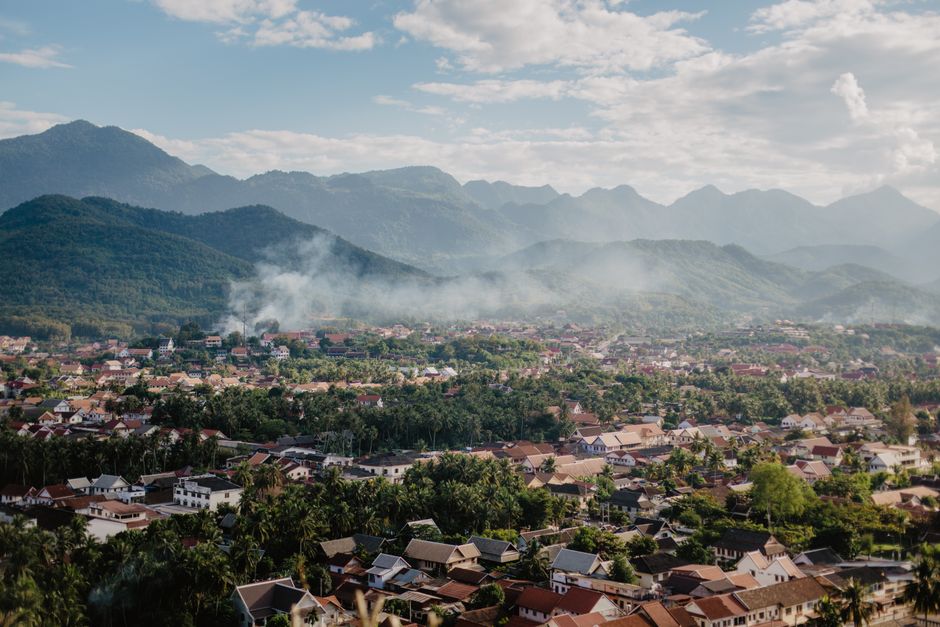
You’ll get the best of Luang Prabang by treating it like two connected mini-areas: temples and viewpoints first (before sunset queues build), then the night market along the riverside streets. Below is a self-guided loop you can start in mid-afternoon and finish comfortably at night—without rushing.
Choose Your Loop: Walking-Only or River Hop
Luang Prabang is compact enough for a walk-based plan, but the river makes a short “hop” feel smoother—especially if you want Wat Xieng Thong without backtracking.
Option A: All-Walking Clockwise (simplest)
Start from the core town streets, work through the main temple cluster, then end at the night market area.
Option B: Boat/Wake-Up-and-Glide (more scenic)
Use a short hired boat for a river crossing (or to reach the temple side) and then keep the rest walk-based. This works well if the afternoon heat is tiring and you want a calmer pace.
A quick logistics rule before you go
- Keep your “most popular” stop for earlier than you think. In practice, Phousi can get crowded close to sunset.
- Bring small cash. Even when payments are possible, many stalls run faster with cash.
Timed Temple Run: Afternoon Before the Night Market
Plan your temples like a sequence of short moves—each stop should be within comfortable walking distance of the next, or separated by a quick river crossing.
1) Wat Xieng Thong (start with the iconic temple)
Wat Xieng Thong is usually the most “must-see” temple on a Luang Prabang list, and it’s a good opener because you’re still early enough to explore calmly.
When to arrive: Aim for mid-afternoon so you can take your time with details before the light gets harsh.
Queue/entry timing tip: This temple tends to be busy around peak sightseeing windows. If you arrive as the afternoon flow begins, you’re more likely to have slower entry and less time squeezed in doorways.
How long to budget: Roughly 45–75 minutes including a slow circuit and a brief pause for photos.
2) Wat Mai (shift to calmer, less “stampede” energy)
Wat Mai is often easier to enjoy without the same crowd pressure you may see at the biggest headline temples.
When to arrive: Late afternoon, after Wat Xieng Thong. That keeps your day trip moving without forcing you into a full rush.
What to watch for: Look for architectural details and courtyard rhythm—this is where a slower pace pays off.
How long to budget: About 30–60 minutes.
Golden Hour Moves: Phousi Hill and the Palace Complex
Your evening will feel smoother if you treat golden hour as a “timed entry” problem, not a “wander until sunset” plan.
3) Phousi Hill (plan the climb like a queue)
Phousi is the viewpoint that often defines a first-time Luang Prabang trip. It’s also the stop where crowds can turn into a bottleneck.
When to arrive: Roughly 45–60 minutes before sunset. If you arrive too close to the peak moment, you may spend more time waiting for space on the stairs and platforms than enjoying the view.
Queue/entry timing tip: The climb direction is not always equally efficient for everyone. The “best” plan is to start the climb earlier rather than trying to time it to the exact minute.
How long to budget: 45–90 minutes total depending on how busy it is and how long you linger.
4) Royal Palace Museum (Haw Pha Bang area)
After your climb (or as a later indoor break), the palace complex gives you a more structured, cooler-feeling pause—handy when evening grows busier outdoors.
When to arrive: Late afternoon or right after your viewpoint slot.
Queue/entry timing tip: Museums and palace areas typically have short lines rather than long queue systems. Still, going earlier in the evening reduces the chance of a crowd bottleneck.
How long to budget: About 45–75 minutes.
Night Market Logistics: Where to Go, What to Skip, How to Stay Comfortable
Once you’re done with temples and viewpoints, you’ll want an easy final transition to the night market. In Luang Prabang, the evening flow is part shopping, part street food, part social scene.
5) Luang Prabang Night Market (finish here)
Most visitors head to the night market around the riverside street grid. It’s busiest as evening starts and can swell again later when people who skipped earlier come back.
When to arrive: About 30–45 minutes after sunset so you can still browse before it reaches peak density.
Queue/entry reality check: This is not a “ticketed” experience, but crowds can act like one—especially at food stalls. You’ll move faster if you browse first, then come back for food.
What to prioritize:
- Small craft items, textiles, and locally made souvenirs (watch for overly “perfect” mass-printed look-alikes)
- Street snacks you can finish in a couple of bites
What to skip:
- High-pressure sellers who try to steer you into a bundle deal within seconds of you arriving
- Overpriced “tour groups-only” items with very little variation—if you can’t compare, you can’t bargain
Food and drinks timing tip: Aim for a staggered approach: one snack early, another later. That reduces lines and helps you avoid eating only at the busiest stalls.
Evening comfort checklist (small habits that matter)
- Dress for temples and for walking: cover shoulders/knees for temple areas; bring something light for later cooling.
- Bring cash in small notes and a few coins.
- Keep valuables secure. Busy evening streets are when “grab-and-go” distractions happen.
- If you’re sensitive to noise, pick a slower food route rather than joining the most concentrated cluster.
Getting Around the Evening Loop: Walking vs. Boat, Plus Practical Timing
A good self-guided day trip in Luang Prabang is less about squeezing in every stop and more about keeping transitions effortless.
Walking distances and pacing
Luang Prabang’s center is walkable, but cobbled surfaces, river light, and crowd flow can slow you down.
Use this pacing rule:
- Plan for “slower than you think” walking in late evening.
- If you’re stopping for photos, keep each photo stop under 10 minutes during peak crowd windows.
River hop: when it’s worth it
A short boat crossing can make your day trip feel less like a loop on a map and more like a series of natural transitions.
When a boat makes sense:
- You’re going to Wat Xieng Thong and want to avoid backtracking
- Heat or tired legs are making the walk feel long
How to handle it safely:
- Agree on the plan before you board and keep your belongings close.
- Treat it as a short transfer, not a long sightseeing detour—your night market time will be better spent browsing and eating.
Queue and entry planning you can reuse
Even without exact opening times, you can manage crowds with timing logic.
Use these anchors:
- Do your most popular viewpoint earlier than sunset.
- Schedule the night market after it has “settled” (browse first, eat after).
- Build buffer time (15–25 minutes) between major transitions so delays don’t spiral.
What to Do Next
Start by choosing which loop you’ll use: all-walking for simplicity, or a short river hop if you want the scenic factor. Then pick your “earliest” anchor (Phousi before the biggest sunset surge, or Wat Xieng Thong mid-afternoon) and build the rest of the sequence backward.
Before you go, note down the order of your stops and carry small cash—those two steps make the evening feel much smoother even when streets are busy.