

Ticketing and Validation for the Sassi: What to Do First
If you’re planning a day in Matera’s Sassi, the biggest avoidable stress is arriving with the right confirmation but missing the “validate before you enter” step. Different sites and walking zones can use different checks, so treat validation as a separate action—not just a booking.
Check whether your ticket needs validation on-site
When your booking mentions validation, timed entry, a QR scan, or a “check-in” location, assume that the ticket alone isn’t automatically accepted at every doorway. Look for:
- A requirement to validate at a specific point before entering a cave house, church, or museum area
- A time window tied to that validation step
- Separate checks for “views/areas” versus “interiors”
If anything in your confirmation says “validate,” don’t wait until you’re already standing at the first entrance. Go to the stated validation point, complete it, and only then start walking.
Keep the confirmation ready offline
Sassi entrances often involve quick inspections on busy days. Have your confirmation accessible even if the signal is weak in the older lanes.
Practical approach:
- Save the confirmation on your phone (and consider screenshots)
- Expect at least one stop where you’ll be asked to show the details again
- If you’re travelling in a group, keep everyone together so nobody misses the check-in cue
Don’t confuse guided access with self-guided routes
You may be able to walk the Sassi without a formal tour, but interiors and certain cave experiences frequently require a ticketed entry. If you’re mixing free walking with paid stops, plan the order so you arrive at ticketed places early—then use the rest of the time for wandering.
Getting Into the Sassi by Foot: Realistic Transfers From the Upper Town
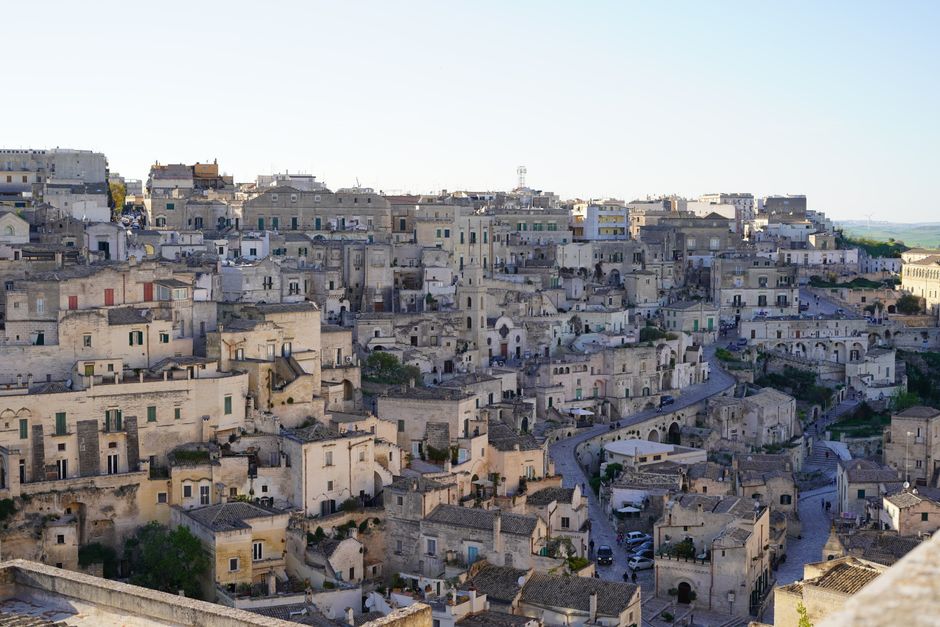
Matera’s Sassi is beautiful, but it’s not designed for long, flat strolls. Even “simple” transfers can feel tiring if you underestimate the climb on the way back up.
Know what “walking transfer” really means here
You’re moving between the upper town roads and the Sassi levels through a mix of:
- Steep stairways and narrow lanes
- Uneven stone steps and cobbles (especially in rain)
- Short but sharp uphill segments on the return
A realistic expectation:
- Downhill into the Sassi: often around 15–25 minutes depending on your exact start point and how often you stop for viewpoints
- Back uphill: commonly 25–45 minutes, slower if you’re carrying bags, stopping for photos, or using a slower route
If you’re visiting in summer heat or carrying a daypack with water and snacks, budget extra time rather than rushing.
Choose a safer descent if you’re not confident on stairs
In dry weather, many travellers take the most direct stair route into the Sassi. In wet weather, that same path can become a slip risk and a bottleneck.
Instead, look for a route that:
- Uses the wider streets where possible
- Minimises repeated stair climbing
- Lets you keep a steady walking rhythm without constantly stopping
If you want the simplest “transfer option” when the ground is questionable, you can also use the lift that connects the upper level with the Sassi area (if it’s operating). It’s often the least tiring choice when you’re dealing with rain, heavy crowds, or limited mobility.
Time your descent to avoid peak congestion
The Sassi gets busiest mid-morning through late afternoon, with crowd peaks around popular entrance windows. If you want easier walking transfers, aim to reach the Sassi level earlier in your day.
A simple rule:
- Plan your first paid interior for earlier, then leave free wandering for later
- Avoid scheduling multiple timed entries back-to-back unless you’re sure you can make the walk between them comfortably
A Walkable Loop in Dry Weather: Where to Start and How to Stitch It Together
When the weather is dry, you can string together a satisfying loop that covers both the viewpoints and the signature Sassi lanes without doubling back too often.
Here are the core stops to anchor your route (you don’t need to hit every interior, but these give you a sensible structure):
- Sasso Barisano
- Sasso Caveoso
- Cattedrale di Matera
- Santa Maria de Idris
- Palombaro Lungo
- Belvedere Murgia Timone
Start in Sasso Barisano for an easier rhythm
Begin on the Barisano side so you can follow the lanes at a more consistent pace and orient yourself early. This is also where it’s easier to figure out which streets lead back toward your next viewpoint.
Practical way to move:
- Walk the main lanes first, then peel off into side streets when you see good photo angles
- Save the “deepest” cave lanes for later in the loop so you’re not turning around at the hardest point
Cut through toward Sasso Caveoso and keep interiors clustered
Sasso Caveoso feels more dramatic, and it’s often where travellers want to spend the most time. If you have tickets for cave houses or museum-style interiors, cluster them here so you’re not paying for timed access twice.
To reduce backtracking:
- Do interiors first, then finish with lanes and viewpoints
- Keep your “return path” in mind while you’re exploring, not only when you’re ready to leave
Finish with Murgia viewpoints when light is kind
A viewpoint finish makes the whole day feel complete. Belvedere viewpoints also give you a natural place to pause before the return—useful if you’ve walked more than expected.
Tip: if you’re sensitive to heat or crowds, aim to reach the viewpoint before the late-afternoon surge.
Weather-Safe Alternate Route: When Rain or Wind Changes the Walk
Rain can turn Sassi’s steps into slick surfaces, and strong winds can make exposed stretches uncomfortable. The weather-safe plan is about trading a faster path for a steadier one.
Swap stair-heavy segments for steadier grades
In wet conditions, avoid routes that require repeated stair descent and ascent in a short span. Instead, route yourself through:
- Wider lanes that feel less slippery
- Paths that reduce the number of “micro-stairs” you have to step down repeatedly
- Streets where you can keep your footing without constantly gripping railings
If you see a section where water collects on steps, treat it like a warning sign and choose the next parallel street.
Use the lift and “re-entry” points to reduce risk
A practical rainy-day move is to use the lift to reposition without losing time to slow stair walking. Even if you still want to explore on foot, reducing one major descent or ascent can save energy and keep you safer.
How to apply it:
- Ride the lift at the moment you’d otherwise hit your hardest stair section
- Re-enter the Sassi lanes from there and continue your loop
- Keep timed entries early, because bad weather can slow every transfer
Plan shelter stops so you’re not rushing between interiors
If rain is likely, treat interiors as anchors. Your weather-safe loop should include:
- At least one longer indoor stop before you tackle the next exposed walking section
- A “pause point” where you can regroup if crowds or weather slow you down
If you’re travelling with someone who tires easily, don’t schedule multiple timed interiors with short walking buffers.
Practical Tips to Keep Ticketing and Walking Stress-Free
Good logistics in Matera are mostly about sequencing: validation first, walking transfers second, and then interiors.
Build your day around checks, not just sightseeing
To keep ticketing smooth:
- Validate at the required point before you start moving between interiors
- Keep your confirmation accessible offline
- If you’re uncertain, ask where validation should happen before you commit to a stair descent
Footwear matters more than you think
Even on “mostly dry” days, the Sassi’s surfaces can be slick in shaded lanes.
For comfortable walking:
- Wear shoes with solid grip designed for uneven stone
- Bring a small umbrella or a light waterproof layer; wind can make ponchos awkward
- Carry water and a snack so you’re not forced into time pressure once you’re on the lower levels
Don’t overpack your route when the ground is wet
If it’s raining, fewer stops with better pacing beats trying to complete everything. A realistic approach is:
- Choose one Sassi side to explore deeply
- Keep the other side for a shorter walkthrough
- Save the second viewpoint for a moment when the rain eases
What to Do Next
Before you head to Matera, review your confirmation for any “validate/check-in” wording and decide where that step fits in your walking plan. Then pick either the dry-weather loop or the rainy-day alternate route based on your forecast, and aim to start early so your transfers feel manageable.