

Getting From Athens to Meteora in One Day
Meteora is far enough from Athens that your biggest decision is transport. The best day plans all protect your monastery visit window and avoid getting stuck in late-afternoon traffic.
Train: often the least stressful option
If you like a straightforward schedule, look at the Athens → Kalambaka train. You’ll still need local transfers to reach the monastery area (either a short taxi ride or a local shuttle depending on the day and your plan).
What this option tends to work for:
- You want fewer driving decisions
- You prefer arriving in the morning without dealing with route-finding
- You’re comfortable checking timetables for exact departure/arrival times
Drive: fastest when traffic is kind
Driving gives you flexibility to adjust for weather and to pick monasteries in the most efficient order for the day. Expect roughly 4.5–6 hours each way depending on the route, stops, and traffic.
Driving works well when:
- You’re comfortable with a long day
- You want to control return time (especially if rain moves in)
- You can start early to beat congestion
Guided-but-self-paced: easy logistics, still your day
A bus-style day tour usually handles the long Athens-to-Meteora leg and drops you near the viewpoints/monastery area. You then move at your own pace within the tour’s time constraints.
This is a good fit if:
- You want less planning for transport
- You’re visiting in peak season and want a smoother start
- You’re okay with a fixed pickup/return window
Build a Realistic Monastery Plan
Meteora’s monasteries sit on cliff-top paths with lots of steps. Even with a great transport plan, you’ll feel the day if you try to “see everything.” A strong day trip usually targets 2–3 monasteries.
Pick a small set you can actually visit
To build your route, choose monasteries that match your interests and the direction you’ll walk.
A simple, practical set for a day trip:
- Great Meteoron: a classic first stop if you want major views early
- Varlaam: a natural partner when you’re building an efficient circuit
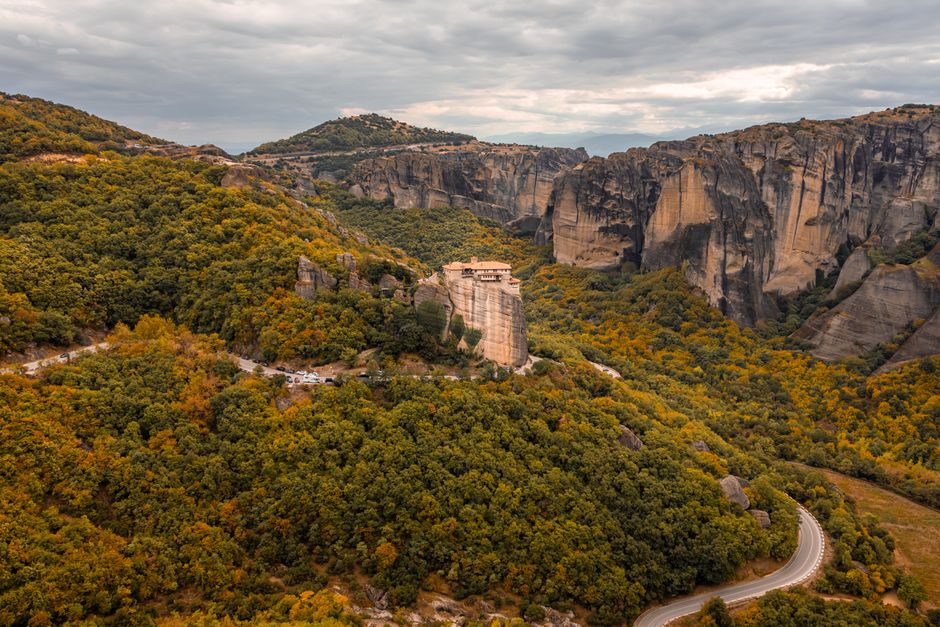
- Rousanou: a good mid-to-late-day option if you’re managing stamina
- Holy Trinity: useful as your final choice when you want a shorter remaining push
Order matters more than you think
Your route should reduce backtracking. As a rule of thumb:
- Start with the monastery that best fits your arrival time
- Pair nearby options back-to-back
- Save the option that involves the most walking for when you’re least likely to feel rushed
If you’re unsure, choose monasteries first, then pick the transport time that gets you there early enough to start comfortably.
Know what’s realistic for a “one day” window
On a tight schedule, you might still get great photos and viewpoints—but you won’t have time for long detours. If you want more time to browse, plan for just two monasteries.
Ticket Timing and Entry Rules
Planning timing isn’t just about arriving early. It’s also about your entry order, because monasteries can get busy and church activities can affect access.
Aim for an early arrival to beat peak lines
For most day trips, the difference between a smooth morning and a stressful afternoon is whether you’re there before crowds fully settle in.
Practical approach:
- Treat “morning arrival” as the goal, not “sometime in the late morning”
- Plan your first monastery entry immediately after you arrive
Build in time for checks and potential waiting
Even when there’s no long queue, entry processes still take time—especially if you need to adjust clothing, go through basic checks, or wait for a group to move through.
How to reduce delays:
- Dress appropriately before you reach the monastery gate area
- Keep a small buffer between monasteries so you’re not sprinting between staircases
- Expect that photo stops near entrances can slow down your first checkpoint
Services can shift the experience
Some moments inside monasteries may be quieter or slower depending on services. You don’t need to overthink it, but you should assume that:
- Your pace may slow at the most significant church moments
- You may need to wait briefly before moving to the next area
That’s another reason to avoid packing too many monasteries into one day.
Walk the Cliffs at the Right Pace
Meteora is a walking day, not a “drive up and park” day. The trails include uneven steps, steep climbs, and frequent viewpoint breaks.
Use a simple walking-time estimate
A reliable planning method is to estimate at a slower pace than you use for city sightseeing.
A practical guideline:
- Plan 3–4 km/h on flatter ground, then subtract extra time for stairs and viewpoints
- Add time for pauses, photos, and re-assembling after stairways
For a one-day itinerary visiting 2–3 monasteries, plan on several hours of active walking plus rests.
Factor viewpoint time into your route
Even if you have a fixed monastery list, you’ll want to stop. Instead of treating viewpoints as “bonus time,” build them into the schedule.
Easy way to do that:
- Choose a “main viewpoint stop” near the middle of your walk
- Keep your first and last stops flexible, so you’re not forced to rush photos at the end
Don’t ignore footwear and stair fatigue
Stairs are constant here, and they add up quickly.
Footwear and comfort checklist:
- Comfortable walking shoes with good grip
- A layer for sudden breezes on the cliff edges
- Small breaks so you don’t arrive at your next monastery out of breath
If you’re traveling with anyone who tires easily, consider reducing to two monasteries and spending more time at fewer viewpoints.
Weather Buffer and Your Return Plan
Weather in the Meteora region can change your day faster than you expect—wind can make viewpoints feel colder, rain can make paths slick, and fog can reduce visibility.
Add buffer time to protect your itinerary
Buffer time is what keeps your day enjoyable even when conditions shift.
A good baseline for day trips:
- Add 30–60 minutes of extra slack overall (more if you’re driving)
- Build breaks between monasteries so delays don’t cascade
The goal is simple: finish your last monastery comfortably, not in a rush to catch transport.
Have a fallback if rain or fog hits
Instead of trying to “push through,” plan what you’ll do if conditions worsen.
A workable fallback structure:
- If weather is light: continue but shorten photo stops and slow down on staircases
- If weather is strong: consider skipping one monastery and focusing on the closest remaining viewpoint/entry you can reach safely
Lock your return with a realistic check-out window
Your return needs margin because transport doesn’t care about your photo timing.
Do this on planning day:
- Pick a return plan that gives you enough time to get back without sprinting down staircases
- If you’re using a guided tour, treat the pickup time as non-negotiable
- If you’re driving, assume traffic at the end of the day can add time even without accidents
Final thoughts: plan early, then stay flexible. Start your day with enough morning time to enter smoothly, choose 2–3 monasteries that fit together, and build in slack so weather doesn’t turn the day into a scramble. If you share your preferred transport (train, drive, or guided) and travel month, you can tighten the itinerary further with a more specific route and pacing plan.