

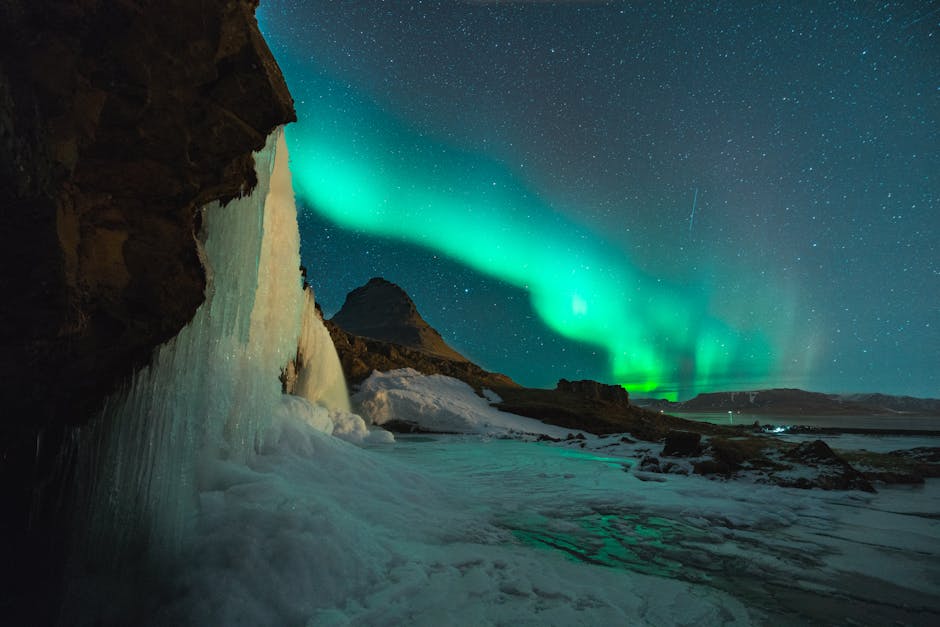
Iceland is one of the best places on Earth to chase the northern lights, but the experience depends heavily on where you sleep and how far you are willing to drive after dark. If you stay too close to Reykjavík or Akureyri, nearby glow can wash out faint aurora.
Below are remote-ish base areas and specific viewpoints where you can typically get darker skies, plus the road realities that matter most in winter.
Why “away from major towns” matters

Light pollution can be the deciding factor
Aurora are not guaranteed to be dramatic every night. When the sky is only moderately active, even small amounts of nearby lighting can make the lights harder to see, especially low on the horizon. That’s why “away from major towns” is about distance, not just darkness.
Weather and cloud cover still control your odds
Iceland’s aurora season runs through winter, but the north lights only show when skies are clear enough. Windy coasts can also push cloud in quickly. A good plan is to base yourself in a dark area, then move to a better spot if clouds clear in another direction.
Moon phase and horizon direction can change what you see
A bright moon can turn the sky lighter and reduce contrast. You don’t need to wait for total darkness, but for fainter aurora, darker moon conditions usually help.
Best base areas with darker skies

These are practical places to base yourself, with a focus on getting out of town lights and having enough road access to adjust your viewing.
Westfjords: long nights and low-light coastlines
- Ísafjörður (base outside the harbour glow), Westfjords
- Patreksfjörður / Strandir edge (aim for countryside drives beyond village lights), Westfjords
Snæfellsnes: remote-feeling coast with main-road access
- Grundarfjörður and the Stapi side of the peninsula, Snæfellsnes
- Búðir area (use pull-offs away from the busiest roadside points), Snæfellsnes
South Coast: dark stretches, but manage crowds
- Vík and Mýrdalur area (base where you can drive away from town lighting)
- Kirkjubæjarklaustur / Skaftafell approach (use quieter roads outside the main stops)
Eastfjords: fewer people, long dark horizons
- Egilsstaðir countryside (choose accommodation with easy access to darker roads)
- Djúpivogur area (set up so you can leave harbour light behind)
Viewpoints for short evening drives
You’ll get the best results when you treat viewpoints as “moveable,” not as a single fixed spot. In winter, stopping early and adjusting once you’ve checked the sky often works better than rushing to the first dark-looking place.
Coastal headlands and black-sand areas
- Stapi cliffs (near calmer pull-offs on the Snæfellsnes coast)
- Reynisfjara stretches west of Vík (park away from the busiest access points where feasible)
National-park surroundings with fewer nearby lights
- Skaftafell area roads and outer viewpoint points (use spaces that aren’t lit by car parks)
Northwestern darkness for dramatic skies
- Hvítserkur and the nearby headland viewpoints (use roadside pull-offs that let you face a darker horizon)
Road realities for aurora nights in winter
Expect darkness, wind, and changing road grip
In Iceland, “short distances” can still feel long after dark. Wind can blow across roads, and black ice can appear suddenly. Plan to drive only what you can handle comfortably, and keep the night simple: one or two viewing drives, not a full route.
Use daylight for navigation; then reduce decision-making
A common mistake is arriving late and trying to figure out where the dark spots are. Instead, identify your likely pull-offs in daylight, then keep your evening routine consistent: drive out, park, dim lights, look up.
Know when to avoid certain roads
Some routes are gravel or can be restricted depending on conditions. If a road is not clearly intended for the kind of vehicle you’re driving, it’s not worth the risk for aurora viewing. Similarly, avoid off-road access near beaches or cliff paths—being close to the weather can be more dangerous than being slightly farther from the perfect horizon.
Reduce light pollution without overpromising
Park away from bright sources, not just “away from people”
You don’t need to be completely alone to reduce glow. What matters is spacing from illuminated buildings, lit roads, and heavily used parking areas. Even in remote areas, a single bright sign or car park can flatten your ability to see faint aurora.
Practical ways to cut glow include arriving after the busiest hours, choosing parking that keeps the brightest lights behind you, and turning off non-essential interior lights.
Keep your eyes adapted to the dark
If you’re constantly checking a phone screen, switching flashlights on and off, or looking at bright interior lights, you’ll lose sensitivity to faint aurora. Use a dim or red-tinted light if available, limit screen time, and give your eyes a few minutes to adjust after you park.
Accept that Iceland can be “good, but not every night”
Even in excellent dark-sky locations, aurora visibility varies with solar activity and cloud cover. If the sky looks hazy or clouds are moving in, don’t force it—move to a different direction only if you can do so safely, or call it early and try again the next night.
Next steps
Pick one base area from the list, then plan for at least one evening drive that goes beyond the brightest town edges. Before you leave for a viewing session, check cloudiness and allow time for safe, confident driving—aurora are worth chasing, but Iceland winter roads are worth respecting.