

Choose a Sequence Before You Leave Termini
Timed-entry works best when you treat the day like a chain: the earlier slot sets your starting point, and everything else becomes a “buffer” activity.
Start with the Earlier Timed Ticket
If you have two time-based entries (often one for the museums and one for the archaeological areas), pick the earliest one as your anchor. Then build the rest around it.
Use this rule of thumb:
- Earliest slot first = start at that site.
- The second site gets the remaining time plus a small cushion for queues and walking.
Use the Walks to Minimise Backtracking
Palatine Hill and the Capitoline Museums are in different parts of Rome’s historic centre—so the trick is not to zig-zag.
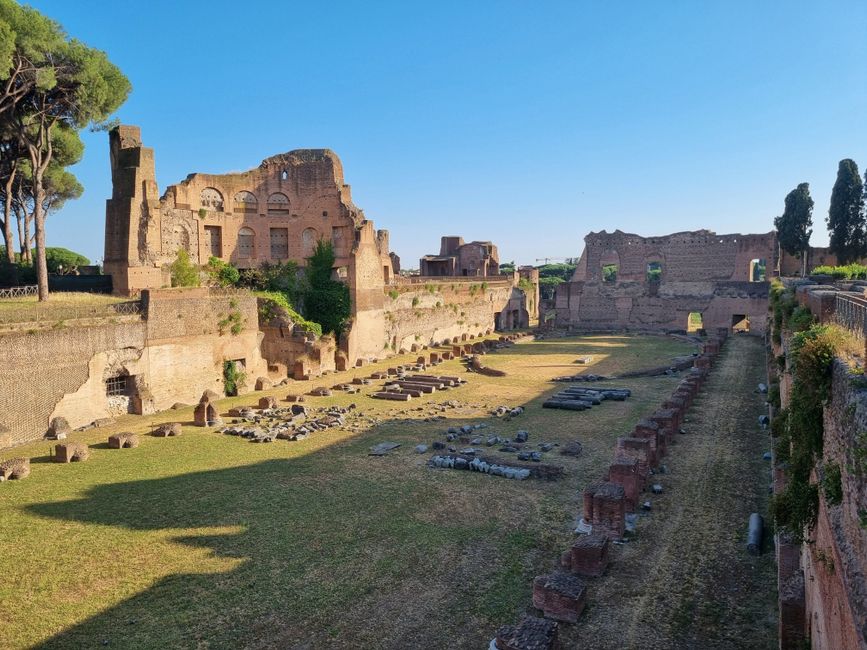
- Palatine Hill sits closer to the Colosseum/Forum side.
- The Capitoline Museums sit on Capitoline Hill, reached via Piazza del Campidoglio.
You’ll waste less time if you move in one direction across the centre: come from Termini to the Palatine/Forum side first, then continue toward the Capitoline Hill views.
Keep Ruins vs Museums as a “Mode”
Don’t try to do everything equally. Decide which one is your main focus for the day, then let the other be the supporting act.
Get from Roma Termini to the Hill Areas with Predictable Timing
Rome is walkable, but “predictable” matters on a same-day plan with timed entries.
Aim for a Simple Transit Pattern
From Roma Termini, you’ll usually get to the Colosseum/Forum zone fastest by metro, then walk a short distance. The Capitoline side is then best handled as a direct walk up to Piazza del Campidoglio, or a short connecting journey if you’re pressed for time.
Expect:
- About 15–25 minutes by metro for the Termini to the Colosseum area leg (plus walking).
- About 10–20 minutes of walking when you’re moving between the Palatine/Forum zone and the Capitoline area, depending on your exact exits and your pace.
Plan Your “Arrival Buffer” the Same Way Every Time
Timed entries can still mean waiting—especially in peak seasons.
A practical approach:
- Arrive at the timed area 15–25 minutes early.
- If the entry line is moving steadily, you can wait on-site.
- If the line is slow, don’t drift into long detours; stick to your route.
Pick the Right Direction for the Day
To minimise backtracking, it helps to know what each site’s exit tends to connect to.
- Palatine Hill generally “feeds” into the wider Colosseum/Forum landscape.
- The Capitoline Museums are approached and left around Piazza del Campidoglio, which is easier to connect to other nearby viewpoints and streets.
When you choose your order, you’re really choosing which “exit landscape” you want at the end of your day.
If You Arrive Early: Palatine Hill First, Then the Capitoline Museums
If you land in the Rome historic centre with enough time before the museum slot, starting with Palatine Hill often feels smoother: ruins are forgiving when you need to pause, and the museum portion can be more structured once you’re inside.
How to Run the Morning Ruins Block
Use the first part of the day for viewpoints and major architectural pockets.
A good morning rhythm:
- Enter Palatine around your planned time.
- Spend about 60–90 minutes moving through the core open areas and viewpoints.
- Save 20–30 minutes near the end for a slower wander so you don’t feel rushed when you switch modes.
Transition Toward Capitoline Hill Without Panic
The switch from ruins to museums is where most days go off track. The fix is to build a clear walking route in your head.
After Palatine, aim to make your way toward Piazza Venezia and then up toward the Capitoline side (or connect with a short hop if your timed museum entry is close). You’re mainly working toward Piazza del Campidoglio.
Where the Museum Slot Fits Best
For the Capitoline Museums, use the timed entry as your “hard checkpoint.” Once you’re inside, you can spend your remaining time without worrying about whether you’re missing a queue.
If you only have one main priority inside the museums, choose one wing or collection and commit for the time you have. The museum galleries are the kind of place where slowing down can help you enjoy the details more than trying to cover every room.
If You Arrive Midday or Late: Museum First or a Hybrid Plan
When your arrival time is tight, you should stop treating the day as a balanced checklist and instead run it as a priority strategy.
When to Start at the Capitoline Museums
Start with the Capitoline Museums if:
- Your museum timed ticket is earlier than your Palatine entry.
- You’re arriving close to your first slot and want the most certain experience.
In this plan, you’ll get the structured part done first while energy and time are still on your side.
A good approach once you’re inside:
- Pick 1–2 standout pieces or sections.
- Move through at a steady pace rather than stopping to read everything.
- Leave enough time to reach Palatine for whatever ruins block is still feasible.
When to Keep It Palatine-Forward
If your Palatine entry is the earlier slot and you want a full-feeling day without stressing about last-minute movement, keep Palatine as the anchor and treat the museum portion as optional.
In practice, that usually means:
- Spend longer on the ruins (60–120 minutes depending on your pace).
- If you can make the museum slot without rushing, do a shorter museum circuit.
- If you can’t, still get something satisfying from Palatine—ruins days can feel complete on their own.
A Late-Day “Hybrid” That Still Feels Worth It
If both timed entries are tight, do this:
- Use one site as the main block.
- Use the other for a shorter “greatest hits” visit.
This is the key to switching modes based on arrival time without turning the day into a sprint.
A Simple Self-Guided Route for Both Sites
Once you know the order, you still need a path that doesn’t balloon into aimless wandering.
Cap Your Walking with Clear Targets
Instead of chasing everything, focus on a handful of high-payoff stops. Use the list below as your anchor points.
- Palatine Hill viewpoints over the Roman landscape
- The House of Augustus area (as part of the Palatine experience)
- The Capitoline Museums in Palazzo dei Conservatori
- The Capitoline Museums in Palazzo Nuovo
- The Capitoline Wolf (displayed within the museum complex)
- Piazza del Campidoglio viewpoints around the museum area
Move at a “Pause Pace,” Not a “Reading Pace”
For both ruins and museums, you’ll enjoy the day more if you alternate.
Use a simple cadence:
- Walk purposefully for 10–20 minutes.
- Pause for 5–8 minutes at a key point.
- Move again.
This keeps you in control of time and reduces the stress of trying to decide what’s most important while you’re already tired.
Manage Crowds by Timing, Not by Guessing
Crowds can build quickly at the busiest historic highlights.
Your best anti-crowd tools:
- Go early for the first site of the day.
- Keep the second site as the “slot-based” part, so you’re not hanging around outside.
- If you notice dense lines, don’t change plans mid-stream—stay with your chosen mode.
Next Steps: Lock in the Timed Tickets and Your Exit Plan
Before you confirm anything, write down the two timed entry times you’re aiming for, then decide which site anchors your start. After that, plan the direction of travel so your end-of-day position naturally lands you near easy connections back toward your evening plans.
Once your schedule is set, build a realistic walking buffer and choose whether your day is “ruins-forward” or “museum-forward,” so you can enjoy both without rushing.