

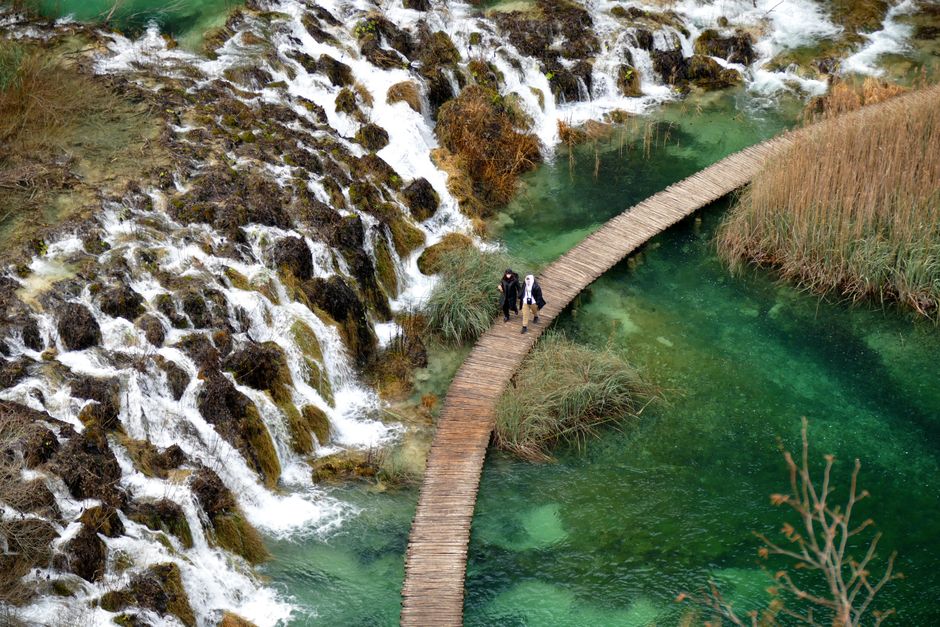
Entrance Tickets: What You Actually Need
At Plitvice Lakes National Park, you’re essentially paying for access, then following marked trails that may include park transport (electric shuttles and/or a boat crossing). The key is to read what your ticket covers and how it matches your intended route.
What the entry ticket normally covers
Most visitors need a standard day entrance ticket to enter the park. On the day, you’ll match it to your chosen trail, and any transport that’s tied to that route will typically be available while you stay inside the park.
If you’re booking in advance, look for the wording that confirms:
- Day validity (usually one day)
- Whether the ticket is for a specific entrance time (common in busy periods)
- Which route options are compatible with your start point
Why “which ticket” can depend on your start
Plitvice isn’t one straight hike—it’s a network. Your start location affects which lakes you’ll see and how many “segments” you’ll walk versus use transport for. You’re unlikely to want to backtrack, so choosing the start point early prevents wasted time.
Plan for peak-day bottlenecks
Regardless of the ticket type, you’ll share the main paths with crowds on summer weekends and holidays. If you’re aiming for a long route, starting early is one of the biggest levers you control.
Choose Your Start: Entrance 1 vs Entrance 2
The park is designed so you can do a one-way feel by starting at one entrance and finishing near the other. That’s usually the easiest way to avoid crossing the same bridges and viewpoints twice.
Entrance 1: Best if you want the classic waterfall-heavy start
Starting from Entrance 1 typically puts you immediately into the Lower Lakes zone. This is where the famous cascade scenery is easiest to access early in the day.
You’ll usually walk past multiple waterfall viewpoints as you work your way toward Lake Kozjak, then you’ll decide whether to use the boat segment and continue upward.
Entrance 2: Best if you want more “upper” scenery earlier
Starting from Entrance 2 often gives you a smoother path into the Upper Lakes experience sooner. You’ll generally still reach the Lower Lakes later on a longer loop, but starting here can help you experience the most scenic sections with fewer interruptions.
If you dislike walking uphill for long periods, check the route you’re committing to—starting point changes the balance between steep and gentle sections.
Picking a direction that saves time
If you’re doing the full “see a lot” day, aim for an itinerary that feels one-way: Lower Lakes first (from Entrance 1) or Upper Lakes first (from Entrance 2), then finish closer to the opposite entrance.
Routes to Plan: Which Lakes You’ll Likely See (and How Long)
Plitvice routes are marked in the field, but visitors commonly choose from a few practical “route styles.” Your route choice determines how many lakes you’ll pass and whether you include the Lake Kozjak boat segment.
Four route styles most visitors choose
Choose based on how much time you have and whether you want maximum variety or fewer moving parts.
- Short Lower Lakes loop (about 2–3 hours): Focus on the Lower Lakes cascades and viewpoints. Expect lots of waterfalls, fewer lakes overall, and minimal transport.
- Lower Lakes to Lake Kozjak (about 3–4.5 hours): A step up from the short loop. You’ll typically see several Lower Lakes highlights, then reach Lake Kozjak for the most iconic “big water” part.
- Classic full-lakes day (about 4.5–6.5 hours): A longer circuit that often includes more Lower Lakes, the Lake Kozjak crossing (where available on that route), and a meaningful slice of the Upper Lakes. This is the best balance for most one-day travellers.
- Long day, one-way feel (about 6–8+ hours): You cover the widest range of scenery and finish nearer the opposite entrance. It’s ideal if you want both clusters (Lower Lakes and Upper Lakes) with fewer compromises.
Lake highlights you’ll most often encounter
Exact lake order varies by route, but most itineraries pass through these “zones”:
- Lower Lakes zone: multiple linked lakes and frequent waterfall viewpoints
- Lake Kozjak: the larger central stretch that many routes cross by boat or by a longer connecting walk depending on the itinerary
- Upper Lakes zone: calmer, higher-elevation water scenes, often with fewer waterfalls per kilometre than the Lower Lakes
You’ll often notice named landmarks like Prošćansko jezero (common early landmark), and you’ll typically include Lake Kozjak on routes that feel “classic.” On longer options, you’re more likely to reach additional Upper Lakes such as Milanovac or Gavanovac (route-dependent).
Realistic time estimates by segment
A helpful way to think about timing is to break the day into three parts:
- Lower Lakes walking time: usually where crowds concentrate, so you may go slower here than you expect
- Kozjak segment: boat crossing or longer connecting walk adds a predictable block of time
- Upper Lakes continuation: typically steadier pacing, with fewer sudden changes in elevation (still, it’s more ground)
Add a buffer if you stop for photos at major viewpoints—on busy days, queueing for the best angles can be as slow as the walking.
Getting Around Inside the Park: What Adds Speed (and What Doesn’t)
You’ll encounter electric transport options designed to reduce walking between key points. The exact mix depends on your chosen route, but the purpose is consistent: connect trailheads and reduce backtracking.
Electric shuttle connections
On longer routes, a shuttle can reposition you between nearby stops at the start or as you move deeper into the park. Use it if it’s included or available along your selected route; otherwise, it can create a mismatch with what the trail network expects.
The Lake Kozjak crossing
A boat crossing is one of the biggest “time-savers” that also delivers a different perspective on the waterfalls and lake edges. Many visitors treat this as the moment that turns a waterfall day into a full Plitvice experience.
If your chosen route includes the crossing, plan your timing around it. On peak days, the boarding area can get busy.
What still takes time: boardwalks and viewpoints
Even with internal transport, Plitvice still has a lot of bridge and boardwalk walking. The good news: these paths are designed for visitor flow. The catch: they can slow down at pinch points where many people pause to photograph.
Where People Most Often Go Wrong
A few common planning mistakes turn a beautiful day into a stressful one. Fixing them is easy if you set your route first.
Starting at the wrong entrance for your preferred day length
If you want a short visit, don’t start a route that expects you to finish far from your exit point. If you want the “full lakes” experience, don’t choose an itinerary that repeatedly sends you back toward the area you already saw.
Choosing the longest route on the busiest day
Summer holidays and weekends often mean slower movement, longer pauses at the most popular overlooks, and less enjoyment from having to squeeze past people. If your schedule is flexible, aim for a weekday.
Underestimating walking time for the “one-way” plan
“One-way” doesn’t mean “easy.” Even the best direction for avoiding backtracking can still be a full day on uneven terrain and lots of steps/boardwalks. If you’re choosing the 6–8+ hour style, start early and keep your stops intentional rather than frequent.
Next Steps
Pick your start point first: Entrance 1 for a classic Lower Lakes-heavy opening, Entrance 2 for an earlier Upper Lakes feel. Then choose the route style that matches your time budget—short loop for a quick highlight day, classic or long for the fullest mix of Lower Lakes, Lake Kozjak, and Upper Lakes. Once you’ve settled on the route, plan your transport so you can arrive early and exit without rushing.