

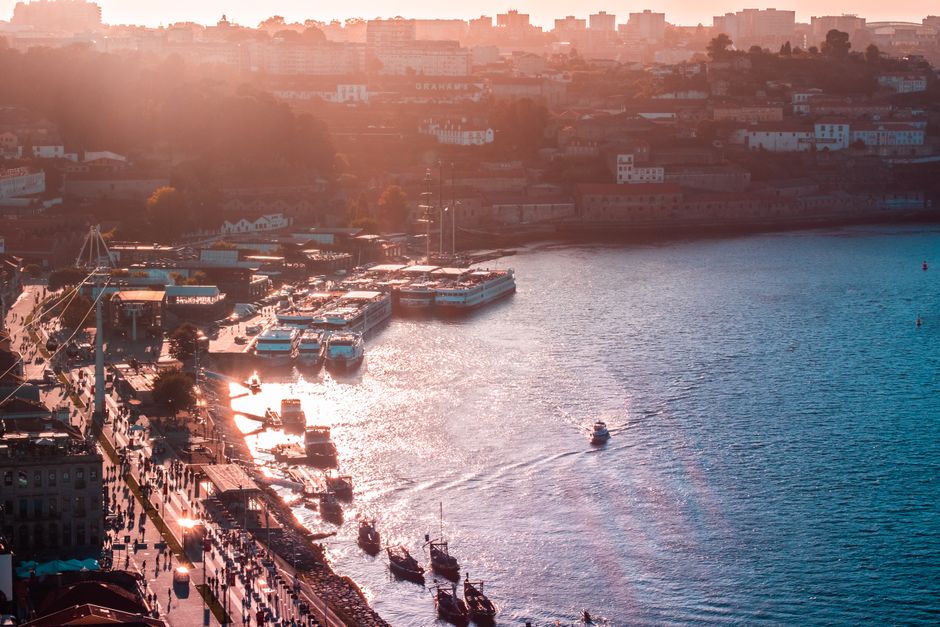
Porto can feel like two trips in one: the compact Historic Center where you’ll walk everywhere, and Gaia across the Douro where you’ll get bigger viewpoints and simpler evenings. The best base depends on what you want your mornings to look like (riverfront light or hilltop views) and how you plan to cross the river.
Below you’ll find stay-use cases to help you decide—without just repeating “stay central” advice.
Porto Historic Center: Best for riverfront mornings and car-free walking

Ribeira waterfront for first-coffee strolls
Ribeira is where the Douro feels most immediate: mornings are bright, you can drift along the quay at a relaxed pace, and you’ll be close to the steps and lanes that funnel people toward the old town. It’s also one of the best places to return to without thinking too hard—especially if your day will start with a river walk.
Look for:
- A room on (or near) the waterfront end of your street, so you’re not climbing the steepest lanes just to begin walking
- Streets with fewer late-night bars if you’re a light sleeper
São Bento and Sé for “walk straight into history”
From the center, you’ll often get a more efficient sequence of sightseeing: stations, cathedrals, and medieval lanes sit close enough that you won’t need constant ride-hailing.
Popular landmarks you’ll reach quickly include:
- São Bento Station
- Sé Cathedral
This is a good fit if your priority is walking loops—something you can do in the morning, then break for a long lunch, then come back for dinner.
Clérigos area for evening dining and night views
Once evening arrives, the Historic Center’s advantage is density: you can go from daytime sightseeing to dinner without planning a separate “transport plan.” The Clérigos side (tower and surrounding streets) tends to feel lively after sunset, but the experience varies block by block.
A solid reference point here is:
- Clérigos Tower
If you want views with a “city lights” vibe, you’ll generally get them more easily by staying in the old-town climb corridors than by trying to reach them from farther out.
Gaia: Best for sunset views and a slower pace after dinner

Jardim do Morro for high-impact Douro views
Jardim do Morro is one of the most reliable choices for sweeping river panoramas without needing a long commute. It’s also ideal if your evenings are about sitting, strolling, and taking photos rather than “covering” a long checklist.
If you want a base that matches that plan, prioritize a stay with quick access to:
- Jardim do Morro
Cais de Gaia for calmer river quays
Where Ribeira can feel busiest at peak times, parts of Gaia’s river edge can feel a touch more open. You get the same Douro energy, but the rhythm can be calmer depending on where your street sits.
For riverfront access, it helps to be near:
- Cais de Gaia
Wine lodges for a structured evening (without the scramble)
If your idea of a good night includes tastings, Gaia is naturally suited. Many wine lodges are clustered so you can plan one activity and walk between nearby stops rather than bouncing across Porto.
A key area to build around is:
- Gaia wine lodges (Ribeira de Gaia)
This works particularly well if you want your dinner to be a separate plan (either before or after tastings), while keeping the logistics simple.
Matching your stay to your daily routine
The biggest decision between the Historic Center and Gaia isn’t “beauty”—it’s the way your day is structured. Use this to choose the side that matches your walking tolerance and your preferred vibe.
Porto Historic Center fits if you want: maximum walk, fewer crossings
Choose the Historic Center when your day looks like:
- breakfast + short sights without long detours
- lunch that’s easy to reach from where you are
- dinner that you can walk to without checking bridge times
In practical terms, you’ll also find it easier to return to your hotel after a late evening because you’re already near the old-town lanes.
Gaia fits if you want: viewpoints first, sightseeing by “hubs”
Choose Gaia when your day looks like:
- late afternoon photos and sunset plans
- a calm base to reset between activities
- wine tastings or a more “evening-oriented” itinerary
You’ll likely cross the river at least once per day (often more), so build your route around it rather than treating it as an afterthought.
The bridge becomes your planning tool (not a surprise)
No matter where you sleep, the river crossing matters. If you base in Gaia, you’ll probably depend more on the main crossings to reach Porto’s old center efficiently.
A key piece of that planning is:
- Dom Luís I Bridge
If your schedule is tight—early start mornings or a late dinner—think about how you’ll move back and forth before you book.
Getting around: walking vs “cross and connect”
Porto is very walkable, but it’s not flat. Your best strategy is to decide which side you want as your “home base,” then accept that the other side is your sightseeing day.
If you’re staying in the Historic Center
You can usually keep your itinerary compact:
- plan most sights within an easy loop
- treat river promenade walks as extensions, not separate trips
- use crossings as occasional shortcuts rather than daily necessities
This is the practical choice for travellers who like to maximize time outdoors without repeatedly navigating bridges and slopes.
If you’re staying in Gaia
You’ll get better “scenery density,” but you’ll likely cross more often.
Common Gaia-based patterns include:
- sunrise/late morning on one side, then viewpoints on the other
- afternoon sightseeing in Porto, then returning to Gaia for dinner and sunset
- wine lodge evenings where the river view is part of the plan
How to avoid the common mistake: choosing the wrong street
Both sides have pockets that can be noticeably different even a few minutes away.
Before you book, check:
- whether your route from the street to the nearest major viewpoint is steep and slippery in wet weather
- whether the immediate area is busy late at night
- whether you’ll be returning at evening hours when the old lanes narrow and foot traffic thickens
Cobbles and stairs are part of Porto. The goal is not to eliminate them—it’s to ensure you’re not surprised by them every single time you go out.
Final call: pick your base, then book with intent
To decide quickly, match your priorities to the side that supports them.
- Choose Porto Historic Center if you want the easiest walking days and the most straightforward “sightseeing → dinner” rhythm.
- Choose Gaia if you want the stronger viewpoint payoff and are comfortable treating crossings as part of your plan.
Next, shortlist 2–3 streets on your chosen side and compare how long it takes to reach one river viewpoint and one evening-dining area on foot. Once you know that, you’ll be able to book confidently—without paying for views you’ll only see once, or walking routes that don’t match your pace.