

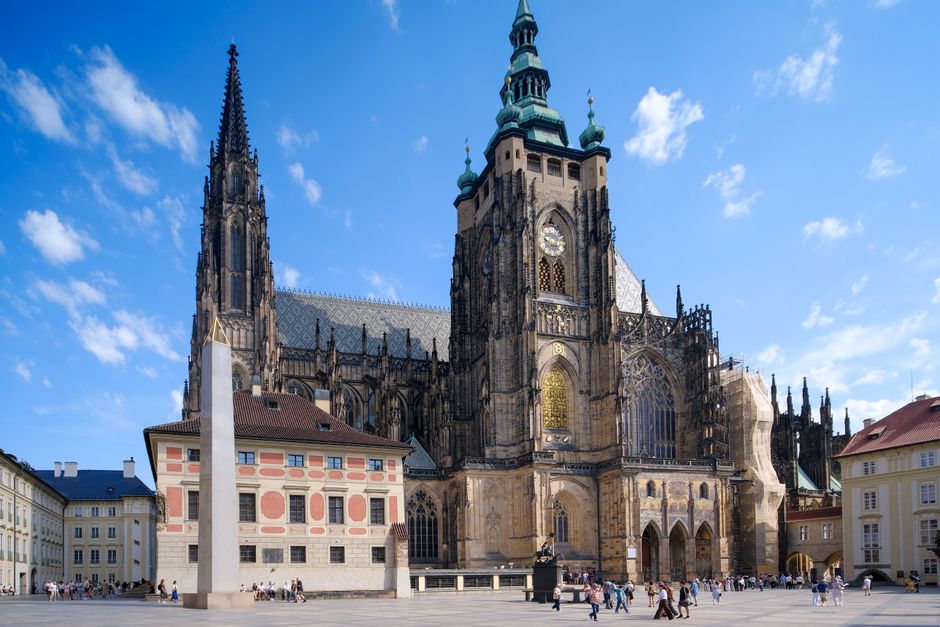
Planning a self-guided day trip to the Prague Castle complex is less about “seeing everything” and more about moving in the right order. You’ll save time (and energy) by anchoring your visit around St Vitus Cathedral, then following the castle circuit uphill where the ground naturally leads you—before crowds build and while you still have daylight.
Plan Tickets and Arrival Time Windows
Choose the Right Ticket Type
Prague Castle is a complex, not a single building, so you’ll usually see two different ticket categories in the ticket areas: one covering access to parts of the castle circuit (courtyards and several buildings) and another specific to St Vitus Cathedral experiences. The cathedral itself is the headline, but towers and some special areas are often handled as separate add-ons.
Before you queue, take 2 minutes to decide:
- Are you visiting only St Vitus Cathedral, or also the wider castle circuit?
- Do you want optional viewpoints (often sold as add-ons)?
- Are you going in a peak season week (which usually means longer lines even if you have tickets)?
Book Cathedral Time Slots When You Can
If you can choose a cathedral entry time, do it. St Vitus Cathedral can get crowded because it’s both a major sightseeing stop and a place where services take place. A booked entry time helps you avoid losing your whole morning to unpredictable queueing.
A practical rule: plan to arrive on foot at the castle area about 20–30 minutes before your chosen cathedral time. That buffer covers getting from the drop-off point to the entrance and any line movement.
Arrive Early Enough to Beat the First Peak
You’ll get the smoothest flow by aiming for the castle before mid-day crowds fully settle in. In practical terms, that means arriving early morning if you can, or choosing a first-circuit slot in the early part of the day if you’re travelling in summer.
If your schedule is flexible, this is your checkpoint system:
- Cathedral time is first: treat it like your appointment.
- Castle circuit is second: use the cathedral booking (or your planned queue time) to choose when to enter the broader complex.
- Golden hour is optional: if you want outdoor views, protect the last 60–90 minutes for when weather and light are better (or when crowds thin).
Your Self-Guided Route: Gates to St Vitus Cathedral
From Malá Strana or Hradčany to the Entry Gate
Most day-trippers approach the castle hill from the Lesser Town side (Malá Strana) or the Hradčany side. Both work; the key is to expect a final uphill walk once you’re dropped near the gates.
What to aim for:
- Get as close to the entrance as your transport allows, then walk the last stretch.
- Keep your bag light. Cobblestones and stairways become tiring fast if you’re carrying a full daypack.
- If you’re heading up after a morning market, avoid the busiest pedestrian corridors by choosing the easiest hill climb you can find at street level (your maps app will be more helpful than guesswork here).
The St Vitus Cathedral Circuit (Inside, Then Out)
St Vitus Cathedral is easiest when you don’t “zig-zag” inside it. Once you’re through the exterior approach and into the cathedral area, your goal is simple: go in, orient yourself quickly, and finish the interior before you drift back outside.
A good rhythm:
- Enter and tour the main interior highlights first. This keeps the best light and lowest fatigue while your legs are still fresh.
- Check whether your optional tower/view time needs a separate entry. If it does, don’t assume you can add it later without a queue.
- Exit with enough time to keep moving uphill. If you linger too long in the cathedral, you’ll feel it later when outdoor sections are still ahead.
Continue to the Royal Buildings
After St Vitus, the direction of travel naturally becomes “follow the circuit.” You’ll typically move toward royal-era spaces that are physically connected to the wider grounds, rather than doubling back.
Keep this in mind as you plan your next checkpoint:
- If you’re travelling in winter or shoulder season, daylight fades earlier—so it’s smart to do the most important indoor stops first (St Vitus and royal interiors).
- If you’re travelling in summer, outdoor crowd density can peak later—so you may prefer to handle outdoor lanes and courtyards after the cathedral.
Uphill Logistics in the Castle Hill Area
Step-Free Options and Where Hills Still Win
Even if you don’t need a fully step-free route, plan for uneven surfaces. The castle area includes cobblestones, ramps that can feel steep, and stair-heavy sightlines.
What to do:
- If accessibility is a concern, look for the closest practical route from your entry point and ask at the information area for the day’s accessible path options.
- Build your route around fewer “back and forth” movements. Once you commit to one side of the hill, it’s usually faster to keep going.
Cobblestones, Sightlines, and Crowd Bottlenecks
Crowd pressure shows up in predictable places: entrances, the tightest courtyards, and the transitions from one attraction zone to the next.
To stay comfortable:
- Walk slightly slower through choke points so you don’t lose time to stop-and-start movement.
- Keep your photos quick at the densest areas. You’ll get better angles with less hassle by stepping aside for a moment rather than waiting in the main flow.
- If you’re carrying a rain jacket, avoid opening it in the most crowded lanes—your “quick stop” can become an accidental blocker.
How to Pace the Day Without Rushing
A self-guided day trip works best when your checkpoints aren’t all “inside.” You’ll want breaks that reset your legs.
Try this pacing model:
- Morning: cathedral first, then one or two royal/indoor spaces.
- Midday: a mix of courtyards and one larger “outdoor-feeling” lane.
- Afternoon: either viewpoints or shorter stops, depending on weather and your energy.
Essential Stops Inside the Castle Complex
Pick a Focus, Then Fill the Gaps
You don’t need to attempt every building to have a strong visit. Choose the handful of stops that match your interests, then let the rest be “nice if you have time.”
Here are the stops most travellers build into an efficient self-guided plan:
- Prague Castle complex courtyards (your main circuit flow)
- St Vitus Cathedral (your anchor visit)
- Old Royal Palace and Vladislav Hall area (royal interiors)
- Changing of the Guard viewing area (timed atmosphere, not a long museum stop)
- St George’s Basilica (another major church within the complex)
- Golden Lane (small lanes and compact houses)
- Powder Tower viewpoint area (short stop for perspective)
- Great South Tower add-on (optional viewpoint timing)
Use St Vitus as Your Time Anchor
Because St Vitus is both the key attraction and the easiest place to lose time to crowds, treat it as the fixed point. Everything else becomes flexible.
If you’re trying to keep your day simple:
- Schedule the cathedral first.
- Choose 2–3 additional stops from the list above.
- Leave 60–90 minutes for “the rest,” which can be courtyards, lanes, and whatever you still feel like seeing.
Avoid the “Everything Everywhere” Trap
On a castle hill, “one more building” often turns into a long walk plus another queue, and suddenly you’re rushing back down. If the day is already busy (common in summer and around weekends), it’s smarter to skip one optional stop than to force a complete circuit.
Rain-Turnaround Plan
If It Rains Before You Enter
When rain starts, don’t immediately switch into panic mode. Your decision point is whether you can get the cathedral out of the way first.
A practical move:
- If the rain is light and you’re close to entry, consider pushing your arrival forward so St Vitus is handled while you’re already there.
- If rain is heavy and you have time to wait, keep your plan simple: warm up indoors first (cathedral), then resume outdoor sections only if the ground dries or light improves.
A Covered-First Mini Itinerary (60–90 minutes)
If weather is turning and you want a safe, contained block of time, use a “cathedral-first” itinerary:
- St Vitus Cathedral interior time (main highlights, then exit)
- One additional covered royal/church stop nearby (choose the one that best matches what you already skipped)
- Return to the circuit route headspace so you’re ready to continue if the rain pauses
This approach keeps you from being stuck in a slow-moving outdoor queue just as you’re getting cold and tired.
When Rain Stops, Resume the Outdoor Sections
Once rain eases, don’t waste the best window by standing still. Make the outdoor work you care about the next checkpoint, starting with the shorter outdoor transitions first.
A smart order after rain:
- Re-check where you are on the circuit (you want to avoid retracing steps).
- Do outdoor lanes/viewpoints while you can see clearly.
- If the weather comes back, retreat to the nearest covered stops rather than trying to “finish everything.”
What to Do Next
Choose your travel day and set a realistic time budget: cathedral-first, then 2–3 additional circuit stops, with a weather buffer. If you’re picking a cathedral entry time, arrive to the castle area 20–30 minutes early so queues don’t derail the plan. After that, pack for uneven ground and be ready with a rain-first version of your itinerary.