


Location and the Right Kind of Stay
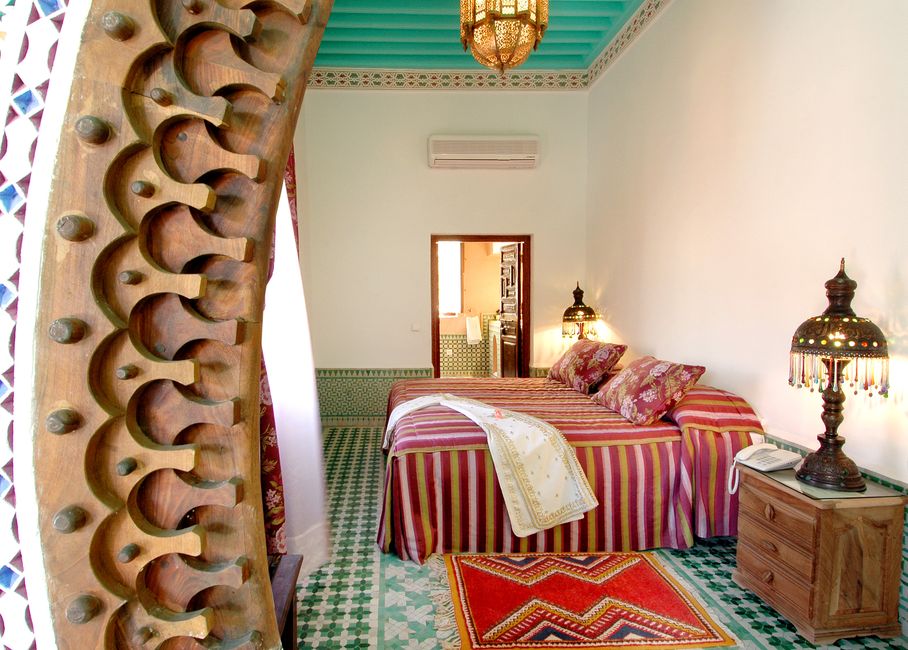
This type of riad is aimed at travellers who want:
- A characterful, inward-facing base rather than a modern corridor-hotel
- A quiet retreat from the medina bustle, especially after dinner
- A more “walk and explore” rhythm, with short hops to sights rather than constant car use
If you’re planning a sightseeing itinerary, many of Marrakech’s classic medina sights are commonly visited from this area (exact times depend on where your riad sits and which route you take):
- Jemaa el-Fna
- Bahia Palace
- Ben Youssef Madrasa
- Saadian Tombs
- Koutoubia Mosque
Room Layout: What the Space Feels Like
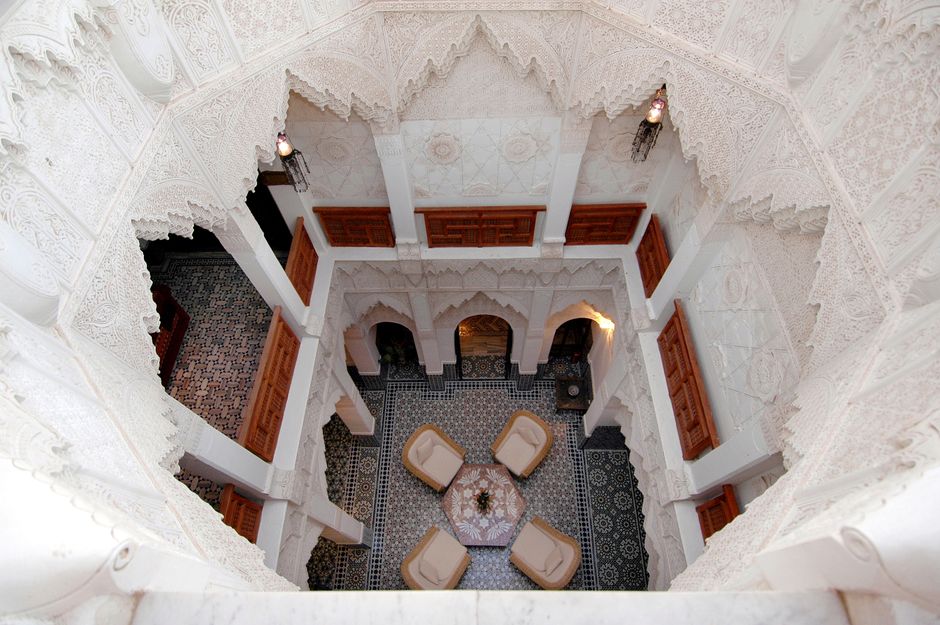
At Riad Zinzin, the layout is best understood in terms of how you move through the riad:
- Expect a compact in-riad footprint: your room is a private pocket, not a large standalone wing
- Many riad rooms have doors opening to inner corridors, with stairs being part of the experience if the room is on an upper level
- Natural light typically comes through inward-facing elements (window openings or courtyard adjacency) rather than through large exterior-facing windows
What this means in practice is that the room can feel cosy and calm when you close the door, but it also means you’ll rely on the riad’s internal design for airflow and brightness. Before booking, it’s worth checking when you look at photos or ask questions:
- Whether your specific room is on a lower or upper level (stairs can matter in heat or with luggage)
- How close your room is to the courtyard edge (that affects both light and acoustics)
- How windows or openings are positioned for ventilation
If your travel style depends on “room time” (working, changing slowly, resting in the afternoon), the best fit is usually a room placement that balances privacy with access to quiet internal space.
Courtyard Acoustics: The Double-Edged Silence
The central courtyard is the defining feature of a Marrakech riad—and it’s also where you’ll notice the biggest difference between rooms.
Because courtyards are hard-surfaced and enclosed, sound can bounce around. At the same time, the courtyard creates a sense of containment: you’re away from the street noise, even while still inside the medina. For Riad Zinzin, think about acoustics in three time bands:
-
Early morning
If the riad has breakfast service in or near the courtyard, you can expect gentle but noticeable movement and voices—often lower volume than street life, but still present. -
Midday
Once guests are out exploring, the courtyard often settles. During this window, you’ll likely find the riad feels calmer and more restful. -
Evening
Sound tends to gather again when people return. If conversations linger in shared areas, you may hear it more clearly than in a hotel that uses long, insulated corridors.
Practical tips for better sleep in a courtyard riad:
- If you’re a light sleeper, ask whether quieter rooms are available (or request a room that’s farther from the courtyard edge)
- Bring earplugs if you’re sensitive to normal, everyday voices
- Plan for the riad’s rhythm: you’ll get the best experience when you align with the way riads “wake up and wind down” rather than expecting hotel-like silence
Breakfast Quality: What to Expect and How to Set Expectations
Breakfast in Marrakech riads is usually a social, home-style affair rather than a large buffet. At Riad Zinzin, you should expect breakfast to be served in the riad’s inner space (often with seating that reflects the riad’s layout).
When assessing breakfast quality—especially in a riad—focus on consistency and freshness rather than “variety overload.” Things that typically matter most for a satisfying morning include:
- Bread and pastries: whether they arrive warm and taste freshly prepared
- Tea and coffee: whether service feels attentive and uninterrupted
- Eggs and classic Moroccan touches: whether there’s a comfortable balance of hot and cold items
If you have dietary preferences, the riad format is usually flexible, but it’s still best to confirm specifics before arrival (for example, how vegetarian-friendly the plate is, or what can be done if you avoid certain ingredients).
Also consider the timing of your breakfast relative to your plans. If you’re heading out for early medina shopping or a morning excursion, a riad breakfast can be a good fit—just be ready for the natural courtyard sound that comes with serving guests.
Getting There and Back: Medina-Edge Walk/Transit Friction
Even if your ride gets close, the medina usually requires a final stretch on foot. This is where the “friction” shows up for Riad Zinzin: you may need to navigate narrow lanes, turns, and occasional steps, with your luggage or in warm weather.
The key friction points to plan for are:
- Taxi drop-offs are typically at the edge, not at the riad door
- The last walk can feel longer if you’re arriving late and your bearings aren’t set
- Lanes can be uneven, and the route may be harder with heavy suitcases
To make the arrival smoother (and reduce stress), do these before you leave:
- Confirm the expected walking distance from the nearest vehicle-access point
- Ask for clear arrival instructions (landmarks, which lane to take, and where the final turns are)
- If you’re travelling with larger luggage, plan to travel lighter or arrange help if that’s available through the property
Heat and timing matter
In Marrakech, the practical comfort of the walk changes quickly:
- Midday can be hot and tiring, especially if you’re carrying bags
- Evening can be more pleasant for walking, but it can also mean busier lanes
If you’re planning several daily outings, consider whether it’s worth structuring your schedule so you’re not doing the hardest return walk repeatedly in peak heat.
What to Do Next
If you’re considering Riad Zinzin, message the property before booking and ask about the specifics that affect your stay the most: your room’s position relative to the courtyard, breakfast timing, and the exact approach route from the medina edge. Once you have those answers, you can decide confidently whether the riad-style acoustics and the final walk fit your travel pace.