

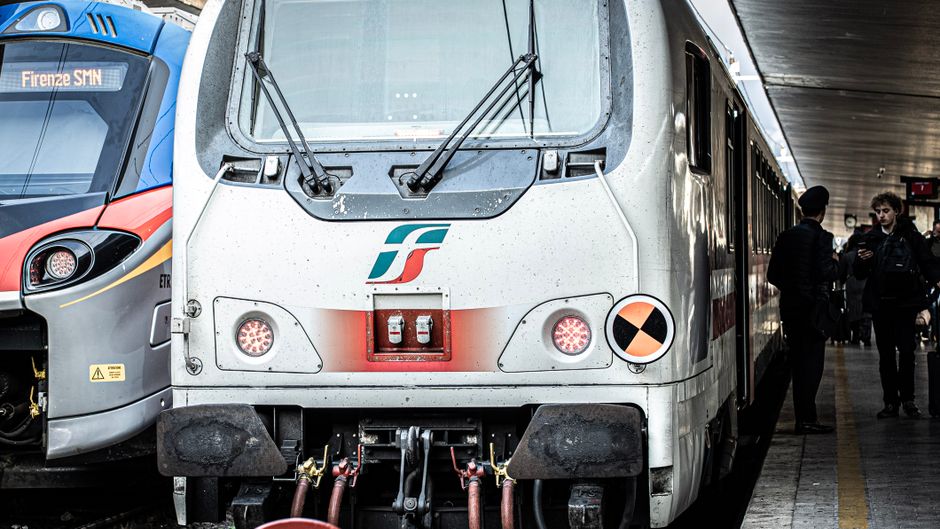
Door-to-Door Timing: What to Expect
If you’re comparing Rome to Florence for comfort and timing, the “journey time” number isn’t the whole story. The real difference comes from how long it takes you to reach the departure point, go through boarding, and then get from the arrival terminal to your accommodation.
Train: often the most reliable for door-to-door time
High-speed rail between Rome and Florence is typically around 1 hour 30 minutes to about 2 hours on the tracks, depending on the service. Add in the usual real-world buffers—getting to Roma Termini (Esquilino) or another Rome rail station, walking to your platform, and boarding—so a practical door-to-door estimate is often around 2.5 to 3 hours.
This timing tends to hold up well in most seasons. In winter, you’ll still be moving efficiently, and the train doesn’t get affected by road congestion in the way buses do.
Bus: can be fine, but build in extra time for traffic
Direct road journeys commonly land in the roughly 3.5 to 4.5 hour range on paper. Door-to-door, it’s often more like 4.5 to 6 hours, because traffic around Rome (and especially around major approaches to the city) can add delays. In summer, heat and higher road use can stretch schedules; in winter, you’ll also want extra time for daylight and weather around terminals.
Buses can be convenient if you’re near a bus stop or a terminal that’s easier to reach from your hotel—but the timing gap vs rail usually remains.
Comfort on Board: Seating, Space, and the “Day-Trip Feel”
Comfort is where you’ll feel the difference most, even if the ticket prices are close.
Train comfort: steadier and usually roomier
Trains generally feel more “reset-friendly” for the second leg of your trip. You’ll typically have more consistent motion (less start-stop than buses) and a layout designed for staying seated for a short-to-medium trip. On many services, reserved seating helps too—less searching around once you board.
For luggage, you usually have practical storage options within the train carriage (overhead or near your area), so you’re not constantly thinking about where your bag goes.
Bus comfort: more basic, and more variable during delays
Buses can be comfortable enough for a few hours, but they’re usually more basic: tighter seating, more noticeable road vibration, and frequent stopping depending on the route. If your schedule is tight, bus delays can also mean longer time sitting in the same seat.
Luggage is also more constrained in practice. Expect undercarriage storage and then the need to manage your bag on boarding and when exiting—especially if you’re traveling with a larger suitcase.
Station and Terminal Logistics: Rome and Florence in Practice
Timing differences become obvious once you factor in where you actually start and end.
Rome: plan around where you are, not just the line
In Rome, the choice often comes down to proximity.
- If you’re near Roma Termini (Esquilino), trains are usually the easiest option—shorter transfer time, and you can reach platforms efficiently.
- If your accommodation is closer to areas like San Lorenzo (often used as a gateway for some regional bus connections) or other central neighbourhoods, buses can reduce your first-mile travel time—especially if you’d otherwise spend time crossing town to reach a rail station.
If you’re heading out early, Rome’s public transport can work, but you should still give yourself extra buffer for stairs, station crowds, and waiting time.
Florence: the advantage is usually walking access
Trains typically arrive at Firenze Santa Maria Novella, which is close to the centre. That matters because once you step off the train, you’re usually within reach of local buses, taxis, and a reasonably walkable connection to many hotels.
With buses, you may arrive at a stop that’s still connected to the city, but you should assume a short ride or longer walk may be necessary to reach the main hotel zones (around Centro Storico and the routes toward Duomo/Santa Maria Novella). If you’re carrying a suitcase, that last-mile piece often decides comfort more than the seating itself.
Which One Fits Your Schedule? (Comfort vs Timing)
Use this section as a decision shortcut based on your departure and arrival window. The “best” option depends less on the route and more on how tight your day is.
Choose the train if you want the simplest plan
- You’re traveling during a busy time (late morning into early evening), when road traffic can stretch bus schedules.
- You arrive with a suitcase and want minimal handling on both ends.
- You have a tight check-in window in Florence and can’t afford a late arrival, even by 30–60 minutes.
Choose the bus if your priorities match its trade-offs
- You’re on a strict budget and bus prices are noticeably lower for your dates.
- Your departure point is easier for a bus than for a rail station, saving real time getting started.
- You can be flexible (looser arrival window, no critical timed reservations the same evening).
Booking and Practical Tips for a Smooth Trip
Even the better option can feel stressful if you book or plan without the right buffers.
When to book and what to check
For trains, buying earlier tends to help with seat availability and fare variety—especially in peak periods when people are moving between major cities. For buses, early booking can also help with the best seats and the departure times that line up with your schedule.
Before you commit, double-check:
- Departure/arrival location inside each city (station vs terminal vs the nearest drop-off area)
- Seat reservation rules (especially on trains)
- Luggage allowances and how larger bags are handled
- Whether your schedule needs a buffer for city transfer time
Common timing mistakes (and how to avoid them)
- Assuming the posted travel time equals door-to-door time. Rome’s traffic makes this gap bigger for buses.
- Going for the earliest option without checking your first-mile commute. If you’re crossing town to reach a station, the “fast” option can stop being fast.
- Underestimating last-mile movement in Florence. If you’re staying in the Centro Storico, the train arrival location is usually smoother; buses can require a short ride.
If you’re unsure, use a simple rule: when your day is tight, treat the train as the default and treat the bus as the option only if your arrival window has slack.
Next Steps: Pick the Option That Matches Your Day
Start by writing down two times: your realistic departure time from Rome and your target arrival/check-in window in Florence. If the gap is tight, you’ll usually be happier choosing the train for both comfort and timing reliability. If budget matters more and you can absorb delays, compare bus departures that still leave you room for the last-mile to your hotel.