

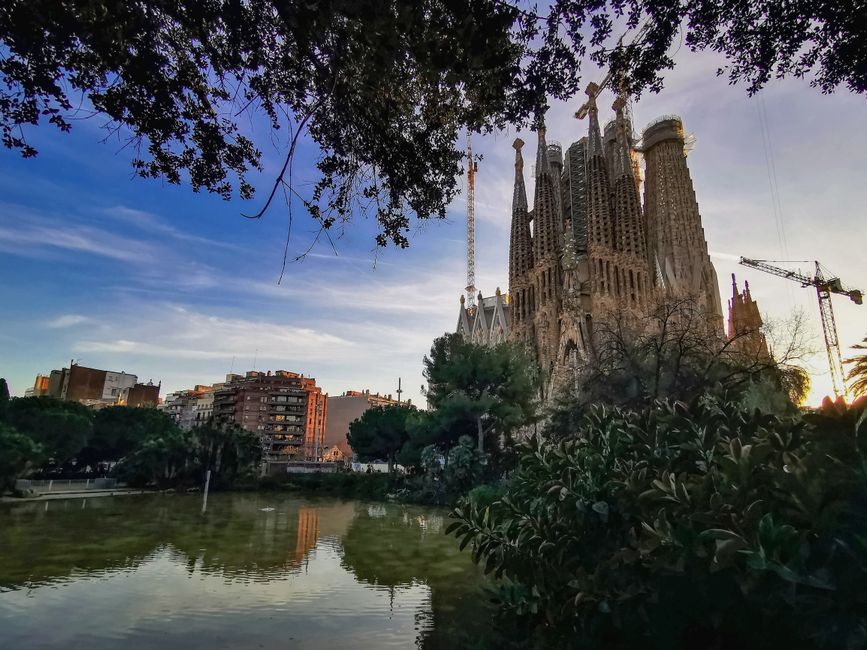
Ticketing and Entry Rules
Book a timed entry (and check what’s included)
Sagrada Família is run on date-based timed entry, so you will usually get the most predictable experience by booking in advance rather than relying on walk-up availability. When you compare tickets, look past the headline price and focus on what your entry actually covers:
- Entry to the basilica at your selected time
- Optional add-ons (such as tower access or guided elements, depending on what you choose)
- Whether areas are staggered by time slots
Timed entry matters because it controls how long you’ll stand at the screening point and how quickly you move inside.
Expect security screening and a strict “arrive ready” rhythm
Even if your ticket is timed, entry is not immediate the moment you arrive. You should plan for security screening and occasional checks of your belongings. For smooth passage:
- Arrive with your ticket accessible on your phone and a backup method (screenshots or offline access)
- Keep bags and bulk items minimal where possible
- Wear comfortable shoes—moving between exterior viewpoints and interior spaces can still feel like a lot of walking
If you are travelling with kids or you have mobility needs, choose the slot that lets you move slowly. The busiest periods are when everyone else arrives at once.
Respect the visit rules, especially if you are planning photos
Sagrada Família is a religious site as well as a landmark, and the environment can feel more formal than pure “sightseeing time.” In practice, that means sticking to posted guidance for photography and noise, and dressing appropriately.
If you are aiming for photos, avoid assuming you can linger at every viewpoint. The visitor flow is managed, and you’ll have a better experience if you treat your photo stops as short “capture windows” rather than long sessions.
Best Queue Timing (So You’re Not Stuck Waiting)
Arrive early for your time slot
Timed tickets still require arrival time. A realistic target is to be at the entrance area about 20–30 minutes before your slot, then go straight through the screening process.
If you arrive exactly at your selected time, you may lose that time to the line and end up rushing once you’re inside.
Use the “shoulder” rule: start earlier, or go later
Sagrada Família is busiest around the mid-morning to early afternoon window, especially in high season. If you want fewer crowds in the basilica interior and at the façades, pick one of these patterns:
- Early morning: usually calmer, and you’ll often get better light for exterior photos
- Late afternoon / early evening: crowds can thin again, but check the day’s schedule for what remains open
In hot summer months, you’ll also appreciate starting earlier because the neighbourhood walk can feel long in full sun.
Adjust for weather without ruining your day
Bad weather changes the experience, not just the comfort. In rain, lines can feel slower and surfaces can be slippery, which affects how quickly people move.
If the forecast looks unsettled, it helps to schedule your exterior focus earlier and save any indoor add-ons or slower museum-style viewing for later in the day. That way, you are not forced to cut your plan mid-route.
Metro Route Options to Sagrada Família
The closest stop: Sagrada Família (Lines 2 and 5)
The simplest route is to take the metro to Sagrada Família, which serves Lines 2 and 5, then walk the final stretch on foot. This is the lowest-hassle option when you are arriving with a timed entry.
When you get out, follow the most direct street approach to the basilica area rather than doubling back through side streets—signage is generally good, but it’s easy to lose time in the final blocks.
Backup options: L4 stations with a longer walk
If that station is inconvenient (for example, line disruptions or you are coming from another part of the city), you can use Line 4 and walk.
- Joanic (L4): typically a manageable walk, especially if you’re comfortable with a steady pace
- Verdaguer (L4): another workable drop-off with a longer final walk
These options are best if you want flexibility for a pre-entry coffee or a short stroll on the way in.
Keep your return simple
Don’t plan a complicated cross-city transfer immediately after your visit. Build in a buffer of 20–40 minutes so you are not sprinting to catch a connection while crowds are spilling out.
A Realistic Walking Loop (With Weather Turnarounds)
Loop baseline: plan 2.5–3.5 hours
A good “one pass, no stress” loop usually takes about half a day if you move at a relaxed sightseeing pace. The distance is not extreme, but it is still a real walk—so it’s ideal for structured breaks rather than drifting.
If the weather is great, you can extend the route with extra façade viewpoints and a longer café stop.
A practical route with four anchor stops
Use this route as a base. It is realistic for most travellers, and you can compress or expand it depending on heat or rain.
- Sagrada Família Basilica (your timed entry anchor)
- Gaudí’s Nativity façade viewpoints (focus on one or two key angles rather than chasing every angle)
- Gaudí’s Passion façade area (short exterior focus if your schedule allows)
- Hospital de Sant Pau (Sant Pau Recinte Modernista) (a strong weather-friendly alternative when you need a break from the open air)
Weather turnarounds: rain, heat, and “too crowded” moments
If you hit rain mid-visit, switch priorities rather than trying to “push through.” A sensible adjustment is:
- Keep your timed entry as-is (that part is already locked)
- Spend more time at covered or indoor elements inside your ticket scope
- Shift any extra exterior time to the last possible moment and prepare to head toward Hospital de Sant Pau earlier than planned
If it is hot, the loop still works, but start earlier and shorten your exterior wandering. In peak summer conditions, it can feel easier to do the basilica first, then make Sant Pau your “slower pace” stop.
If queues suddenly feel worse than expected (for example, because visitor groups are arriving together), use an easy fallback: take a longer break in a café close to your current position, then rejoin the loop once the flow steadies.
Before You Go: Practical Checks That Save Time
Decide about add-ons before you arrive
If you have options like tower access or specific museum-style areas, it’s smart to choose in advance. The reason is simple: add-ons often depend on availability, and waiting to decide on the day can break your timing.
Aim for a plan where you’re not forced to sprint between zones just to “fit everything in.”
Bring the right “day-trip” habits, not just the ticket
Small things make a big difference around a high-demand site:
- Keep water handy in warm months
- Wear shoes that work on uneven surfaces
- Treat your phone battery like a tour item—save directions and avoid overusing GPS on poor reception days
Avoid common tourist-trap behaviour
The biggest time-waster at landmark sites is rigidly following an internet-style “hour-by-hour” schedule. If you are visiting during a busier period, that approach can lead to frustration.
Instead, keep the loop structured around your timed entry and your anchor stops, then leave room for crowd flow and the weather.
Next Steps
Pick a visit time that matches your tolerance for crowds—early morning for calmer pacing, late afternoon for a quieter feel. Then book timed entry for Sagrada Família and line up your walking loop so Hospital de Sant Pau can act as your weather fallback. Once your plan is set, check your metro station route and leave extra buffer for entry screening and transfers.