

You can do the Blue Mountains from Sydney without renting a car, and the key is to build your day around a few linked lookout walks. This itinerary starts and ends with train stops, then uses short local hops between viewpoints so you’re not spending the whole day searching for transport.
Below is a realistic, viewpoint-heavy plan you can adjust for fog, rain, or heat—while keeping a timetable rhythm that works for most travellers.
Train Route and Timetable Logic
Where you’ll base yourself: Katoomba as the main station
Most day-trip plans run through Katoomba because it’s the hub for Echo Point and the cliff-track viewpoints. From there, you can still reach other lookouts (like Wentworth Falls) without a complicated connection.
If you’d rather minimise walking from your station, you can also use Wentworth Falls station partway through the day—just make sure your return train still lines up.
A timetable approach that avoids stress
You don’t need exact departure times to plan this well, but you do need a repeatable rule:
- Get to the first lookout before it gets busy (mid-morning is usually easier than late morning)
- Keep the long stretch for when you’ll have the best views (clear weather usually means cliff walks)
- Leave a buffer for weather so you can swap to shorter lookouts without feeling rushed
As a practical guideline, you’ll usually want:
- A morning train from Sydney to Katoomba (expect roughly a couple of hours, depending on the service)
- A mid-afternoon return train from Katoomba or Wentworth Falls back toward Sydney
Because schedules can vary by day, check the timetable on the morning you travel and aim for connections that give you at least 60–90 minutes of flexibility once you’re in the mountains.
A Full Day Itinerary: Katoomba to Wentworth Falls
Key stops (the plan’s backbone)
Use these as your “anchors” for navigation and decision-making:
- Echo Point (Three Sisters)
- Prince Henry Cliff Walk
- Sublime Point Lookout
- Katoomba (for lunch and timing)
- Leura (for a relaxed village stop)
- Wentworth Falls (Queen Victoria Lookout)
- Scenic World (optional)
Morning: start at Echo Point, then link the cliff-walk viewpoints
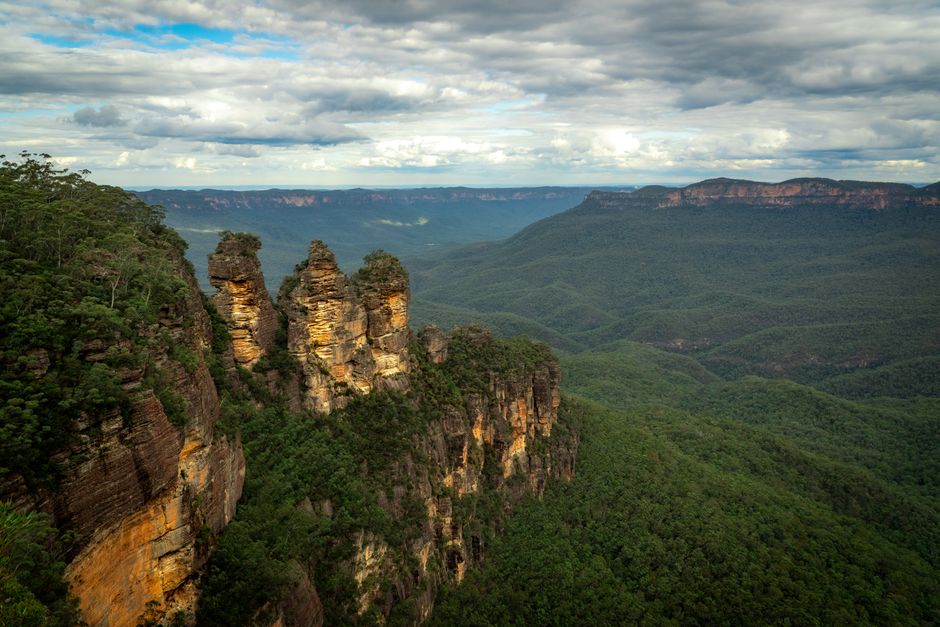
Start with Echo Point (Three Sisters). In clear weather, this is where the Blue Mountains look dramatic enough to justify a day trip.
From Echo Point, aim to do Prince Henry Cliff Walk next. This is the segment that rewards you with layered valley views, but it’s also the one most affected by low cloud and strong winds. If the weather looks uncertain, don’t commit to a full out-and-back—pick the portion that stays comfortable for your pace and visibility.
After the cliff walk, continue to Sublime Point Lookout for a different angle over the valley. This pairing (cliff walk → second lookout) works well because you’re already in the right area and it keeps your movement efficient.
Midday: reset in Katoomba, then choose Leura or a shorter return
Once you’ve done the main viewpoints, head into Katoomba for lunch and a breather. This is your “recovery block”: sit down, refill water, and check the sky properly before deciding whether to extend your walk time.
Then decide between:
- Leura, if you want a gentler pace with scenic streets and easy stops, or
- staying more direct if you’re dealing with wind, mist, or slower-than-expected walking.
Afternoon: switch to Wentworth Falls for a fresh set of lookouts
In the afternoon, shift gears to Wentworth Falls (Queen Victoria Lookout). This is a good weather hedge: even when cliff tracks are slippery or visibility is poor, you can often still enjoy a strong viewpoint from the more established walking areas.
If you’re feeling good and visibility is improving, you can keep the day moving. If you’re tired or conditions are worsening, prioritise one standout viewpoint and then start working back toward your return station.
Ticketing, Costs, and What to Book
Opal and ticket basics for the day trip
For most travellers, the simplest approach is using Opal for the train journey. You typically tap on and tap off when entering and leaving services, and your fare is calculated based on your travel.
Because Opal pricing depends on travel history and ticket type, it’s hard to give a single “day-trip cost” that fits everyone. Plan on a moderate day-trip spend rather than a budget fare, and check what options your account shows the morning you go.
Don’t lose time at the station gates
The most common day-trip mistake is arriving without being ready for how the system works (especially if you’re switching stations).
- Make sure you’re using a valid, topped-up Opal account (or the right Opal form if you’re travelling with a concession)
- Tap on at Sydney departure, then tap off at your final exit point
- If you switch stations during the day, follow the gate/tap instructions for those platforms
Scenic World: optional, but useful for bad weather
Scenic World is not essential for the classic Blue Mountains lookouts, but it can be a smart “weather lever.” If visibility is poor or walking feels harder than expected, it gives you a way to experience the area while keeping your exertion controlled.
If you do include it, treat it as a replacement rather than a bonus. Add it only if you have time without cutting your main lookout priorities.
Your Realistic Walking Plan (Distances, Pacing, Shortcuts)
How much walking is realistic for a one-day viewpoint trip
A day-trip plan like this can land around 6–9 kilometres total, depending on which cliff-walk portions you complete and how often you pause for photos.
To keep it realistic, use this rule of thumb:
- If you’re stopping frequently for views, your “kilometres” can rise without you noticing.
- If you’re already walking slowly or taking extra breaks, cut the cliff walk to the portion that still feels enjoyable.
Build your pace around viewpoints, not endurance
The cliff tracks look short on a map, but they’re exposed and can be uneven underfoot. For comfort, plan for:
- Slow, steady movement with photo pauses
- Turning back early if you feel like you’re forcing it
- Short breaks in Katoomba before you decide on Leura and Wentworth Falls
A practical target is to finish the morning viewpoints feeling like you could still do one more highlight after lunch.
Where to shorten if conditions change
If the day turns windy, wet, or foggy, shortening doesn’t have to mean “skip everything.” Use these adjustments:
- Shorten the Prince Henry Cliff Walk portion and focus on the key lookouts
- Prioritise Wentworth Falls (Queen Victoria Lookout) because it’s easier to enjoy even when views are inconsistent
- If legs feel tired late afternoon, choose one additional stop (Leura or an optional activity) instead of trying to fit both
Weather Swap Options for the Best Viewpoints
Clear skies: follow the full cliff-walk flow
When the weather is crisp and visibility is good, you’ll get the strongest payoff from the planned order:
Echo Point (Three Sisters) → Prince Henry Cliff Walk → Sublime Point
In that scenario, it’s worth doing more of the cliff walk rather than cutting early.
Low cloud, mist, or drizzle: switch to a “lookout-first” approach
If visibility drops, you still want the day to feel like a win. In that case:
- Keep Echo Point as a quick “check the view” stop
- Focus on Wentworth Falls (Queen Victoria Lookout) for your main afternoon viewpoint
- Consider using Scenic World as your controlled-option activity rather than extending slippery cliff walking
Heat or strong sun: start earlier and reduce exposure
On hot days, the priority becomes comfort:
- Don’t push the cliff walk to the hottest part of the day
- Use the Katoomba lunch window to cool down and slow your pace
- Choose Leura for a calmer village stop, and keep the most exposed segments shorter
Even a well-planned day can feel exhausting in the mountains if you wait too long to adjust—so make the swap decision as soon as you notice the conditions changing.
What to Do Next
Check the train timetable for your travel date and lock in a morning arrival window for Katoomba, then a late-afternoon return that still leaves you time for a weather swap. Once the trains are set, follow the order of key stops so you’re moving efficiently between viewpoints, not hopping around the mountains without a rhythm.