

Plan Your Start Point and Cable Car Basics
Where the cable car starts (Rike Park side)
You’ll board the Tbilisi Cable Car near Rike Park, by the Bridge of Peace. This is the most straightforward way to reach Narikala because it cuts out the longest uphill leg.
If you’re coming from Old Town streets, aim to reach Rike Park first, then walk to the cable car area. You’ll also find it easiest to orient yourself with the river view: the lower station is on the city-side of the Mtkvari, and Narikala is uphill.
What the ride feels like (and what to notice)
Plan for a short cable-car ride plus a walk from the upper area into the fort zone. Even if you’re not rushing, you’ll want shoes that handle uneven stone and steps—Narikala is compact, but the ground can be rough.
As a rule of thumb, budget:
- Ride + immediate exit: about 10–20 minutes
- Walking into the fort viewpoints: about 15–25 minutes depending on where you stop
Weather contingencies (rain, fog, wind)
This route is simple, but weather can change the experience quickly.
- Fog or low cloud: viewpoint photos can turn grey. If visibility looks poor, treat the first pass through Narikala as a “get the lay of the land” loop and save the main viewpoint time for later.
- Rain or wet stone: slows stairs and can make railings feel slippery. Wear non-slip shoes and take a slower pace on the descent back toward Old Tbilisi.
- Wind: cable cars can feel bumpy when gusts pick up. If you’re travelling with mobility limits, keep extra time for careful boarding and disembarking.
If rain is steady, consider swapping your Narikala visit to a lighter window between showers. Clear spells often happen after a front passes, especially outside the deepest winter cold.
Self-Guided Route: Cable Car to Narikala Fortress
Your route stops (follow this in order)
Use this as a simple, self-guided loop. The distances are short, but stepping between viewpoints can take longer than you expect.
- Rike Park Cable Car Lower Station
- Narikala Upper Cable Car Exit
- Narikala Fortress Gate Area
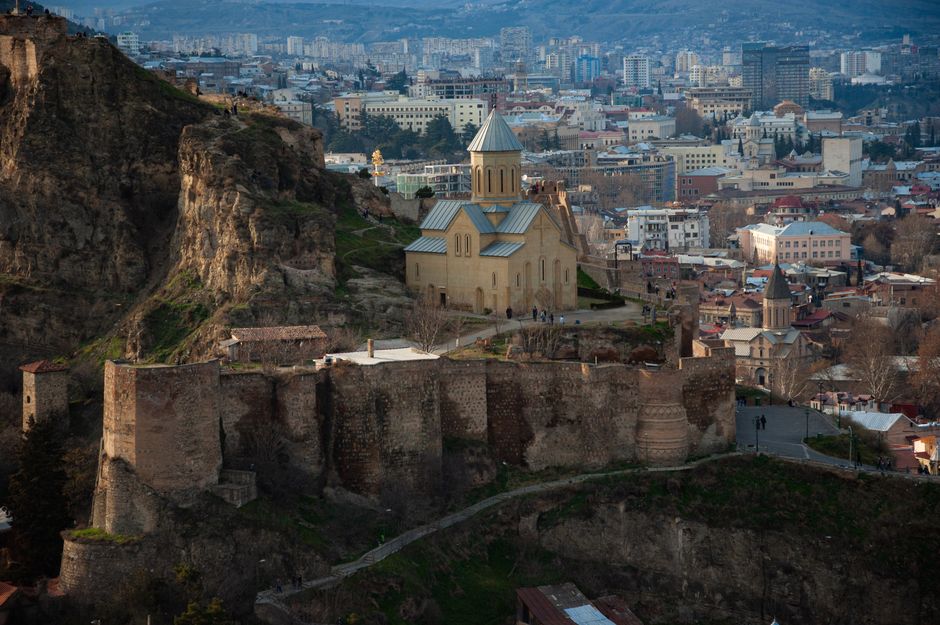
- Fort Walls Lookout (Old Tbilisi panorama)
- Stairs to Higher Bastions
- Mother of Georgia Statue Viewpoint area
- Sunset-facing viewpoints above the river
- Descent toward Old Town paths (toward Abanotubani)
How to find the fort entrance once you exit
After you leave the upper cable car area, you’ll be guided by pedestrian flow and the visible fort walls. Look for signs or arrows that point toward Narikala Fortress and the main walkway.
If there are multiple paths, pick the one that leads toward the thicker fort-wall area rather than the smallest stair-only shortcut. The larger routes tend to connect more consistently to the viewpoints, and they’re usually easier to retrace if you decide to return.
Where the steep sections are (and how to pace)
Narikala is not long-distance trekking, but you’ll hit short climbs and steeper stair sections.
To keep it comfortable:
- Take a slow first ascent so you don’t feel rushed when the best views open.
- Plan a rest stop halfway—even a 5-minute pause makes the final viewpoint push feel easier.
- If travelling in warmer months, start earlier in the day to avoid the strongest sun.
Timing for Viewpoints Without Rushing
Best light depends on what you want to photograph
You’ll get different results depending on the time of day:
- Morning: often clearer visibility over the city and the river. Great if you want crisp rooftops and less haze.
- Late afternoon to early evening: tends to bring warmer light across the fort stone and a glow on the Old Town streets.
- Sunset window: the views above the river become dramatic, but it also means more people heading to the same outlook.
If you’re travelling in winter, daylight hours are shorter. Aim to be at the main lookout segment earlier rather than assuming you’ll “have time later.”
How long to spend at each viewpoint
A practical pacing plan:
- Upper area + first gate-to-wall loop: 20–30 minutes
- Wall panoramas and fort-wall edges: 25–35 minutes
- Higher bastions / statue area: 25–35 minutes
That total—often around 70–100 minutes—is enough for most travellers to enjoy the views, not just pass through.
If the fort is busy, keep it simple: choose two main viewpoint stops and move on rather than trying to hit every angle.
Avoid crowd bottlenecks (especially at exit and lookouts)
Expect the busiest moments around:
- Late afternoon, when many people time the cable car ride for views
- Weekends and holidays, when tour groups cluster on similar schedules
To reduce waiting and photo frustration:
- Start earlier if your priority is quieter viewpoints.
- If you see people pooling at a narrow stair segment, pause at a wider patch before moving through.
- Give yourself a buffer for slow walking near railings—standing time adds up fast.
Connect to Nearby Attractions on Foot
Old Town lanes after Narikala
Once you start descending, you’ll naturally re-enter the Old Town rhythm—small lanes, historic facades, and easy opportunities to stop for coffee or a quick meal.
To make the walk feel smooth, follow the downhill pedestrian flow rather than trying to cut directly across steep areas. The routes that feel slightly longer often land you closer to your next sight with fewer detours.
Abanotubani (sulphur baths) walk-down
A common next step is Abanotubani, the sulphur-bath district. The descent toward Old Tbilisi paths is usually the easiest way to reach it, because you’re heading from the fort zone toward the river and older streets.
Plan for roughly 15–25 minutes on foot from the fort-area descent to reach the bath district, depending on how often you stop and which stairs you take.
If you’re visiting in the evening, the area around the baths can feel lively. In cooler months, give extra time for slippery patches on stone.
Sioni Cathedral and Metekhi river views
From Abanotubani and Old Town lanes, you can continue toward two popular historic anchors:
- Sioni Cathedral area (good for a calm street-level pause)
- Metekhi river-view perspectives (best when you want to look out across the city and river bends)
These are best as a relaxed “walk it off” extension after Narikala, not a rushed sprint. If you’re carrying a daypack, keep your essentials accessible so you’re not constantly opening bags at street corners.
Weather and Safety Contingencies (So You Can Keep the Plan)
If the forecast looks questionable
When conditions turn uncertain, your best strategy is flexibility:
- Choose an earlier start so you can reschedule viewpoint time without losing the whole outing.
- Watch for slick stone during rainfall; slow down on stair segments even if everyone else is moving quickly.
If you’re already near Rike Park and the weather shifts suddenly, it’s often still worth going up—just avoid treating a single viewpoint as the only goal. Narikala has multiple edges, so you can find acceptable visibility even if one lookout is blocked by mist.
What to wear and carry for comfort
This is a short route, but it’s still active sightseeing. For the best experience:
- Wear grippy shoes (stair-friendly soles matter)
- Bring a light layer in spring/autumn and a warmer option in winter
- Carry water, especially in summer afternoons
If you’re visiting in winter, warm gloves can be useful for handling railings and staying comfortable while you wait for a good view.
Decide your “turnaround point” before you get tired
Pick a clear point where you’ll stop and either head back down or keep going. That could be the statue viewpoint area or a specific wall lookout. Having a decision in advance prevents the classic situation where tired legs push you into hurried steps on the way down.
Final Thoughts: What to Do Next
Choose a viewpoint priority—morning clarity or sunset atmosphere—then set your Narikala time so you’re at the main lookouts with breathing room. Get to Rike Park early enough to manage any queues comfortably, and plan your descent as your next step into Abanotubani and Old Tbilisi streets.