

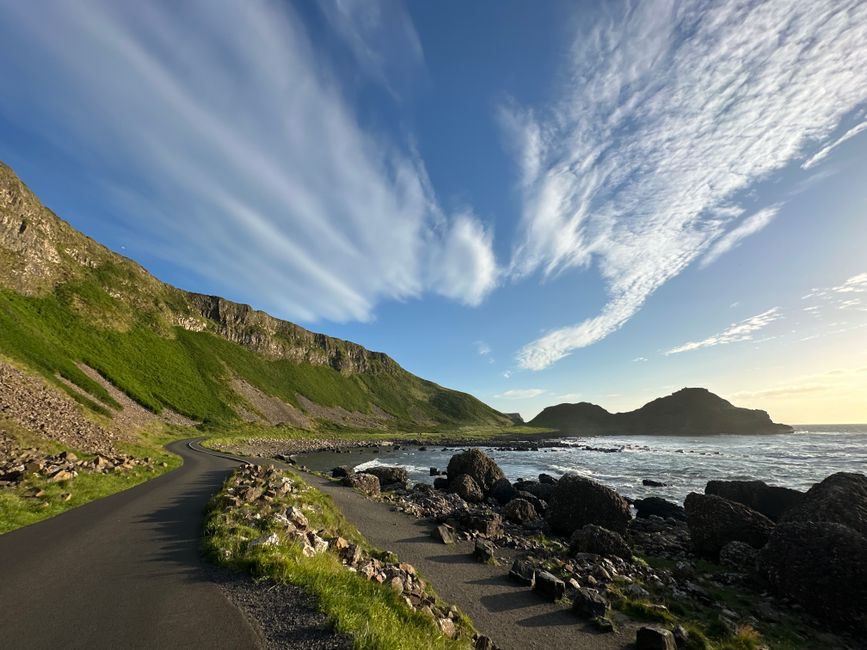
If you’re building a road trip around the Ulster Cycle of History in Northern Ireland, the easiest win is sequencing: start east, work north along the Antrim coast, then swing west to Londonderry, and finally head south to Armagh before looping back.
Below is a curated drive itinerary that keeps the route moving in one direction, so you’re not constantly backtracking on the same roads. It also prioritises places where you can park, walk comfortably, and spend meaningful time.
What this route is designed to cover
You will get a practical sweep across the Ulster Cycle of History themes, including:
- Fortified medieval and early-modern settings (castle stops)
- A major contested city story in Londonderry
- The ecclesiastical and settlement history around Armagh
Route Overview and Sequencing
Suggested 3-night loop (clockwise)
This itinerary is planned as a clockwise circuit so each driving day builds on the previous one.
- Night 1: Belfast (or nearby)
- Night 2: Ballymena/Glenarm area (or nearby) or go straight to Londonderry if you prefer a longer day
- Night 3: Londonderry
You can complete the route in 3 days with early starts, or stretch it into 4 days if you like slower mornings.
How to minimise backtracking
To keep the mileage under control, you will:
- Start with Belfast and head north toward Carrickfergus
- Continue along the coast through Dunluce and Giant’s Causeway
- Cut west into Londonderry and stay there for the main evening walk
- Finish by dropping south through Armagh and ending in the Hillsborough area before returning toward Belfast
Approximate drive times (use ranges)
Drive times vary with traffic and the season, but expect:
- Belfast → Carrickfergus: 25–40 minutes
- Carrickfergus → Glenarm: 35–55 minutes
- Glenarm → Dunluce: 1–1.5 hours
- Dunluce → Giant’s Causeway: 45–60 minutes
- Giant’s Causeway → Londonderry: 2.5–3.25 hours
- Londonderry → Armagh: 2.5–3.25 hours
- Armagh → Hillsborough: 1–1.5 hours
Day 1: Belfast and Carrickfergus Stronghold History
Ulster Museum (Belfast) — start with context
Begin in Belfast with the Ulster Museum so you’re not arriving at castles with only dates and names in your head.
What to do on arrival:
- Spend time on the collections that connect Northern Ireland’s longer timeline (regional culture, settlement, and key turning points)
- Keep it flexible: aim for a focused visit rather than trying to “do everything”
Parking tip:
- Use the main car parks near the city centre and plan for a short walk—city-centre parking can be easier than trying to drive right up to the door.
Carrickfergus Castle — a compact, high-impact stop
From Belfast, head to Carrickfergus Castle. It’s a straightforward, satisfying stop: you can park, walk the perimeter, and understand how a coastal stronghold controlled movement in and out.
Drive time:
- Belfast → Carrickfergus: 25–40 minutes
Parking tip:
- Look for a designated castle-area car park rather than roadside waiting. If you arrive midday in peak season, give yourself extra time to find a convenient spot.
How long to allow:
- 1.5–2 hours, including a slow walk and photo stops
Glenarm Castle — finish the day in the wider coastal landscape
Next, continue to Glenarm Castle for a softer transition from hard fortifications to the landed-estate story you’ll see elsewhere on the Ulster Cycle of History.
Drive time:
- Carrickfergus → Glenarm: 35–55 minutes
Parking tip:
- Use the property car parking and avoid parking overflow—traffic can tighten around country-road bends during busy weekends.
How long to allow:
- 60–90 minutes for grounds and relaxed walking
Day 2: Antrim Coast to Londonderry’s Siege-Era Story
Dunluce Castle — dramatic coastline, easy walking circuits
From Glenarm, drive to Dunluce Castle. The setting is one of Northern Ireland’s most striking: you’ll get views and a sense of how cliffs and proximity to the sea shaped defence.
Drive time:
- Glenarm → Dunluce: 1–1.5 hours
Parking tip:
- Use the main visitor car park. Coastal stops often have uneven ground and short walking distances can become muddy—wear shoes you’d be happy to get dirty.
How long to allow:
- 1–1.5 hours
Giant’s Causeway — plan for time, not just photos
Then continue to Giant’s Causeway. This stop can fill your whole afternoon if you’re not careful, so it works best when you treat it as a planned visit: arrive with enough daylight and build in a proper walking loop.
Drive time:
- Dunluce → Giant’s Causeway: 45–60 minutes
Parking tip:
- Expect high demand in summer and on public holidays. Arriving earlier in the day helps you park with fewer compromises.
How long to allow:
- 2–3 hours (more if you’re taking your time on the route)
Londonderry City Walls — evening walk to lock in the story
Finish the day in Londonderry with the Londonderry City Walls. By late afternoon or early evening, the walk feels calmer and the historic context lands more clearly after your coastal and castle day.
Drive time:
- Giant’s Causeway → Londonderry: 2.5–3.25 hours
Parking tip:
- If you’re staying overnight in Londonderry, park at your accommodation early and use the car less in the city centre. If you have to drive in for the walk, choose a car park that’s easy to exit when you return.
How long to allow:
- 60–90 minutes for the walls walk and viewpoint pauses
Optional add-on on the same evening (if you have energy):
- Tower Museum is a good complement to the city-wall story, especially if you want deeper background before tomorrow.
Day 3: Armagh and Late-Ulster Heritage, Then Homeward
Armagh Cathedral and the Ecclesiastical Quarter — set the spiritual context
With your driving day headed south, stop in Armagh for Armagh Cathedral and the Ecclesiastical Quarter. This is where you’ll feel the “older Ulster” layer underneath later events.
Drive time:
- Londonderry → Armagh: 2.5–3.25 hours
Parking tip:
- Use city-centre car parks and plan short walking routes. If you’re travelling with suitcases or bulky items, consider dropping what you can at your hotel before the walk.
How long to allow:
- 1.5–2 hours
Navan Fort — a focused early-landscape stop
Next, head to Navan Fort. It’s a strong “landscape history” complement: the emphasis is on how the region’s earlier peoples shaped the sense of place.
Parking tip:
- Keep an eye on weather and ground conditions—this is a more open, outdoor environment than the cathedral area.
How long to allow:
- 60–90 minutes
Hillsborough Castle and Gardens — end the loop with a calmer pace
Finish your Ulster Cycle of History road trip at Hillsborough Castle and Gardens. It’s a fitting wind-down: you’ll end on something grounded in heritage and landscape rather than another long driving push.
Drive time:
- Armagh → Hillsborough: 1–1.5 hours
Parking tip:
- Park once and enjoy the grounds on foot. If you’re visiting near peak weekend times, give yourself extra time to reach the entrance area calmly.
How long to allow:
- 1–2 hours
Next Steps: Make the Drive Work for Your Dates
If you’re travelling in summer, book any accommodation early and consider starting drives before mid-morning to protect your daylight for coastal walking. For shoulder seasons (spring and autumn), you’ll usually find a better balance of opening-day availability and easier parking.
Next, decide whether you want your overnight stops to be split (one night closer to the coast, one in Londonderry) or whether you’d rather push through to Londonderry on Day 2. Once that’s set, build your day around the arrival times that suit the walking stops on your list.