

Tickets and What They Actually Cover
For a self-guided day, you’ll get the best results by choosing a ticket that includes the specific areas you care about and gives you a timed entry slot (so you’re not guessing at the gate).
Standard Vatican Museums Entry (Self-Guided)
This is the most common option: you’re free to move through the museum floors at your own pace, and you still have to follow the one-way museum flow toward the highlight rooms.
Time-Slot Tickets That Include Access to the Sistine Chapel
Many standard entries effectively route you toward the Sistine Chapel viewing area, but some add-on or “priority” products can change what you can access and when. When comparing options, read carefully for whether your ticket guarantees you the Sistine Chapel route.
Early-Entry / After-Hours Style Tickets
If you see an early or late entry product, it’s usually designed to reduce the worst of the peak congestion. These can still be subject to security screening delays, but starting earlier or later often makes the museum feel more manageable.
Ticket types to consider (pick one, not several):
- Standard Vatican Museums ticket (self-guided, timed entry)
- Ticket that explicitly routes you through the Sistine Chapel viewing area
- Early-entry / after-hours style ticket (often less crowded)
Best Entry Timing for Shorter Lines
Timing matters more than most people expect, because you’re dealing with two different bottlenecks: security screening and crowd flow inside.
Morning (Often Best, If You Can Commit)
For the Vatican Museums, a morning time slot usually means:
- Fewer “school trip” bursts than later in the day
- Less time standing in a dense corridor before you reach the first major rooms
Aim to arrive before your time slot so you can clear bag checks without sprinting. Even then, expect that your scheduled entry doesn’t eliminate every line—security can still stretch.
Late Morning to Midday (Where Patience Gets Tested)
If you choose a mid-morning or midday slot, you’re more likely to hit heavier crowd density in the Raphael Rooms and Sistine Chapel approach. It’s not “impossible,” but you should plan for slower movement and more frequent stop-and-go.
St Peter’s Basilica Timing (Respect the Crowd Patterns)
St Peter’s Basilica is open for longer hours than the museums, but it still fills fast—especially around peak daytime. If you’re touring on a busy travel week, consider building your basilica visit after you’ve cleared the museum highlight rooms, rather than arriving too early and then waiting.
Queue Buffers: What to Plan for in Real Time
A timed ticket helps, but you’ll still want buffers for security and the natural bottleneck of human traffic.
Use a “Security First” Arrival Window
A good rule of thumb for the museums is to arrive roughly 30–45 minutes before your timed entry slot so you can handle bag checks and entry formalities calmly. If you’re carrying a larger bag, umbrella, or anything that triggers extra screening, lean toward the longer end of that buffer.
Expect Congestion at the High-Demand Rooms
Inside, the queue pressure usually peaks near:
- the transition corridors to the big rooms
- the Sistine Chapel viewing area
- the areas where people stop for photos and then fully block the next walking lane
In practice, it helps to plan for 15–30 minutes of slow movement around these bottlenecks, even if you’re moving “normally.”
Build Time Between Museums and Basilica
The walk from the museum exit to St Peter’s Basilica is straightforward, but the basilica entry can involve its own security screening. Treat this as a separate step, not a continuation of the museum queue, and plan at least 30–60 minutes for transfer + re-entry.
A Walkable Self-Guided Route Through the Vatican Museums
To keep the day realistic, focus on a simple route that gets you to the iconic interiors without backtracking. The Vatican Museums can feel labyrinthine once you’re inside, so a route with checkpoint stops prevents “lost time” and helps you pace the day.
The Route (Move Forward, Don’t Re-Learn the Map)
Start with the museum entry flow, then commit to the highlight sequence. You’ll see plenty of side rooms along the way—ignore anything that would tempt you to wander, and save the “extra time” for the Sistine Chapel area.
Key checkpoint stops for a self-guided visit:
- Courtyard of the Pine Cone area (your first orientation point)
- Gallery of Maps
- Raphael Rooms
- Key transition hallways on the way toward the Sistine Chapel
- Sistine Chapel viewing area
- Museum exit flow toward the basilica
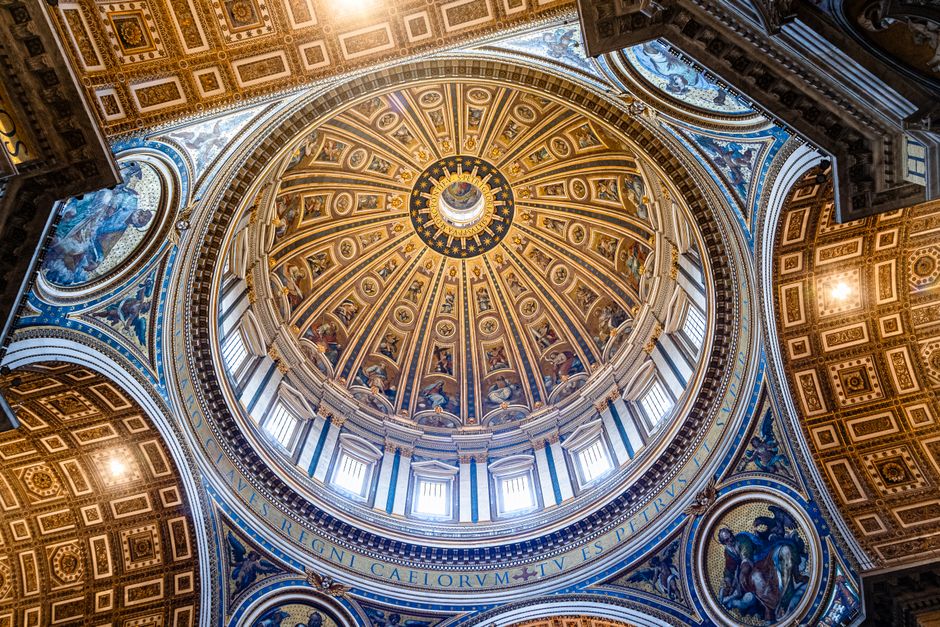
- St Peter’s Basilica entry and the main nave
- Bernini’s Baldachin and papal-altar area
- Michelangelo’s Pietà area
- Dome viewpoints plan (either climb route or nearby viewpoint areas)
How to Time Your Pacing Inside
Once you reach the Raphael Rooms region, don’t treat it like a quick corridor pass. People linger there, and the line-like flow narrows as you approach the next rooms.
A practical pacing approach:
- Spend less time early on (first rooms), so you can slow down later.
- When you get to the Sistine Chapel approach, plan to move with the flow instead of forcing your own route.
- Give yourself a realistic “end of museums” window so the basilica doesn’t become a rushed scramble.
St Peter’s Basilica: A Self-Guided Walk That Works
St Peter’s Basilica rewards a planned route because it’s a large space where people naturally drift into chapels and side areas. You’ll see more by doing a focused circuit.
Enter, Orient, and Take the Main Axis
After security, aim straight for the main nave axis. This is where you’ll get the clearest sense of the scale of the building and where the crowd flow tends to be the most predictable.
Use These Basilica Checkpoints to Avoid Detours
From the nave, your self-guided circuit can move like this:
- Head toward Bernini’s Baldachin and the papal-altar area (a natural focal point)
- Continue toward the Michelangelo’s Pietà area
- If you want a dome viewpoint, decide early whether the climb is worth it for your energy level and time budget
The biggest “time leak” in St Peter’s isn’t that people get lost—it’s that you can spend too long in side chapels while the rest of your plan becomes compressed.
Dome Viewpoint: Add It Only If You’re Staying Flexible
If dome access is available during your dates, assume it will add significant time. Don’t make it an afterthought if your day is already full—choose it because you want that payoff, not because you’re trying to fill spare time.
What to Do Next
Choose a ticket that matches the highlights you want (especially the Sistine Chapel routing), then book a time slot that gives you a buffer for security. On the day, stick to the checkpoint route: museum highlights in order, then a separate basilica re-entry window.
If you want the smoothest experience, decide your dome plan before you arrive and commit to a forward-only flow once inside the museums.