


If you’re planning to stay in Alfama but want to avoid turning every outing into a stair workout, you’ll have more success by choosing your “base corridor” first, not your postcard view.
Lisbon’s hills are real in Alfama—especially as you move away from the river and toward the castle-side lanes. The trick is to stay where the gradient softens (even if it’s never perfectly flat), and to use tram and metro stops so you walk downhill more often than uphill.
How To Spot Less-Hilly Alfama

- The riverfront and the broad avenues that feed into it
- Main roads that keep the grade steadier (even if the side streets still climb)
- Train/transport hubs at the lower levels of the city
In practice, that means you’ll be able to do an evening walk to dinner or a viewpoint without needing to “earn” the view with a long uphill detour.
Use the rails for the steep parts (then walk the gentle bits)
Trams and metro are what make an Alfama-focused stay workable when you don’t want to climb constantly. Your goal is simple: let public transport handle the vertical lift, then keep your everyday walking on flatter corridors.
- The historic Tram 28 is iconic, but it’s also a climbing route—use it when you’d otherwise be slogging uphill
- Metro stops in lower-central neighbourhoods can act like a launchpad, so you’re not starting every day from the steep lanes
- Plan to walk from your stop toward your accommodation on the “easy side” of the neighbourhood when possible
Skip the stair-cluster pockets closest to the highest viewpoint lanes
“Beyond the viewpoints” should mean something practical: avoid accommodation that sits deep inside the tightest lanes where routes funnel into stairs.
Look for these red flags when choosing where to stay:
- Reviews mentioning frequent steps from street level
- “Short walk” descriptions that repeatedly mention slopes
- Streets that look like they end quickly at narrow, steep access lanes
You don’t need to avoid Alfama—just avoid the steepest micro-zones for day-to-day movement.
Stay Zones In And Around Alfama (With Less Uphill Walking)
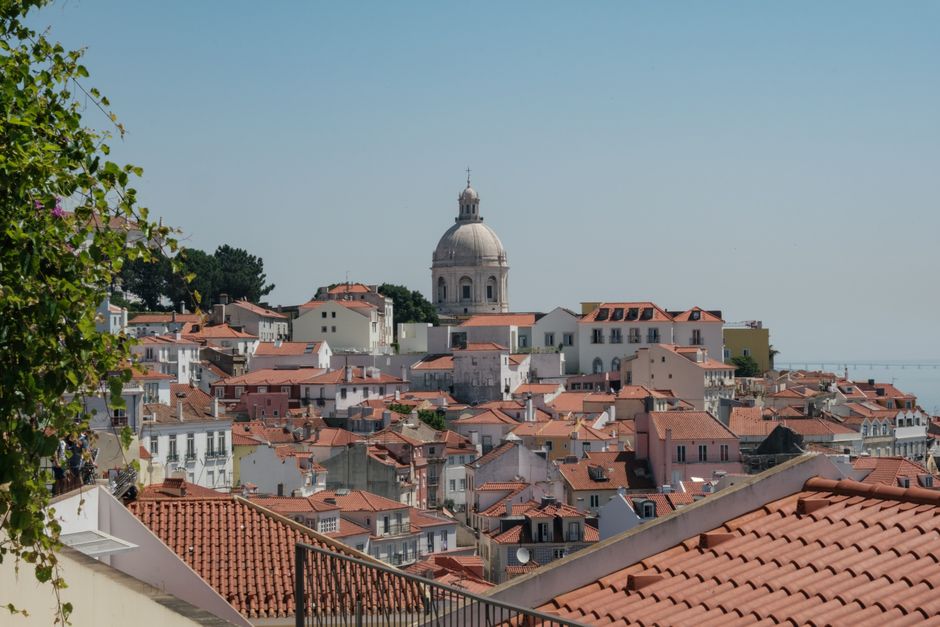
Lower Alfama via Santa Apolónia (train-station access)
This is one of the most reliable choices if you want Alfama without starting your day on the steepest slopes.
What to expect:
- More practical access thanks to the Santa Apolónia rail area
- Shorter, more manageable walks into central Alfama lanes (compared with deeper hillside pockets)
- A solid option if you plan day trips and want transport to do some of the work
Terreiro do Paço / Praça do Comércio edge (walk into Alfama from the flat)
If your priority is minimal hill fatigue, staying along the broad river-facing zone gives you the easiest daily footing.
Why it works for Alfama:
- You can walk toward Alfama’s lower streets from a smoother starting point
- Evening strolls often feel easier because you’re already near the flatter waterfront corridors
- It’s a convenient base for mixing Alfama with Baixa and Chiado without constantly re-climbing the city
Cais do Sodré to the riverwalk corridors (use transit, then walk downhill at night)
This base helps you “earn” less walking while still getting to Alfama in time for dinner, music, or a sunset drink.
Watch-outs:
- The neighbourhood is lively—so choose a quieter street, not the loudest strip
- It’s great for getting to Alfama, but you’ll still want to plan routes to avoid steep shortcuts
Mouraria’s lower lanes near Martim Moniz (metro + tram for hill skipping)
Mouraria is tightly linked with Alfama culture—music, small streets, and late-night energy—but staying near transport nodes can make it far more manageable.
How to use it smartly:
- Start with Martim Moniz/metro access so you’re not beginning uphill days from the steepest points
- Use the tram for the steep sections you’d otherwise walk up
- In the evenings, aim for loops that flow downward toward main roads or the river
Anjos / Intendente approach (a gentler “middle” before the steep rises)
If you want a quieter base than the busiest corners, this is often a calmer option that still keeps you close enough to Alfama to be worth it.
Why travellers pick it:
- Easy metro reach means fewer long uphill walks
- You can step into Alfama for a meal and come back without treating the return as a challenge
Baixa-Chiado edge (use transport to reach Alfama; keep evenings walkable)
This may not feel like “Alfama” on day one, but it’s one of the most practical bases for less hilly walking—especially if you’re happy to treat Alfama as a destination rather than your doorstep.
Best for:
- Quick trips to Alfama via tram connections
- Walkable evenings along main streets and squares without repeated climbing
Quick rule: if you dislike slopes, choose a base where you can comfortably walk back after dinner. In Lisbon, that can matter more than how charming the first 50 metres look.
Evening Walkability That Doesn’t Turn Into a Stair Sprint
Build your night plans around riverfront and main corridors
Evenings are where Lisbon’s hills can surprise you, because you’re tired and the streets feel longer.
For a more relaxed feel, prioritise:
- The riverfront stretches near Praça do Comércio and the adjacent waterfront routes
- Main corridors with steadier grades where you can walk to dinner, then return without “one more hill”
Aim for loops, not one-way climbs
A common mistake is planning to go up to Alfama in the evening for food, then taking the same route back. If you’re trying to minimise hills, pick a loop strategy.
A workable pattern:
- Walk up a little in the early evening when you’re still fresh
- Use tram/transport for the steep return leg
- Choose a dinner zone that lets you come back on a downhill or gently graded route
Choose viewpoints as quick detours, not the centre of your itinerary
“Beyond the viewpoints” can still include viewpoints—but as short detours.
To keep things comfortable:
- Pick one viewpoint per evening (not multiple)
- Use transport to reduce the last steep push
- Consider going earlier rather than late; crowds rise and the area feels more crowded around peak times
Getting Around Without Constant Hills
Match your walking level to your plan
If your day includes museum hopping and café stops, you’ll want your neighbourhood base to absorb that energy.
As a rule of thumb:
- If you’re likely to do a full day on foot, choose the flatter base corridors above
- If you’re using tram/metro repeatedly, you can be slightly more adventurous with your base—just don’t choose the steepest lane micro-zones
Use trams strategically, not as a default
Tram 28 can be a highlight, but it’s also crowded at peak times and tends to slow down.
When tram helps most:
- You want access to Alfama without walking uphill
- You’re comfortable with short waits and busier stops
When it hurts:
- If you’re trying to move quickly with minimal walking in the heat or at peak evening hours
Don’t ignore the “last 10 minutes” from your accommodation
Even a well-located base can become hard if the walk from street level to your door involves stairs, ramps, or a sharp slope.
Before booking, scan for review language about:
- Steps at arrival
- Slopes in the final approach
- Narrow lanes where taxis can’t get close
Booking Tactics for a Smoother Alfama Stay
Filter for access: elevator, fewer steps, and easier street approach
For less hilly walking, access matters more than the view. A great room in a hard-to-reach lane can turn every outing into effort.
Try to confirm:
- Whether the building has an elevator
- How many steps you’ll likely climb from street level
- Whether the “flat entrance” is actually flat for your route
Pick streets near transport corridors, then walk within the same band
The best approach is to stay where your daily routes stay in the same altitude band.
A practical method:
- Identify the closest tram/metro stop you’ll use most
- Make sure your accommodation is between you and the easiest walk routes, not behind the steepest rise
Prioritise reviews that describe slopes clearly
Ignore vague comments like “great location” or “historic streets.” Instead, look for:
- Concrete slope descriptions (“steep hill,” “lots of steps,” “manageable walk downhill”)
- Mentions of how long it takes to walk back after dinner
- Consistent comments across multiple reviewers
Even if you end up choosing a slightly pricier option, you may save time and energy—especially across multiple evenings.
Next Steps: Pick a Base and Map Your Routes
Choose one of the six zones above based on how you want to move after dinner: mostly downhill walking, or tram/metro-led returns. Once you’ve picked a base, do a simple route check for your most common evenings—dinner plus a back-to-your-door return—so you know you won’t be fighting the hill every night.