

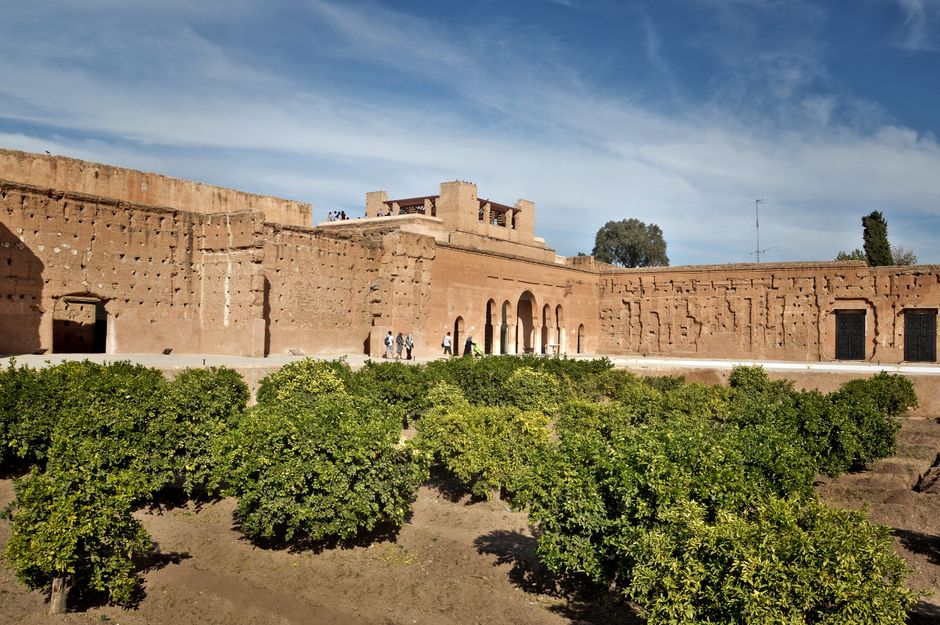
Medina vs. Mellah: what’s the difference?

What each area is best for
- Medina: a full-day mix of markets, classic streets, ornate religious buildings, and palace-style sights.
- Mellah: a calmer feel than the busiest souks, with a strong historical thread—especially around the synagogue and the Jewish cemetery—plus local food and everyday shopping.
Where they sit (so you can plan your walking)
You can treat the Medina as your main “grid” of sightseeing, with the Mellah as a nearby target rather than a separate day trip. Most first-time routes work best when you:
- Start at a major Medina landmark (the central square area or a palace/madrasa zone)
- Work outward into the surrounding souks
- Detour into the Mellah when you want history, quieter lanes, and a different shopping rhythm
Navigation mindset: expect turns, use landmarks
The Medina isn’t built for “drive-by” orientation. You’ll get the best results if you:
- Plan routes around recognisable stops (a mosque complex, a palace entrance, a market square)
- Count time on foot rather than distance—alleys can double your walking time
- Keep your phone for reference only when you’re safely paused; constant screen use invites mistakes and pickpocket opportunities
The Medina on foot: where to spend your first hours

A practical first walk (start with these anchors)
If you want a simple order that reduces backtracking, use these as your “anchor” points:
- Jemaa el-Fnaa (the main square area): best for atmosphere, street food watching, and meeting point clarity
- Ben Youssef Madrasa: a strong early cultural stop with an unmistakable interior courtyard
- Bahia Palace: a slower-paced palace visit once you’ve had enough lively lanes
Souks and lanes: how they usually behave
In the busiest souk stretches, vendors often try to pull you into lanes by calling out to specific interests—leather goods, rugs, lamps, spices, or services like tailoring. Instead of fighting the flow, you’ll find it works better to:
- Decide what you’re browsing first (e.g., spices vs. textiles vs. metalwork)
- Move at a steady pace through the main artery lanes
- Step aside into a side lane only when you’re ready to compare prices
Best times to reduce crowds
You don’t have to visit early every day, but timing helps:
- Mornings: cooler, often less intense than peak evenings
- Late afternoons into night: strongest street atmosphere near Jemaa el-Fnaa, but more crowding and louder bargaining
The Mellah: what to see, how to move through it
The Mellah rewards visitors who like history and quiet lanes—while still giving you local shopping and everyday scenes. It’s usually easier to navigate than the deepest maze-core lanes of the wider Medina, mainly because the focal points are more obvious.
What the Mellah is best for
If your goal is to understand Marrakech’s layered history while still staying close to the Medina’s buzz, the Mellah is the right detour.
Key sights you can build around
These are the Mellah-focused stops most first-time visitors aim for:
- Slat al-Azama Synagogue: the best-known remaining synagogue site in the quarter
- Old Jewish Cemetery: a somber, historical place that’s usually visited as part of the same area walk
- Rahba Kedima (market square area nearby): best for snacks, browsing small stalls, and catching the local-market rhythm
Walking tips for the Mellah
Because lanes can narrow quickly, you’ll find these habits prevent frustration:
- Keep an exit plan: choose a nearby main lane to return to if a street gets too busy
- Travel with a “meet point” idea: agree with your group on a fixed landmark (you’ll thank yourself later)
- Dress for respect around religious/historic sites—shoulders and knees are safest, and it’s easier than being asked to adjust
Getting around day-to-day: a navigation checklist
Even if you’re comfortable walking, the Medina can feel disorienting at first. The goal isn’t to “map every alley”—it’s to move confidently from landmark to landmark.
On-foot navigation that works for first-timers
Try this approach on Day 1:
- Pick one main anchor and one secondary anchor for each half-day
- Walk there in daylight, then return to that anchor before you venture deeper into side lanes
- If you lose your way, retrace to the last recognisable plaza/complex rather than chasing shortcuts
Local movement norms (what’s typical here)
- Staying on foot inside the Medina: most lanes aren’t practical for vehicles, and drivers may not wait where you want to stop.
- Crossing traffic outside the walls: be cautious at larger roads—vehicles move fast compared with the slow walking pace of the Medina.
- Using a guide only where it helps: if you’re visiting multiple ticketed sights, a short guided block can reduce time lost in the lanes.
When it’s worth asking for directions
Ask when you reach a decision point: “Which lane leads back to this square?” or “Where is the entrance to this palace?” You’ll get better results if you:
- Show a landmark name (written down) rather than only pointing at streets
- Ask for the direction of travel, not a guarantee that the route is the only option
What to buy and how ticketing usually works
Marrakech shopping is part theatre, part craftsmanship. You’ll have a better experience if you know what’s standard: bargaining expectations, when cash matters, and how entry to sights typically runs.
Purchase norms in souks (what to expect)
In many stalls you’ll see a similar pattern: vendors offer options, you counter, and prices can shift once you show you’re serious—but also willing to walk away.
For first-time visitors, it helps to keep these rules:
- Check quality before price: textiles, leather, and carved items can look similar from a distance.
- Ask about how items are made if you care about authenticity; it’s usually more useful than arguing over numbers.
- Be ready to bargain politely: not aggressive, just firm and friendly.
Food and small purchases
Near market squares and busy lanes, food is often sold by vendors setting up close to foot traffic. Expect that:
- Portions can be quick and informal (order, wait, eat nearby)
- Cash is often the easiest option
- You may be offered “a sample” before a full price is discussed—decide quickly so you’re not surprised at checkout
Ticketing norms for sights
For palace, madrasa, and historic interiors, you can usually expect a paid entry with on-site ticket handling. Ticketing is generally straightforward, but first-time visitors often get caught by these practical details:
- Tickets are typically collected at the entrance or via a small on-site desk
- Some places may limit entry flow during busy periods—arriving earlier helps
- If an area has guided access, you may see unofficial offers; stick to the official entry point to avoid confusion
Final thoughts: plan your first day with anchors
Choose one Medina anchor and one Mellah anchor, then build your browsing time between them. If you want less hassle, go with a clear start time, carry a cash buffer, and treat the souks as a wandering experience rather than a route you have to “finish.”