

Choose Your Aurora Base: Dark Sky + Road Reality
Dark-sky conditions matter more than distance
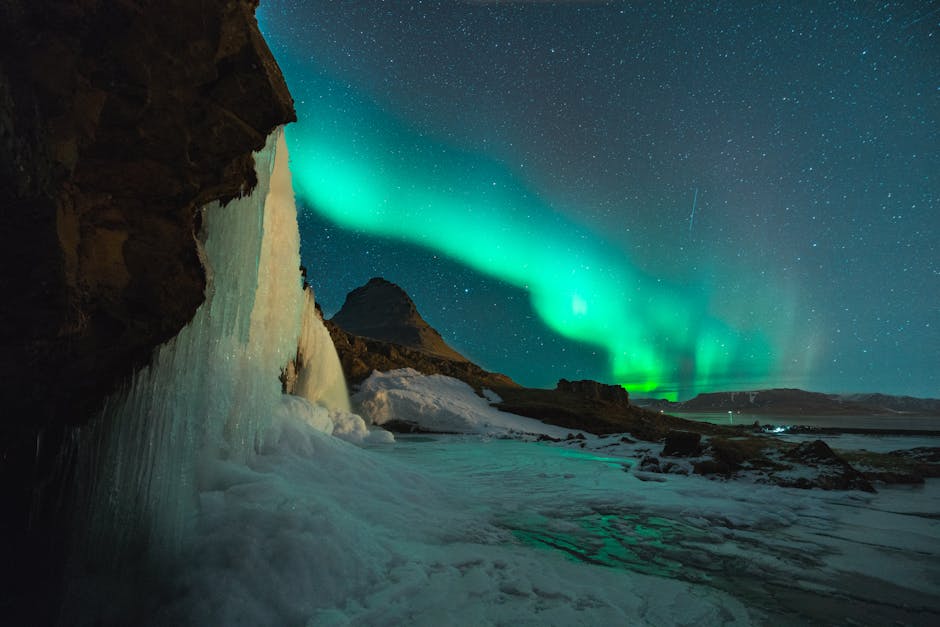
Northern lights in Iceland are mainly about two things: a forecast that suggests aurora activity and conditions that let you see it. Even if you’re “far from Reykjavik”, a bright night sky from clouds, wind-blown haze, or heavy light pollution can make the lights look faint.
As you compare base towns, think in terms of “how dark will it really be after you arrive?” Reykjavik can be a workable starting point if you’re flexible and you’re willing to drive away from the brightest areas at short notice. Smaller towns tend to give you darker skies with less effort.
Aurora doesn’t follow the Ring Road
The aurora can appear anywhere overhead, but your visibility is heavily influenced by local weather. Iceland’s winter patterns mean you can be under clear skies in one direction while another area is socked in.
So the smartest base town is often the one that helps you react quickly—without turning a short chase into a risky drive at night.
Road access: what winter changes
In winter, “road access” is less about whether roads exist and more about what they’re like after dark:
- Main routes (especially around the Ring Road corridor) are usually ploughed, but can still be slow on windy nights.
- Side roads and inland shortcuts can become unpredictable, especially if you’re relying on daylight to find them.
- The practical limit for chasing is your ability to drive safely back to your accommodation if the sky clears late.
If your plan depends on multiple overnight road segments, you’re stacking risk. Instead, choose a base where you can spend the night close to good viewing options.
West Iceland Bases: Reykjavík and Borgarnes
Reykjavík
Reykjavík is often the easiest “starter city” because services are concentrated: accommodation options, car rental availability, and the likelihood that you can move plans around if the first forecast doesn’t look good.
The trade-off is light. If you’re staying in central areas, the aurora may still happen, but it can be harder to spot unless you drive to darker surroundings. In winter, even a short drive can add meaningful time—so build the expectation that aurora nights may mean late-night driving.
Reykjavík works best if you want:
- More flexibility on arrival and departure dates
- A lower chance of feeling stranded by limited supply
- The option to chase after checking conditions
Borgarnes
Borgarnes is a practical step away from Reykjavík’s stronger glow, while still keeping you on a route that’s generally more straightforward than many rural detours.
It’s a good base if you want a “middle ground”: dark enough to notice the lights more easily, but not so remote that you’re relying on long night drives to see them. Expect a winter rhythm where you’ll still watch cloud cover closely and drive only when it looks promising.
Borgarnes suits travellers who:
- Prefer to spend less time in the brightest areas
- Still want a straightforward logistics base
- Are comfortable with short, targeted night drives
North Iceland: Akureyri as the Comfortable Bet
Akureyri
Akureyri is one of the clearest northern choices for aurora chasing because it combines a strong transport base with the benefit of being farther from Iceland’s densest light sources.
You’ll usually find that Akureyri is easier to manage than far-flung northern settlements. That matters when winter weather changes fast: you want to be able to plan an evening, not start a full-day driving project.
Aurora nights from Akureyri tend to work well when you:
- Choose accommodation that keeps you near ploughed routes
- Plan to look for the aurora where the sky opens up (rather than inside the city lights)
Drive-a-bit or stay put
With Akureyri, the most realistic strategy is to choose a base near the town but not in the brightest core, then make smaller adjustments at night if conditions shift.
A key road reality in the north is that “not too far” still needs respect at night. Even when major roads are maintained, visibility can drop quickly in snow and wind, so you’ll want a plan that gets you back before fatigue—and before weather tightens again.
South Coast Bases: Vík and the Höfn Area
Vík
Vík is a classic southern aurora base because it sits in a part of Iceland where the night sky can be dramatically darker than in Reykjavík, especially away from built-up areas.
The reason it’s popular is also the reason you need to plan carefully: southern roads can be exposed to wind and weather. That doesn’t mean aurora viewing is impossible, but it does mean you should assume that some nights will be “forecast yes, visibility no”.
Vík is a good fit when you want:
- Dark-sky potential with a strong sense of southern Iceland scenery
- A base where you don’t need long drives to reach darker viewing spots
- To prioritise aurora visibility over minimising driving
Höfn Area
The Höfn area (along Iceland’s southeastern coastline) is another strong choice for aurora hunters who want the benefits of being further from the brightest light zones.
This corridor can be a rewarding place to spend multiple nights because it often feels less like a “drive-by stop” and more like a place where you can settle into winter conditions. Still, road realities matter: winter can turn travel times into something slower than expected, especially if weather forces you to reduce speed.
If you’re using Höfn as your base, it helps to book around the idea of multiple attempts. A single night rarely tells the whole story.
East Iceland Option: Egilsstaðir for a Quieter Drive
Egilsstaðir
Egilsstaðir is a useful eastern base when you want a quieter, less “tourist-density” feeling while still having the infrastructure of a town rather than a remote outpost.
For northern lights, the key advantage isn’t that the east guarantees clearer skies—it’s that you’re often far enough from major light sources to make aurora sightings more likely to stand out. You’ll still need to watch cloud cover and wind, but the overall viewing conditions can be better than you’d get in brighter, busier hubs.
Egilsstaðir can suit you best if:
- You’re planning several nights rather than one “big chase” night
- You prefer a calmer base over constant onward driving
- You’re comfortable managing winter driving times
How to think about daylight and delays
In winter, the combination of short daylight and weather-driven delays changes the day-to-night balance. Even if your driving route is fully paved on paper, the real issue is whether conditions allow the pace you planned.
So when Egilsstaðir is your base, choose accommodation and viewing plans that don’t rely on making long, strict timelines. The aurora can be subtle at first—if you’re rushing, you can miss the window.
Next Steps: Lock in Dates and a Flexible Night Plan
Book around your “arrival window”, not just the forecast
For aurora trips, you’ll usually do better by booking a base town with enough nights to absorb weather. Aim for a plan where you can check conditions each afternoon and decide whether to keep your evening quiet or make a short drive.
In practice, that means choosing accommodation with easy change options when possible, and having your car setup ready for winter from day one.
Plan one practical backup per base town
Every base town above works best when you have a backup that doesn’t require heroic effort. Your backup can be as simple as a nearby darker viewing area you can reach safely and return from, or shifting your viewing start time if conditions improve later.
If you want the best odds, treat your aurora nights as a sequence of attempts—rather than a single moment you have to get exactly right.
Next, pick the base town that matches your tolerance for winter driving: Reykjavík for maximum convenience, Borgarnes or Akureyri for a balanced approach, and Vík or the Höfn area for darker-sky potential. Once the base is set, plan for several nights and keep your evening schedule flexible enough to respond when the sky finally cooperates.