

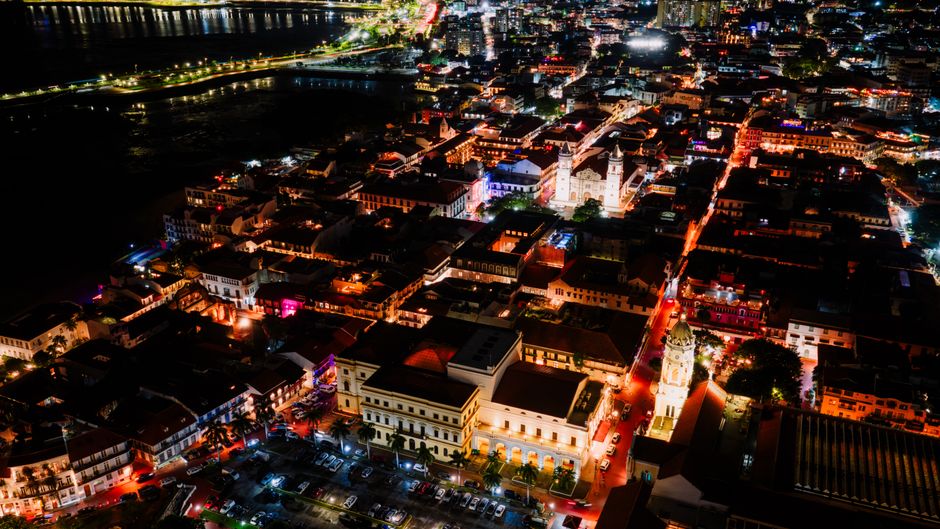
Getting to Casco Antiguo With Transit (and Minimal Guesswork)
Casco Antiguo is compact, but it sits above the water and along steep side streets. A good plan is to use the Metro (when you’re starting further out) and then switch to walking for the entire historic core.
Use the Metro to drop you near the old centre
If you’re coming from central Panama City, aim for a Metro stop closest to Casco Viejo (commonly Iglesia del Carmen or 5 de Mayo). From either, you’ll typically walk 10–20 minutes depending on your exact start point and how quickly you climb the streets.
Quick tips:
- Exit the station and follow signs for Casco Viejo / Casco Antiguo.
- Expect the last part to be uphill—wear shoes with grip.
- Keep your plan flexible: Casco’s street layout means small detours can add time quickly.
From Albrook (big transport hub)
If you’re starting from Albrook (buses and regional connections), take the Metro toward the line that serves central Panama City, then walk the final segment into Casco Antiguo. Total time is often roughly 30–50 minutes including the walk, depending on waiting times.
When you arrive:
- Start by orienting around the main squares (Plaza Independencia or Plaza Catedral area).
- Use a map app only for “which street am I on?”—Casco is easier once you’re physically there.
From Tocumen Airport and farther neighbourhoods
From Tocumen International Airport, you generally combine ground transport to the Metro network (or a direct ride) and then walk into Casco. Expect a longer trip—often 60–90+ minutes door-to-door—because airport-to-centre options vary by traffic.
For nearby areas such as El Cangrejo and San Francisco, you can often do a mix of short ride + walking. If you’re keeping it simple, get as close as possible by taxi/rideshare and then start the walk near the main Casco entrances.
The Walking Plan (About 3½ to 4½ Hours)
This route is designed to feel like one continuous circuit, not a checklist. You’ll spend most of your time on foot inside Casco Antiguo, with optional museum time added only where it makes sense.
Suggested pacing and time blocks
Plan for:
- 0:00–0:45 Orientation near the waterfront edge and the independence core
- 0:45–2:15 Cathedral area, colonial lanes, plazas, and vault-style architecture
- 2:15–3:15 Museum cluster and church stops
- 3:15–4:15 Views, hillside finish, and a practical way to end
If you’re short on time, you can compress by skipping the indoor museums and staying outdoors for a 2:15–3:00 version.
Where to buy tickets (ticket points)
Ticketed stops in Casco are usually “at the venue” rather than an easy prebook-from-anywhere situation. For each museum-style stop below, tickets are typically purchased at the entrance or ticket counter:
- Arrive with a little buffer so you’re not rushing.
- If you want a specific guided experience (theatres and special exhibits), go earlier in the day.
- If a line forms, keep moving—Casco is full of rewarding street sections between ticket points.
What to keep in mind while you walk
- Casco’s streets can be uneven; take it slow on cobbles.
- Sun can be intense midday. Early morning or late afternoon is more comfortable.
- Many stops are visually close—your biggest time cost is climbing and crossing back and forth.
Independence Square to Waterfront Streets (Stops 1–4 | 45–75 Minutes)
Start near the centre of Casco Antiguo and aim to end this block back near the main waterfront edge and the broad open squares.
Stop 1: Plaza de la Independencia
Begin at Plaza de la Independencia, the central square where you’ll immediately get the scale of Casco—open space, colonial façades, and easy photo angles. From here you can aim downhill toward the historic cores.
Stop 2: Metropolitan Cathedral (Catedral Metropolitana de Santa María la Antigua)
Walk from the square into the cathedral area for one of the most recognisable interiors/exteriors in the district. This stop works well early because the lanes around it feel busiest later in the day.
Ticket point:
- If you want to enter for the interior, plan for venue entry at the cathedral.
Stop 3: Plaza Herrera / the “main-street” feel
Continue toward the civic street rhythm of Casco. You’re looking for a calm moment to reset—Casco’s “best walking” sections often begin after you’ve done the first big icon.
Stop 4: Museo del Canal Interoceánico
Head into the Museo del Canal Interoceánico area. This is one of the strongest indoor complements for the district because it connects Panama’s history to the place you’re walking.
Ticket point:
- Buy tickets at the museum entrance / ticket counter and check whether you need to allocate time for exhibits.
Colonial Lanes, Vaults, and French Square (Stops 5–8 | 90–110 Minutes)
This block is the classic “Casco look”: plazas framed by historic buildings, narrow lanes, and the signature vault-style street sections.
Stop 5: Calle de las Bóvedas
Walk the historic corridors around Calle de las Bóvedas. Even if you don’t go inside anything, the architecture and repeated arches give you the Casco experience.
Practical note:
- This area can be busy. If you’re aiming for photos, take your time just before or after peak foot traffic.
Stop 6: Plaza de Francia
Continue to Plaza de Francia, a compact plaza that’s easy to navigate—good for a short break and a clear “checkpoint” for your route.
If you need a reset:
- Grab water, re-check your bearings, and decide whether you’ll add any extra indoor time.
Stop 7: Iglesia de San José
From the French Square area, follow the streets upward toward Iglesia de San José. This stop is more than a photo—watch how the streets funnel around the church area.
Ticket point:
- If you’re entering, expect entry at the church.
Stop 8: Teatro Nacional de Panamá (exterior-first)
End this block with the Teatro Nacional de Panamá area. It’s often easiest to treat this as an exterior landmark unless you already know you want a particular performance or programme.
Ticket point:
- If you want a theatre visit, tickets are typically handled on-site via the box office for that day’s options.
Churches, Markets, and Hillside Finishes (Stops 9–12 | 60–90 Minutes)
This final block is where you trade “maximum icons” for a smoother finish: churches, a local food stop, and a viewpoint that makes the whole walk feel complete.
Stop 9: Iglesia de la Merced
Walk toward Iglesia de la Merced for another strong architectural contrast from the cathedral zone. If you feel like you’re repeating too much, slow down here and just focus on details—doorways, stonework, and the way streets open into small courtyards.
Ticket point:
- If you want interior access, plan entry at the church.
Stop 10: Mercado-style stop near Casco (Mercado de Mariscos)
For a practical mid-to-late stop, head to Mercado de Mariscos (or the seafood market area near Casco). It’s useful for a low-effort snack or drink break before your final climb.
What to do:
- If you’re not sure what to order, stick to simple items and look for stalls with steady turnover.
- Keep expectations realistic: market areas can be crowded and can feel touristy around peak hours.
Stop 11: Palacio de las Garzas
Continue to Palacio de las Garzas, a historic building that’s often a quieter stop than the big plazas. Treat it as a short “architecture moment” rather than a full sit-down break.
Stop 12: Cerro Ancón viewpoint (short climb)
Finish with Cerro Ancón for the hillside perspective. The climb takes time, but it’s a strong way to close your Casco walk because it changes the scale—suddenly the district looks like a planned, walled city.
Practical note:
- Wear shoes suited to uneven streets and plan for slower pace near the top.
Final Steps: Make It Smooth on the Day
Before you set off, choose your start time based on comfort: earlier for fewer crowds, later for warmer light and easier evening atmosphere. Save extra time for the museums only if you’re actually interested—Casco’s streets and plazas are often the main attraction.
After your walk, decide whether you’ll head back to your accommodation via Metro (walk to the nearest station) or by a short ride if your legs are tired from the hills.